
Living bacteria that generate hydrogen from food waste could be key to a carbon-negative way of manufacturing everyday chemicals, according to new research from the University of Edinburgh and the University of Surrey.
Hydrogenation is used across the chemical industry to manufacture pharmaceuticals, fuels, plastics and food products. However, most industrial hydrogen still comes from fossil fuels, making it a major source of global carbon emissions.
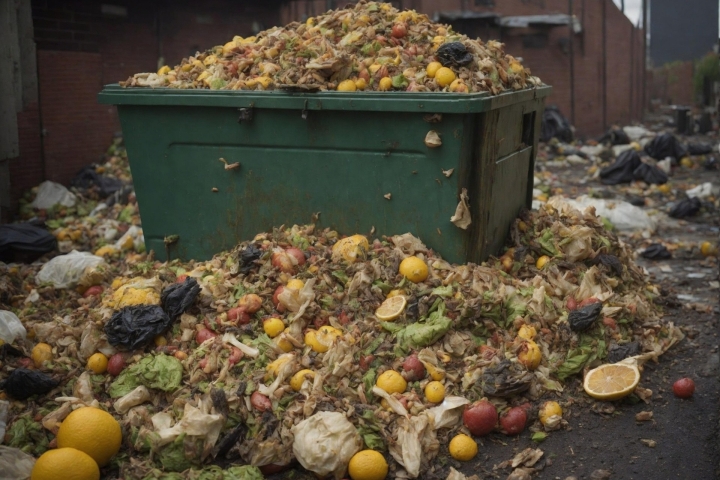
In a study published in Nature Chemistry, the team demonstrated how waste bread can be converted into biological hydrogen capable of powering key industrial hydrogenation reactions under mild, low-energy conditions. This novel approach avoids the extreme temperatures, pressures and fossil-derived hydrogen normally required.
Surrey’s life cycle assessment – the first to evaluate this system – showed that combining microbial hydrogen production with catalytic chemistry can be cleaner than both fossil-based and electrolytic hydrogen, and can even become carbon-negative when food waste is used as the feedstock. The system was also able to make several valuable industrial chemicals, including adipic acid – a key building block for nylon and other polymers – as well as fine chemicals and fragrance ingredients.
Professor Jhuma Sadhukhan, Co-Director of the Global Centre for Sustainable Bioproducts and Carbon-Loop hub at the University of Surrey, and a co-author of the study who led the life-cycle assessment, said:
“Our life cycle assessment found that decarbonising chemical manufacturing is not only technically feasible but environmentally advantageous when biological hydrogen is used. With the right integration into existing industrial systems, this approach could offer a practical, carbon-negative alternative to today’s fossil-intensive methods, helping the sector cut emissions without compromising productivity.”
The study draws on Surrey’s expertise in circular systems and environmental modelling, brought together through the Surrey Circular Economy Group, which combines systems thinking, engineering and digital tools to design low-carbon, resource-efficient solutions.
The findings provide a clear blueprint for how the chemical industry could shift towards circular, low-carbon manufacturing – turning waste into a resource while significantly reducing emissions.