
A global database of nuclear physics discoveries spanning more than a century has ranked three University of Surrey physicists among the world’s top 10 for discovering and characterising nuclear isomers – rare, long-lived excited states of atomic nuclei that provide a unique window into the structure of matter and underpin modern medical imaging.
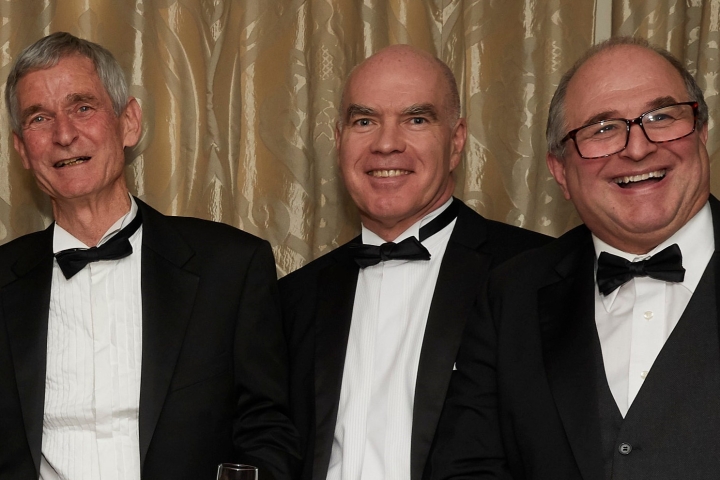
Professors Zsolt Podolyák, Philip Walker and Patrick Regan – ranked second, third and tenth respectively in a global list of more than 1,000 researchers – are the highest-ranking university-based academics. Their work has helped position Surrey as the world’s leading university for nuclear isomer discovery, an exceptional distinction in a field typically dominated by large national laboratories.
Nuclear isomers occur when protons and neutrons inside an atomic nucleus rearrange into higher-energy configurations that live far longer than typical excited nuclear states, which usually last much less than a microsecond. Some isomers survive for microseconds, years, or in extreme cases, far longer than the age of the universe.
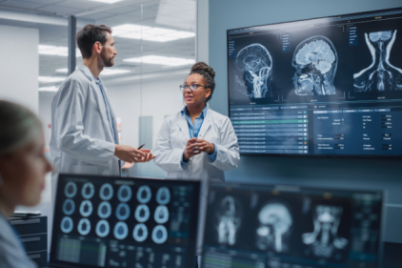
Alongside helping scientists understand how elements are formed in stellar explosions and neutron-star mergers – and how they decay to create the matter around us – isomers are most widely used in medicine. The world’s most common diagnostic imaging isotope, Technetium-99m, used in around 20 million diagnostic procedures each year, is itself an isomer, and the same techniques used to study these states allow for accurate cancer diagnosis and safe radiation dosing.
The rankings come from a new international database compiled by Professor Michael Thoennessen of Michigan State University and published in Nuclear Physics News International. The findings will be presented at the NUSTAR Annual Meeting in Germany from 23-27 February.
Zsolt Podolyák, Professor at Surrey’s School of Mathematics and Physics, said:
“Discovering and characterising nuclear isomers is technically extremely challenging. These states are rare and often hidden within enormous amounts of background data. What this recognition shows is the sustained strength of Surrey’s nuclear physics research and our ability to lead major experiments at the world’s most advanced accelerator facilities.”
The discoveries were carried out at major international accelerator laboratories, including the GSI Helmholtz Centre for Heavy Ion Research in Darmstadt, Germany, a leading hub for nuclear structure research. While the new ranking database has named GSI the world’s leading laboratory for isomer discoveries, Surrey is ranked number one in isomers discovered by external users.
Patrick Regan, NPL Professor of Nuclear Metrology at the University of Surrey, said:
“Research into nuclear isomers helps us address some of the most fundamental questions in science – including where we come from and how the atoms that make up our bodies were formed in stellar explosions. To have three researchers from one university ranked in the global top 10 is highly unusual and reflects decades of sustained leadership in a very demanding field.”
Professor Philip Walker, Emeritus Professor of Physics at the University of Surrey, who has previously been awarded the Institute of Physics’ Rutherford Medal and the European Physical Society’s Lise Meitner Prize for his contributions to nuclear structure physics, said:
“Nuclear isomers have played a central role in shaping our understanding of atomic nuclei since their discovery in 1921. They provide some of the most sensitive tests of how protons and neutrons arrange themselves inside the nucleus and have repeatedly challenged and refined our theoretical models. I am honoured to be counted among the world’s leading researchers in this field.”
The NUSTAR (Nuclear Structure, Astrophysics and Reactions) Annual Meeting forms part of the FAIR (Facility for Antiproton and Ion Research) accelerator facility at the GSI site in Darmstadt, bringing together around 800 nuclear physicists worldwide. Surrey Professor Zsolt Podolyák serves as spokesperson for the international NUSTAR collaboration, helping to guide its scientific direction and coordinate research at one of the world’s most advanced accelerator facilities.