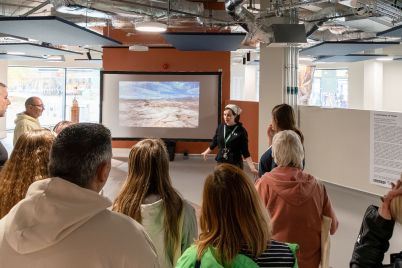

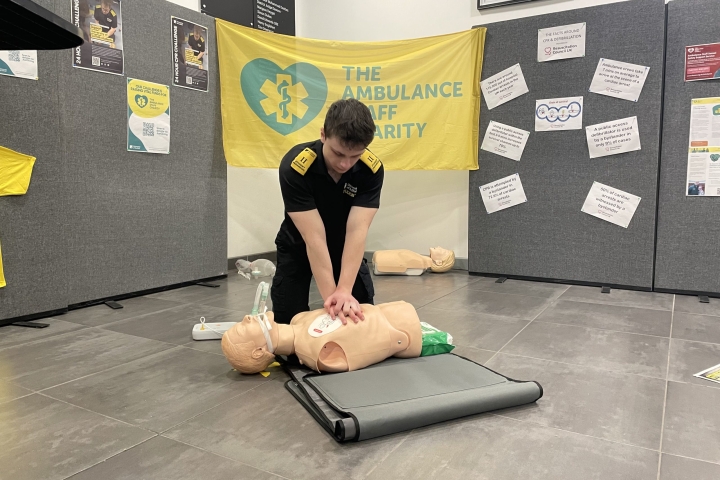
More than 50 students from across the three years of the BSc (Hons) Paramedic Science degree completed a 24-hour CPR marathon this week, clocking up more than 172,000 chest compressions at the university’s Waterfront Building in Ipswich. Along the way they delivered 720 defibrillator shocks and 10,200 rescue breaths – a day’s work measured in muscle memory.
The point was not endurance for endurance’s sake. It was persuasion.
The Confidence Gap
Each year, about 115,000 out-of-hospital cardiac arrests are reported to UK ambulance services, according to the Resuscitation Council UK. Around half are witnessed. CPR is attempted in most cases. Yet fewer than 10% involve a public access defibrillator.
Second-year student Chris Matthews, who organised the event, says hesitation is the problem. People are anxious about using defibrillators, unaware that 999 call handlers will talk them through the process and even provide the access code.
“Our placements have shown us how critical early CPR is,” he said. “But we also see that lack of confidence.”
So the students opted for a visible, slightly gruelling demonstration: this is what intervention looks like.
Challenging Assumptions
The challenge also tackled a more awkward barrier – performing CPR on women.
Second-year student Fleur Connelly said stigma still surrounds removing a bra so defibrillator pads can be placed correctly. “It’s not about dignity,” she said. “It’s about doing something that might save a life. Doing nothing is worse.”
The message was delivered plainly, and repeatedly.
Civic leaders, including the High Sheriff of Suffolk and the Ipswich Mayor, stopped by to observe and try their hand. The students have also applied to Guinness World Records, in case the effort qualifies as a record attempt.
Raising Money – and the Bar
The marathon has raised more than £3,200 so far for The Ambulance Staff Charity, which supports serving and retired ambulance staff and their families.
Bethany Weeks, deputy course leader, said she was “incredibly proud” of the cohort. The students, meanwhile, return to lectures and placements with slightly sore shoulders and a sharper point made.
If the exercise persuades even a handful of bystanders to step forward rather than freeze, the arithmetic starts to look compelling.