
A pioneering implant is giving a Hull woman new hope she will experience fewer and less severe epileptic seizures.
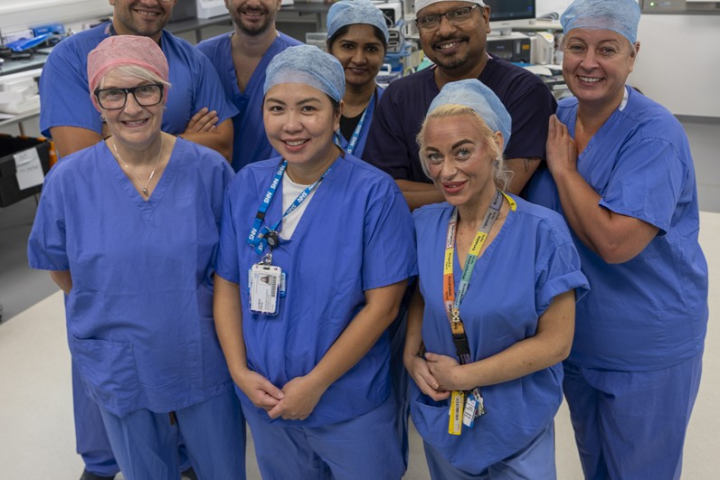
Samantha Baker underwent Vagus Nerve Stimulation surgery as a day case patient at the Day Surgery Centre (DSC) at Castle Hill Hospital, under the care of neurosurgeon Mr Adam Razak and his team. This is the first time we’ve done this procedure at the DSC, and may be the first whole system implantation in the country done in a dedicated DSC.
Vagus Nerve Stimulation, known as VNS Therapy, can help manage epilepsy in adults and children whose seizures cannot be controlled effectively with medication, and are not suitable for resective brain surgery.
During the procedure, a small device is implanted beneath the skin in the chest. A thin wire connects it to the left vagus nerve deep in the neck, allowing mild electrical pulses to travel along the nerve towards the brain. The stimulation is intended to help prevent seizures before they begin, reduce seizure frequency/severity, or stop them after they have started.

Samantha Baker began experiencing myoclonic jerks, a form of epileptic seizure, when she was three. Her condition was under control by the age of 11, but the seizures returned more severely when she was around 14 or 15.
The 29-year-old said: “The operation went really well. I was in and out the same day, which was great because I was able to sleep in my own bed that night.
“I am hoping this procedure will help reduce the number of seizures I have and their severity. My biggest hope would be to be able to drive in the future.”
Mr Razak said the treatment can make a significant difference for some people living with difficult-to-control epilepsy.
He said: “The stimulation travels up the nerve and can reduce seizure frequency. It does not work for every patient, but I have patients for whom VNS has resulted in huge improvements in their epilepsy.
“It acts as an adjunct alongside medication and some patients also tell us it has helped to lift their mood.”
The procedure was completed under general anaesthetic, with Samantha discharged home later the same day following a period of observation and recovery.