
A planetary scientist who has shared the wonders of our galaxy with people all over the world has won a prestigious prize for his work in community space science.
Dr James O’Donoghue has been awarded the 2026 Carl Sagan medal by the American Astronomical Society (AAS). The prize recognises and honours outstanding communication by an active planetary scientist to the general public.
His public outreach spans a wide range of formats and audiences:
- Nearly 100 educational animations on space and planetary science, viewed more than 400 million times across platforms and used in school and university classrooms, museum exhibits and planetarium shows worldwide
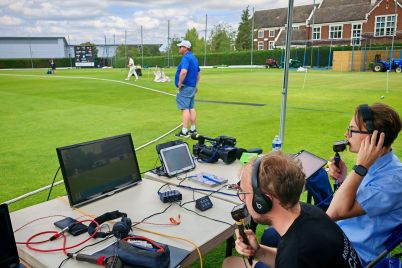
- TV and radio interviews for international, national and local news outlets, including the BBC and PBS Nova
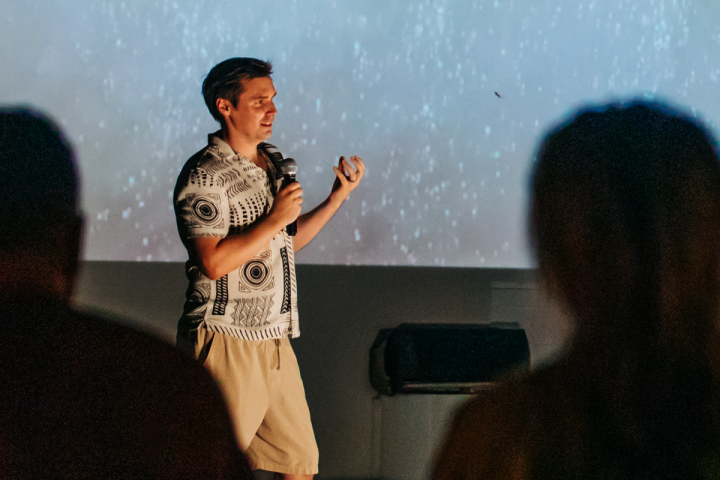
- Organising ‘Observe the Moon Night’, an annual stargazing event at the University of Reading, which has drawn hundreds of people to campus
An AAS statement said: “Dr O’Donoghue is an extraordinarily creative and effective communicator of topics in planetary science, while also being a recognised leader in observations of the upper atmospheres of the giant planets and an engaged member of the planetary science community.
“He truly exemplifies the spirit of the Sagan Prize through the combination of his unique and impactful communication work with his scientific leadership.”
The medal is named after the late American astronomer and broadcaster Dr Carl Sagan, whose 1980 documentary series Cosmos was watched by at least 500 million people across 60 countries. Previous winners have been recognised for communicating research on topics including the origins of the Moon, the exploration of Saturn, and the search for habitable planets beyond our solar system.
Dr James O’Donoghue, University of Reading, said: “Space is one of the few subjects that almost everyone is curious about, and that curiosity is worth taking seriously. When people understand what’s happening on other planets, it changes how they see our own world. Sharing that science as widely and accessibly as possible is just as important as doing it in the first place.”