
“I wish that we could scrap VAR.”
Peter Schmeichel probably spoke for a large portion of (fed-up) football fans with his comments over the weekend.
The former goalkeeper was on punditry duties for Viaplay as part of their coverage of Sunday’s controversial Manchester derby between two of his old clubs, United and Manchester City.
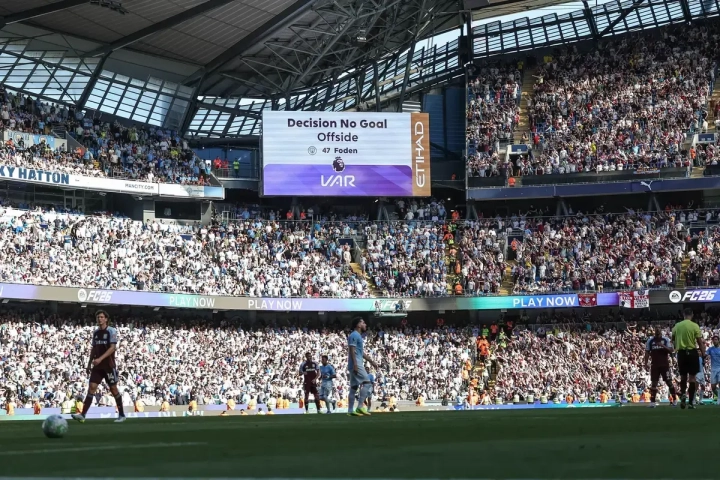
The 199th meeting between the old foes was laced in drama and talking points. Most up for debate was the goal Erling Haaland scored in the second half, when he netted from close range. Whilst VAR’s check showed that Haaland was onside, it failed to note or deem relevant the presence of City’s Enzo Fernandez who was attempting to meet Josko Gvardiol’s cross. The cross subsequently took a nick off United defender Patrick Dorgu’s boot, bypassed Fernández and another United defender, Lisandro Martínez, and was finished by Haaland.
The episode resulted in a lengthy VAR check and incredulity among the home fans when the goal was awarded. Pro Ref, the fancy new name for PGMOL, has since admitted it got that decision wrong. That will have done little to appease many, including Schmeichel.
“We’ve got into a system now where VAR and the referees are the most important people in football,” said the Dane. “It sucks all the energy out of it. As soon as there is a goal, you’re not allowed to celebrate.
“I wish, and I’m longing for these days, we could scrap VAR because it’s such an annoyance and it’s interfering with football. And it hasn’t made it better.”
The aforementioned Manchester derby wasn’t the only Premier League game affected by VAR controversy last weekend.
Arsenal’s game up at Sunderland was mired in drama after the award of a penalty following a seemingly innocuous tangle between Ezri Konsa and Dan Ballard. VAR intervention resulted in the spot-kick being awarded.
Arsenal boss Mikel Arteta said afterwards: “I watched it 20 times and I cannot find a way to understand how they think to give a penalty in that situation, or the way the VAR has to intervene.”
We shouldn’t be surprised though should we? Since its introduction in 2019-20, VAR has gone from being a touchy subject to an outright stain on the game – certainly at the highest level. The increased reliance on it by officials is there for all to see.
According to data in a BBC Sport report, there were 25 VAR errors recorded last season. That was up from 18 the season prior, as per the Premier League’s key match incidents (KMI) panel.
You can add another to that growing list with the Haaland incident. So what happens now? As noted by many, the apologies and promises arrive but do they actually manifest themselves into genuine improvement?
The voices calling for VAR to be culled might be getting louder and more prominent but you can pretty much guarantee it won’t happen. The horse has bolted on this one.
Far too much money has been invested in the technology, far too much time has been spent implementing it into the highest level of football. And, as sad as it is, these incidents create debate, fill column inches and take up air time as the topics are discussed and pored over to the nth degree.
Football’s governing bodies bang the drum that major mistakes are being reduced through technology and that tweaks are constantly being made to try and speed up the process, especially to match-going fans in stadiums.
But try telling that to the managers and fans on the end of constant errors and mistakes.
VAR has put down firm roots and been embedded in our game. It is here to stay – Schmeichel and the rest of us are just going to have to accept that.