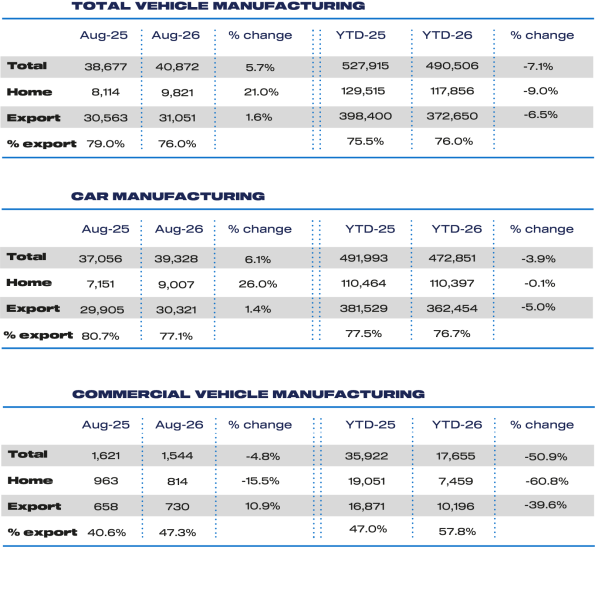

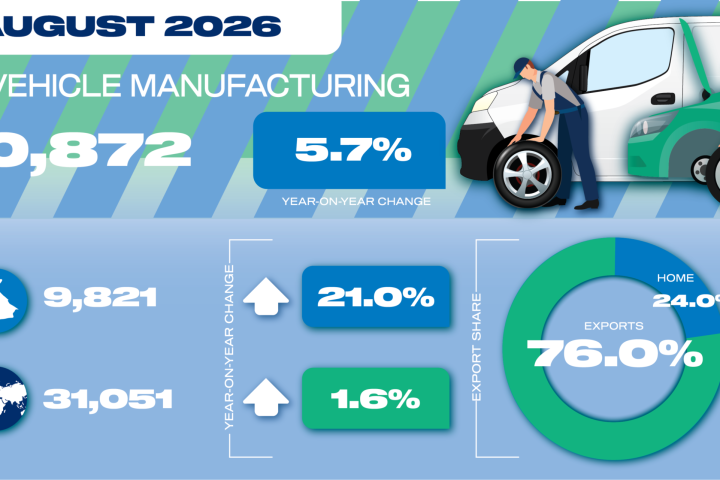
UK vehicle production grew by 5.7% to 40,872 units in August, according to figures published today by the Society of Motor Manufacturers and Traders (SMMT). While this was the second rise recorded in the year to date, August is a low output month and subject to volatility given variable summer shutdown schedules, which this year spanned July and August at some plants.1 Year-to-date output remains down, although losses eased to -7.1% from -8.1% in the first seven months.
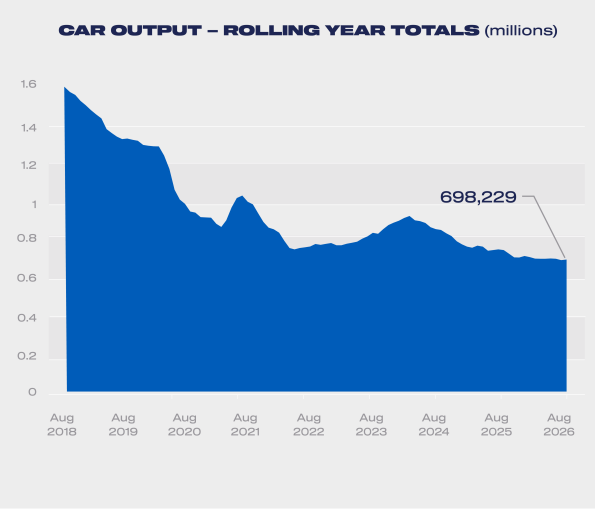
Car production recorded its strongest increase since December 2025, rising by 6.1% to 39,328 units, with growth driven largely by output for the domestic market, which rose by 26.0%. Production for export also grew, up 1.4%, and accounted for more than three quarters (77.1%) of all cars made in the month.
Exports to Australia, Japan and the US posted the strongest growth in the top 10 markets, up 104.7%, 88.4% and 48.6% respectively, with the US delivering the greatest volume gain, up by 1,508 units. Shipments to Türkiye, China and the EU declined, falling -49.6%, -15.0%, and -7.4% respectively, although the EU remained the UK’s largest overseas destination accounting for 54.1% of all exports.
Electrified vehicle output, including battery electric and hybrid models, increased by 2.0% during the month, accounting for more than four in 10 cars produced (43.6%).
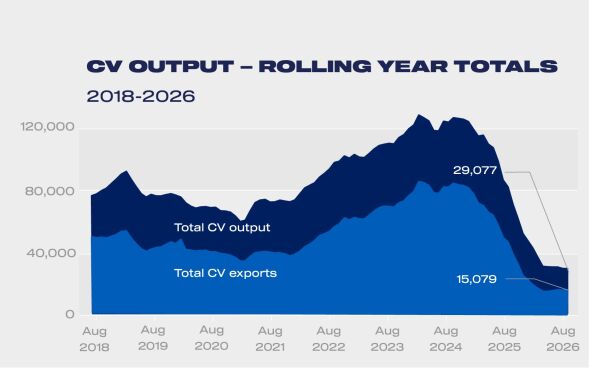
Commercial vehicle production remained under pressure, with van, truck, bus and coach output declining by -4.8% to 1,544 units. Export performance was more positive, rising 10.9%, but this was outweighed by a -15.5% reduction in output for the domestic market. Year-to-date volumes remain -50.9% down, following structural changes to manufacturing capacity.
While August’s figures provide some positivity after a difficult start to the year, a more significant indicator of the sector’s long-term prospects is the flow of investment into UK automotive manufacturing. September’s announcements by both specialist and mass market manufacturers, amounting to more than £1 billion,2 demonstrate international confidence in Britain’s engineering expertise, skilled workforce and advanced manufacturing capabilities, even as countries around the world compete ever-more aggressively to attract industrial investment.
Pressures on the sector persist, however, as EU policymakers progress the Industrial Accelerator Act and its ‘Made in Europe’ proposals, which as drafted would render UK-built vehicles uncompetitive in their largest global market. Such a step would pose an existential threat to UK production while hitting European suppliers through significantly reduced demand for EU-sourced components. With British manufacturing generating €24 billion of economic activity in the EU supply chain and supporting a quarter of a million jobs across the bloc, rules designed to strengthen Europe’s automotive sector risk weakening the very industry they seek to protect.3
The industry is calling for the postponed EU-UK Summit to be rescheduled urgently, to address both the Made in Europe issue and forthcoming changes to the Trade and Cooperation Act (TCA – the ‘Brexit deal’) rules of origin. If not addressed, from 1 January 2027 tougher rules of origin requirements will burden both EU and UK manufacturers with additional tariffs on the majority of battery, electric and plug-in hybrid vehicles, costing at least £1.4 billion,4 on top of the challenges created by the Industrial Accelerator Act. Both sides must now move beyond political reset and focus on practical solutions or otherwise risk undermining the free and fair trade, and mutual competitiveness, the TCA was designed to preserve.
Mike Hawes, SMMT Chief Executive, said, “August’s return to growth and this month’s £1 billion-plus investment commitments show hard-won confidence in UK automotive manufacturing, confidence that must be protected, not put at risk. The UK and EU automotive industries are deeply integrated, so effectively excluding British-produced vehicles from their largest market would assure mutual damage. Both sides must urgently agree practical fixes to protect jobs, preserve shared competitiveness and keep the EU and UK industry moving.”