
The Road Safety Trust, the UK’s largest independent road safety funder, has awarded £115,000 in grant funding for four new projects to support police with reducing deaths and serious injuries on our roads.
The initiatives range from measuring the effectiveness of motorcycle-based speed enforcement on rural roads, to the introduction of a ranking system identifying a county’s ‘most risky’ drivers to better target enforcement and educational interventions.
The projects were selected through a rigorous review process, following the Trust’s summer 2026 Police Grants funding round, which invited applications for police initiatives to improve road safety at a local level.
Ruth Purdie OBE, Chief Executive of The Road Safety Trust, said: “I am proud to support four excellent initiatives that have the potential to make a real difference on our roads. The role of policing – whether through law enforcement, intelligence gathering or proactive operations – is fundamental to improving road safety.
“These new grants reflect the importance of investing in research and intervention that can deliver real-world impact in reducing criminality and improving road safety, ultimately reducing the number of deaths and serious injuries. I look forward to gaining valuable insights as these projects progress.”
This latest funding means The Road Safety Trust has awarded nearly £700,000 to police forces to test and develop innovative roads policing interventions designed to reduce harm on our roads.
This year, the Trust is offering a second window to apply for funding under its Police Road Safety Grants Round. The round has re-opened today (Monday 2 November) for further expressions of interest, with forces invited to put forward project ideas up to the value of £30,000 in funding. Eligible projects could include the evaluation of successful police interventions, further development and dissemination of findings, or trials of new initiatives.
Full details of the four successful projects are:
Staffordshire Police – Operation Diamond – Evaluating the role of police officers as non‑medical professional responders at road traffic collisions – £30,000
Police officers are often the first emergency service at the scene of a road traffic collision. The median time from injury to traumatic cardiac arrest is just 12 minutes: the ‘diamond minutes’ that offer the greatest survival advantage.
The project hopes to determine whether an uplift in training can lead to police officers’ improved psychological capability and preparedness to act during the immediate post-collision period. It seeks to equip officers with practical knowledge, skills and equipment to help improve patient outcomes prior to the arrival of emergency medical services.
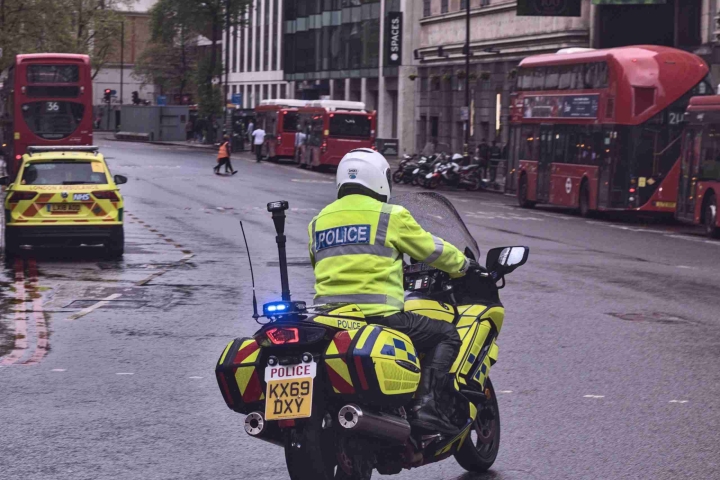
Hampshire & Isle of Wight Constabulary – Reaching the Roads Others Can’t: Evaluating Motorcycle-Based Speed Enforcement – £30,000
HIOW Constabulary has developed a motorcycle-based speed-enforcement approach to complement its existing camera vans. The approach is designed to enable enforcement at suitable rural, semi-rural, constrained and community-prioritised locations that conventional vans cannot readily serve.
This project will independently evaluate where and under what circumstances motorcycle-based enforcement adds value. It will assess its operational reach and effectiveness, examine the speeding behaviours and road users identified, and explore the experiences of officers and stakeholders who deliver, manage and support the approach. The team will also examine community awareness and perceptions of the programme.
Essex Police – Evaluating and Optimising Operation Limit: Maximising the Road Safety Impact of Impairment Enforcement – £30,000
This 12-month project will evaluate and optimise Essex Police’s Operation Limit, examining how drink and drug-driving enforcement can make the greatest possible contribution to preventing deaths and serious injuries.
It will move beyond traditional measures of enforcement success, such as roadside tests, arrests and charges, to consider how enforcement contributes to deterrence, prevention and reduced road harm.
Lincolnshire Police – Identifying those who pose most harm to road users and pedestrians in Lincolnshire. The Driver Harm Risk Assessment Scale – £25,000
Although forces are likely to be aware of some ‘risky drivers’ in their area, this is usually due to individual officers’ knowledge of previous offenders. Drivers known to officers will likely represent only a small fraction of the drivers who pose a significant risk of harm to others.
This project aims to develop a Driver Harm Risk Assessment Scale to assist police in identifying drivers who pose most risk of harm to other road users and pedestrians, helping to inform better targeting for both enforcement and educational initiatives.