
University of Brighton research revealing a hidden source of marine pollution in Sussex coastal waters is being brought to life through an interactive art exhibition, helping shine a spotlight on an environmental threat affecting marine ecosystems.
Scientists from the University of Brighton have found evidence that deteriorating fibreglass boats can release microscopic particles into the marine environment, with traces already identified in oysters and mussels collected from Chichester Harbour.
Now, researchers and artists have joined forces to transform that science into an interactive public exhibition at the Ocean Symposium and Marine Exhibition 2026 in Bexhill-on-Sea, using recovered boat materials, digital technology and creative storytelling to reveal the hidden legacy of abandoned vessels.
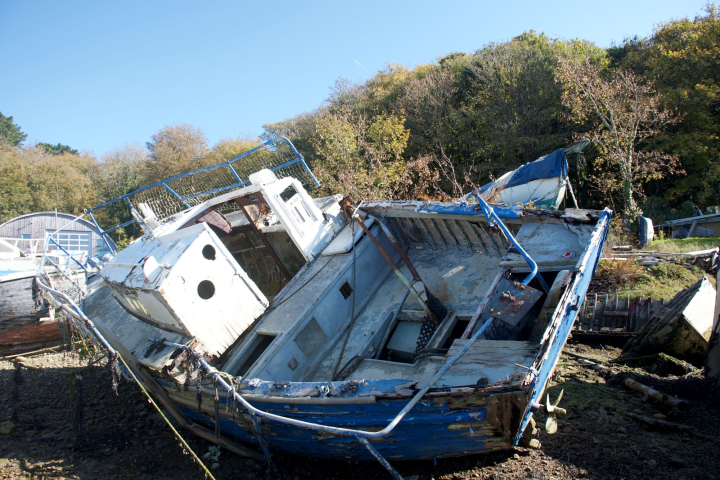
The exhibition explores a growing environmental challenge facing coastal communities. While fibreglass boats were designed to last for decades, abandoned and neglected vessels can slowly break down, releasing tiny fragments of fibreglass, paint and other materials into surrounding waters.
University of Brighton researcher academic Dr Nicholas Gant describes the problem as a “slow motion explosion of pollution”, warning that the scale of the issue may be far greater than first thought.
Research connected to the project suggests thousands of abandoned fibreglass boats across Europe could be contributing to the accumulation and spread of polluting materials throughout marine environments.
The exhibition builds on research by University of Brighton biologist Dr Corina Ciocan, whose 2024 study identified microscopic fibreglass particles in the soft tissues of oysters and mussels from Chichester Harbour, raising concerns about the impact of deteriorating boats on marine life and coastal ecosystems.
That work helped inspire Regenerative Tides: Sailing for Solutions (ReTISS), an international project led by French environmental charity Floating Stories Lab, investigating the environmental impacts of abandoned boats across France, the UK and Portugal.
As part of the project, researchers, artists and citizen scientists have documented abandoned vessels and collected environmental samples from affected coastal locations. Their investigations have identified traces of boat-related materials in surrounding environments, including areas where oysters are cultivated.
To help communicate the findings beyond academic audiences, Brighton academics Dr Nicholas Gant and Tanya Dean – who teach on the 3D Design and Craft BA(Hons) course – joined the project to explore how creative practice could help people better understand the issue.
The result is the Table of Curiosity, an interactive installation inspired by research carried out around abandoned boat sites in Brittany. Built from reclaimed wood, the installation incorporates fibreglass shards, paint flakes and corroded boat components collected from abandoned vessel locations along the Goyen River. Encased in resin, the fragments reveal the physical materials left behind as boats slowly deteriorate in the environment.
Visitors can also explore interactive digital imagery through tablet-based displays, allowing them to navigate detailed 3D models of abandoned boats and the marine habitats around them. A collection of artwork and postcards imagines conversations between decaying vessels and the mussels growing on their hulls, inviting audiences to see the issue through a different lens.
Dr Corina Ciocan, Principal Lecturer at the University of Brighton and Co-Director of its Centre for Environment and Society, said: “Fibreglass boats are built to last, but when they are abandoned, they can become a source of pollution that is difficult to manage. As they deteriorate, they release tiny particles into the environment, which can be taken up by marine life. This project is helping us explore the scale of the problem and find new ways to communicate why it matters. Bringing the research together with art is a powerful way to help people understand an environmental issue that is often hidden from view.”
Dr Nicholas Gant, Principal Lecture at the University of Brighton, said: “The problem is like a slow-motion explosion of pollution, with materials from abandoned boats gradually accumulating and spreading throughout the environment. What initially appeared to be a problem involving around 30 boats has turned out to be much larger, with thousands of vessels involved, raising serious concerns about the long-term impact on our marine environment.
“Art can help people connect with scientific research in a very different way. The installation is a great example of how collaboration between different partners can help bring important environmental challenges to a wider audience and encourage people to think differently about the pollution these boats leave behind.”
The exhibition will feature at the Ocean Symposium and Marine Exhibition 2026 on Saturday 14 November at St Peter’s Community Centre in Bexhill-on-Sea. It is co-hosted by the United Nations Association Climate & Oceans, Sussex Dolphin Project, Sussex Underwater and community supporters, in partnership with Sussex Marine and Coastal Forum.
The event will bring together marine scientists, conservation organisations, policymakers, artists and coastal communities to explore solutions to the challenges facing our oceans through talks, films, exhibitions and public discussions.
The project reflects the University of Brighton’s commitment to combining research, creativity and collaboration to address real-world environmental challenges and support a healthier, more sustainable future.