
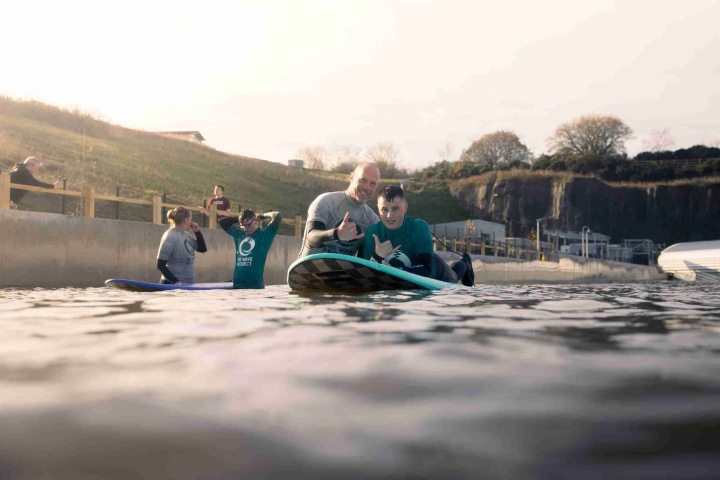
A world-first evaluation by mental health charity The Wave Project has found that young people taking part in its Surf Therapy programmes at inland wave pools experienced significant improvements across every outcome measured – with improvements comparable to beach-based programmes on four out of five measures.
The findings could open up new opportunities to bring blue-space-based mental health support to young people living further from the coast, at a time when more than 1.27 million referrals were made to children’s mental health services in 2024/25.
Against the backdrop of a “perfect storm” of challenges facing children and young people, with increasing pressure on public services, new research from the UK’s leading Surf Therapy charity has found significant positive outcomes for young people taking part in their programmes on the coast and at inland wave pools.
The world-first evaluation analyses data from 22 coastal beach sites across the UK and two inland wave pools, involving 360 young people during the 2025 delivery season. The inland programmes were delivered at The Wave in Bristol and Lost Shore Surf Resort in Edinburgh, where The Wave Project is the chosen youth Surf Therapy partner.
The findings are encouraging: every measured outcome – including wellbeing, self-belief, perseverance, pride in achievements and connection to others – improved significantly from the start to the end of the 6-week programme in both settings. For four of the five outcomes there was no significant difference in the amount of improvement between the two settings, providing opportunities to explore how environments and session structures can shape young people’s experiences.
Ramon Van de Velde, CEO at The Wave Project comments: “This is a world-first piece of research for Surf Therapy and we’re incredibly proud that The Wave Project has been able to lead on it.
“We’re delighted to be working alongside partners such as The Wave in Bristol since 2020 and Lost Shore in Edinburgh since 2024, who have made it possible for us to take our Surf Therapy programmes into new environments and reach young people further from the coast.
“What the research shows is that, while coastal and inland settings aren’t identical, young people experienced significant positive outcomes in both. At a time when children’s mental health services are under enormous pressure, we need to think creatively about where preventative support can be delivered. Blue spaces, including inland surf facilities, have the potential to play a huge role in wellbeing. Our vision is that every child and young person who could benefit from The Wave Project’s support can access it. This research gives us an important foundation for exploring how we can make that vision a reality, reaching more young people in more places.”
Julian Topham, CEO of The Wave, said: “We’re incredibly proud to have been the first inland surfing destination to partner with The Wave Project, when we started working together in 2020. What began as a trial has grown into an incredible long-term partnership, which has made a huge difference to young people who can’t access Surf Therapy at the coast.
“Over the years we’ve seen first-hand what can happen during these 6-week courses – young people growing in confidence, feeling proud of what they’ve achieved, connecting with others and, importantly, having fun. So it’s really exciting to see research supporting what we’ve been seeing week in, week out at The Wave.
“We’ve always believed in the positive impact that being in and around water can have on our wellbeing, which is why supporting research in this area matters so much to us. These findings are an important step in understanding how inland blue spaces can help make experiences like Surf Therapy accessible to more young people, wherever they live.”
Andy Hadden, Founder of Lost Shore Surf Resort said: “My involvement with The Wave Project goes back many years, to volunteering with them at Dunbar and seeing first-hand the extraordinary impact Surf Therapy can have on young people. That experience was part of the inspiration for Lost Shore and our belief that the benefits of surfing shouldn’t be determined by how close you happen to live to the coast.
“This research is hugely encouraging because it shows significant positive outcomes for young people taking part in Surf Therapy in inland wave pools as well as at the coast. We see that impact at Lost Shore: in the confidence young people build, the connections they make and the sense of achievement that comes from doing something they may never have thought possible.
“What’s really exciting is what this could mean for the future. Inland surf facilities can help bring Surf Therapy within reach of young people and communities who have traditionally been excluded by geography. We’re incredibly proud of our partnership with The Wave Project and of playing a part in building the evidence for how surfing can support young people’s wellbeing wherever they live.”
Parent of a young surfer at a wave-pool Project Hub comments: “The Wave Project reminded him of what he is capable of, that you can thrive even when you’re worried – surfing and being in water is a huge part of his identity, it is his happy place. He would like to train to become a Surf Mentor himself in the future and help other children who need some support to find their happy place too.”
The Wave Project is calling for children’s mental health to remain a national priority, with greater investment in prevention and early intervention so that more young people can access support before they reach crisis point.
The charity believes there is a significant opportunity to build on programmes that are already delivering positive outcomes and expand access to community-based support. With the right investment, charities like The Wave Project can reach more children and young people with preventative support, helping them not simply to cope, but to thrive.