
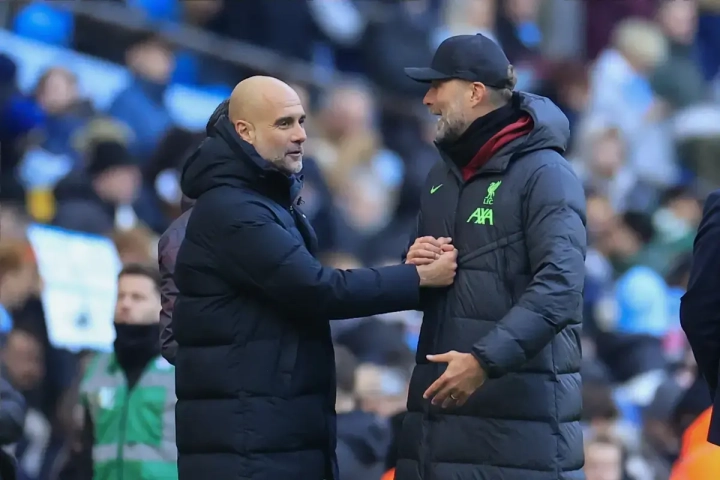
The dust has barely settled on the 2026 FIFA World Cup in North America, yet the tremors of its fallout continue to reshape the elite echelons of international football. In a week of unprecedented managerial drama across Europe, the fortunes of two traditional powerhouses have taken wildly divergent paths. The German Football Association (DFB) has successfully executed one of the most anticipated appointments in recent memory, officially unveiling Jürgen Klopp as the new head coach of the men’s national team on a contract running until 2030. Conversely, the Italian Football Federation (FIGC) has been handed a bitter rejection, with their highly ambitious, high-profile pursuit of former Manchester City manager Pep Guardiola ending in failure.
The contrasting outcomes highlight the immense pressure on European federations to rebuild and re-strategise following a summer that exposed profound structural flaws in both nations’ sporting setups.
Klopp’s Triumphant Return to the Dugout
For years, the prospect of Jürgen Klopp leading the German national team felt like an inevitability waiting for the right alignment of circumstances. On Friday morning at the DFB headquarters in Frankfurt, that alignment was formalised. The 59-year-old was officially presented as the 13th head coach in the history of the German national side, taking the reins from Julian Nagelsmann. Nagelsmann stepped down in the wake of Germany’s catastrophic round-of-32 exit at the hands of Paraguay in the 2026 World Cup, a result that plunged the four-time world champions into a state of deep sporting introspection.
Klopp arrives at the DFB having spent the last 18 months working as the Head of Global Soccer for the Red Bull group, a role he assumed in early 2025 following his emotionally draining, nine-and-a-half-year tenure at Liverpool. When he departed Anfield in 2024, citing immense fatigue and a desperate need to recharge after securing the Premier League and Champions League titles, few anticipated he would return to the intense glare of the dugout quite so soon. However, the allure of managing his country proved too powerful to ignore.
The negotiation process to extract Klopp from his lucrative corporate position was remarkably smooth. Reports confirm that the DFB did not have to pay a traditional transfer fee or compensation package to Red Bull, largely due to a specific get-out clause tailored for the national team job. Instead, an agreement was reached wherein a €1 million donation will be made to Red Bull’s Wings for Life charity foundation, which supports research into spinal cord injuries.
“The national team brings us Germans together like almost nothing else can,” Klopp told the gathered international media during his unveiling. “That’s what makes this task so special for me.”
The Monumental Task Awaiting Germany
While the sheer magnetism of Klopp’s personality has immediately lifted the collective gloom surrounding German football, the scale of the rebuilding project cannot be overstated. Since lifting the trophy at the Maracanã in 2014, Germany’s record on the global stage has been nothing short of dismal. They have remarkably failed to win a single knockout match at a World Cup in twelve years, suffering consecutive group-stage exits in 2018 and 2022 before this summer’s humiliating defeat to Paraguay.
Klopp’s four-year contract explicitly encompasses the 2026/27 and 2028/29 UEFA Nations League campaigns, the UEFA Euro 2028 tournament hosted in the UK and Ireland, and ultimately, the 2030 FIFA World Cup in Morocco, Portugal, and Spain. To achieve success across these milestones, the new head coach is reportedly keen to surround himself with trusted lieutenants. Media outlets in Germany suggest he is actively looking to reunite with Pep Lijnders and Peter Krawietz, the coaching architects who were instrumental to his glittering success at Liverpool.
The new era will officially commence on 24 September 2026, when Klopp leads Germany into a fiercely contested UEFA Nations League Group A2 fixture away against bitter rivals the Netherlands. With matches against Greece and Serbia also looming on the horizon, the legendary tactician has precious little time to implement his trademark high-intensity pressing system and completely revitalise a fractured, confidence-sapped dressing room.
Italy’s Audacious Guardiola Bid Falls Flat
While champagne corks popped in Frankfurt, an atmosphere of stark disappointment enveloped Rome. The Italian Football Federation, spearheaded by Paolo Maldini, had launched an audacious, aggressive charm offensive to recruit Pep Guardiola as the new head coach of the Azzurri. However, the 55-year-old Spaniard has definitively informed the FIGC that he will not be taking the role.
Italy finds itself navigating a historic sporting crisis. The four-time world champions suffered the absolute humiliation of missing the 2026 World Cup, marking an unprecedented third consecutive absence from the sport’s premier global showcase after failing to qualify in 2018 and 2022. The failure to qualify triggered the immediate departure of head coach Gennaro Gattuso, leaving the federation utterly desperate to secure a transformational figure capable of overhauling the national sporting infrastructure.
Guardiola, who stepped down from his role at Manchester City at the end of the 2025/26 season following a decade of total domestic dominance that yielded six Premier League titles and a Champions League crown, was unequivocally Italy’s primary target. Maldini and the Italian hierarchy hoped that the opportunity to lead a comprehensive, romantic rebuild of one of football’s most storied nations, coupled with his personal affinity for the country having previously played for Brescia and Roma, would be sufficient to lure him out of his planned sabbatical.
The Factors Behind the Rejection
Despite the prestige of the Italian national team and the persistent efforts of the FIGC delegation, Guardiola’s decision to decline the approach was ultimately rooted in a firm desire to distance himself from the sport’s relentless demands. Having spent the last decade operating in the intense pressure cooker of the Premier League, the Catalan coach informed the Italian federation that he wished to turn down the role for “personal reasons” outside of football.
Furthermore, reports emanating from the press indicate that financial disparities played a secondary but notable role in the breakdown of the talks. Guardiola’s salary expectations, shaped by his status as arguably the preeminent coach of his generation, were reportedly significantly higher than the financial package the FIGC is currently capable of offering. With no immediate desire to return to the dugout, Guardiola appears steadfast in his intention to enjoy an extended period of rest before carefully considering his next career move.
Managerial Crosswords: The Current Landscape
| Manager | Previous Role | Current Status | Primary Motivation / Task |
| Jürgen Klopp | Red Bull (Head of Global Soccer) | Germany Head Coach (until 2030) | Rebuilding the German national team for Euro 2028 and the 2030 World Cup. |
| Pep Guardiola | Manchester City (Manager) | On Sabbatical | Extending his coaching break and stepping away from football for personal reasons. |
Moving Forward into Uncertainty
The rejection leaves Italy in a highly precarious position as they prepare to find Gattuso’s successor. Maldini and the federation must rapidly pivot to their alternatives, conducting a thorough search for a manager who possesses both the tactical acumen and the psychological fortitude required to heal a deeply traumatised footballing nation. The Azzurri cannot afford another prolonged period of stagnation, and the appointment of a new head coach has now become an urgent, critical priority.
Ultimately, this week’s developments serve as a fascinating reflection of the contemporary international management market. The German Football Association has decisively secured a generational talent, bringing Jürgen Klopp back into the fold to mastermind their resurrection. In contrast, Italy’s failed pursuit of Pep Guardiola underscores the immense difficulty of attracting elite, club-level tacticians to the international game when they are determined to preserve their energy reserves. As the road to the UEFA Euro 2028 qualifying campaign begins to take shape, the ripple effects of these boardroom decisions will undoubtedly dictate the balance of power in European football for years to come.