

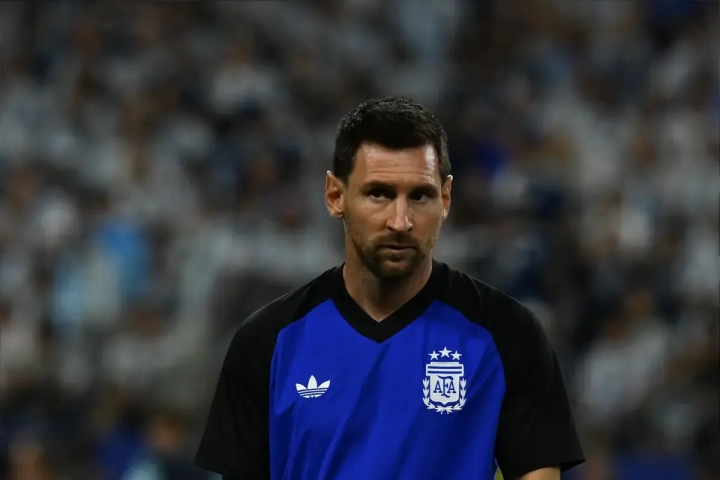
The margin for error has evaporated at the 2026 FIFA World Cup. As the sprawling group stage concludes and the unforgiving reality of single-elimination football takes centre stage, the Round of 32 has delivered a fixture that perfectly encapsulates the magic of the tournament. On Friday, 3 July 2026, scheduled for a 23:00 BST kick-off beneath the vibrant floodlights of the Miami Stadium in Florida, reigning champions Argentina will lock horns with the competition’s ultimate surprise package, Cape Verde. The encounter presents a straightforward, brutal equation: victory secures a coveted place in the last sixteen and a clash against either Australia or Egypt, while defeat guarantees an immediate journey home.
The contrast between the two nations could not be more pronounced. La Albiceleste arrive as the undisputed heavyweights of global football, seeking to defend the crown they captured so spectacularly four years ago. Their opponents, meanwhile, are competing in their maiden World Cup. With a population of fewer than 600,000, the African archipelago has already achieved sporting immortality simply by reaching this stage, becoming the smallest nation in history to navigate the group phase. Unburdened by external expectations, the Blue Sharks represent a fascinating hurdle for the tournament favourites.
Argentina’s Flawless Momentum
For Lionel Scaloni’s outfit, the journey to the knockout bracket has been an exercise in relentless efficiency. Placed in Group J, the South American giants systematically dismantled their opposition, collecting maximum points to secure top spot. Their campaign opened with a comprehensive 3-0 victory over Algeria, which was swiftly followed by a highly professional 2-0 dispatching of Austria. They concluded the preliminary phase with a comfortable 3-1 triumph against Jordan, allowing the manager to manage minutes and rotate his squad where necessary.
Statistics paint a terrifying picture for any prospective opponent. Argentina have averaged 2.67 goals per game throughout the tournament, dominating possession with an average of 62% while boasting a passing accuracy exceeding 90%. Furthermore, they enter this clash riding a formidable ten-match winning streak across all international fixtures. Their defensive structure remains equally impressive, having conceded just once during the group stage and keeping eight clean sheets in their last ten outings. It is a squad operating at the absolute peak of its powers, perfectly balancing defensive discipline with devastating attacking quality.
The Resilience of the Blue Sharks
While Argentina cruised through their group, Cape Verde’s progression was a testament to extraordinary defensive organisation and sheer grit. Placed in a fiercely competitive sector, they stunned the footballing establishment by advancing undefeated. Their campaign was defined by three consecutive draws, including remarkable goalless stalemates against European champions Spain and a stubborn Saudi Arabia side. Crucially, their resolute performances orchestrated the premature elimination of traditional powerhouse Uruguay, proving that their presence in the Round of 32 is entirely merited.
Manager Bubista has meticulously crafted a squad that thrives on frustrating superior opposition. The Blue Sharks are the first World Cup debutants to navigate the group stage undefeated since Senegal achieved the feat in 2002. Currently enjoying a five-match unbeaten run across all competitions, they have recorded four clean sheets in that span. While they average just 41% possession and generate significantly fewer shooting opportunities than their illustrious opponents, their ability to absorb immense pressure without fracturing has become their defining characteristic.
The Tactical Battleground
The tactical dynamics for this encounter are glaringly apparent. Argentina will inevitably dominate the ball, patiently probing to identify fractures within the opposition’s defensive architecture. The central midfield partnership of Alexis Mac Allister and Enzo Fernandez provides a reliable foundation, offering defensive security while possessing the technical precision to dictate the tempo. Rodrigo De Paul will operate as the tireless engine, circulating possession to tire the opposition, while the dynamic Thiago Almada provides width and creativity.
Crucial to the South American strategy will be the intelligent movement of their attacking personnel. By dropping into the half-spaces, the forwards will attempt to drag defenders out of their rigid structure, creating passing lanes for overlapping full-backs Nahuel Molina and Facundo Medina. Upon losing possession, Scaloni’s men will initiate an immediate, high-intensity press to suffocate any potential counter-attacks at the source.
Conversely, Cape Verde will deploy the same defensive masterclass that so effectively neutralised Spain. Bubista is expected to establish a deep, compact 4-5-1 formation, drastically limiting the space between the midfield and defensive lines. Their primary objective will be to funnel the Argentine attacks into the wide areas, backing their central defenders to clear incoming crosses. When the opportunity arises, the African side will look to exploit the vast spaces left behind Argentina’s high defensive line with direct, vertical passes aimed at the explosive pace of Ryan Mendes and Hélio Varela.
Key Personnel and Influential Figures
The narrative surrounding the Argentine camp is undeniably dominated by their talismanic captain, Lionel Messi. The legendary forward arrived in North America with the golden touch intact, netting a remarkable six goals during the group stage. In doing so, he shattered the all-time World Cup scoring record, taking his overall tally to 19 goals. His ability to unlock deep, congested defences with a single, visionary pass or a moment of individual brilliance makes him the ultimate threat against a low block. He is brilliantly supported by the predatory instincts of Lautaro Martinez, who provides a constant focal point inside the penalty area.
For the Blue Sharks, the undisputed hero of their historic run stands between the posts. Forty-year-old goalkeeper Vozinha has been an absolute revelation, commanding his penalty area with veteran authority. Boasting an 83% save percentage and two vital clean sheets, his reflexes and leadership will be tested to the absolute limit in Miami. Ahead of him, holding midfielder Kevin Pina will be tasked with the unenviable job of disrupting the world champions’ passing lanes and denying the Argentine playmakers the time and space required to operate effectively.
Team News and Squad Availability
As the intense North American summer schedule takes its toll, physical conditioning and medical management become paramount. Fortunately for Scaloni, the Argentine medical department has delivered positive news ahead of this crucial fixture. Commanding centre-back Cristian Romero, who had been dealing with a minor knee injury, has returned to full training. The Tottenham Hotspur defender is entirely expected to reclaim his starting position at the heart of the defence, allowing the manager to deploy a full-strength starting eleven. With no suspensions to navigate, the reigning champions possess a fully stocked arsenal.
Similarly, Cape Verde arrive in Florida boasting a remarkably clean bill of health. Bubista has reported no fresh injury concerns stemming from their final group stage exertion, nor do they have any players suspended for the accumulation of yellow cards. This comprehensive availability allows the manager to select his preferred, trusted personnel and execute his defensive blueprint without being forced into unwanted compromises.
A Historic First Meeting
Friday’s clash in Miami represents a significant milestone, marking the first-ever meeting between Argentina and Cape Verde at the senior international level. Consequently, there is no historical precedent or head-to-head record to analyse. For the African archipelago, simply sharing the pitch with the defending world champions in a competitive knockout match is an astonishing achievement that highlights the democratising power of the expanded tournament format.
As the 23:00 BST kick-off rapidly approaches, the atmosphere surrounding the Miami Stadium is building towards a magnificent crescendo. The scorching Florida climate will undoubtedly test the endurance, hydration, and energy reserves of every player involved. Every tackle will carry immense weight, every defensive lapse will be heavily magnified, and every goal will be celebrated with unbridled passion.
The pressure rests entirely upon Argentine shoulders. A nation expects nothing less than a comfortable victory and a seamless progression towards the latter stages of the tournament. Cape Verde, however, have absolutely nothing to lose. They step onto the pitch armed with the liberating freedom of a squad that has already surpassed all expectations. One team intends to march onwards in pursuit of a third consecutive major international title, while the other is daring to orchestrate what would arguably be the greatest upset in the long, storied history of the FIFA World Cup. The global footballing audience awaits the outcome with bated breath.