
The unforgiving landscape of knockout football continues to dominate the 2026 FIFA World Cup, offering no quarter to the unprepared. As the tournament reaches the business end of the Round of 16, a genuinely fascinating intercontinental fixture awaits. Scheduled for a 21:00 BST kick-off on Sunday, 5 July 2026, tournament favourites Brazil will face a resurgent Norway at the sprawling New York New Jersey Stadium in East Rutherford.
Arriving in North America carrying the immense weight of a football-obsessed nation, the South American giants are desperate to end a 24-year World Cup drought. To achieve this monumental task, the Brazilian Football Confederation made the unprecedented decision to appoint Carlo Ancelotti, making the legendary Italian the first foreign manager to guide the Seleção at a global finals.
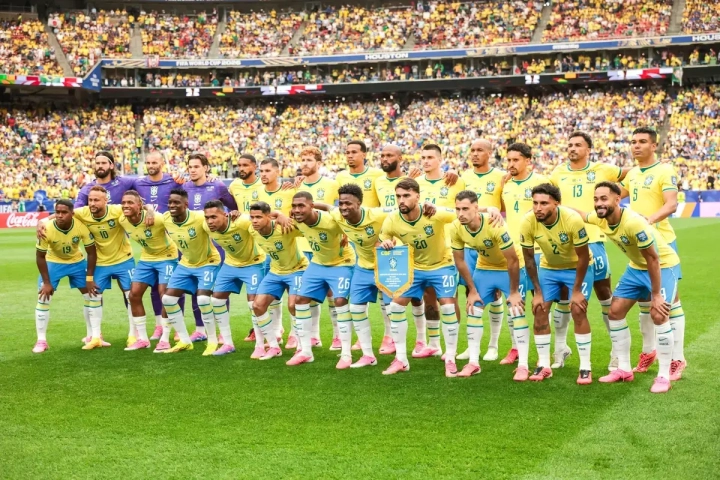
Their journey to this stage has been a compelling mix of serene dominance and heart-stopping drama. Navigating Group C with relative ease, they secured a 1-1 draw against Morocco before ruthlessly dismantling both Haiti and Scotland with identical 3-0 scorelines. However, their Round of 32 clash against Japan provided a severe physical and mental examination. Trailing early in Houston, a strike from veteran midfielder Casemiro restored parity before Arsenal forward Gabriel Martinelli dramatically snatched a 2-1 victory in the 96th minute. That late, breathless winner proved that Ancelotti’s men possess the vital psychological resilience required for deep tournament runs.
On the entirely opposite end of the expectation spectrum, the Scandinavian outfit are currently riding the crest of a historic wave. Having painfully failed to even qualify for the World Cup since France 1998, Ståle Solbakken’s squad have firmly established their heavily touted “golden generation” on the grandest stage.
Their progression through the grueling North American tournament has been wildly entertaining. Positioned in Group I, they bounced back from a humbling 4-1 defeat to France by securing thrilling victories over Senegal (3-2) and Iraq (4-1). Moving into the Round of 32, they faced a formidable Ivory Coast side in Dallas. Displaying remarkable tactical maturity in the Texas heat, goals from rising star Antonio Nusa and talismanic striker Erling Haaland secured a hard-fought 2-1 triumph. Solbakken has cultivated a fearless mentality within his camp, proving they are highly capable of absorbing immense pressure and striking back with lethal precision.
The tactical battlelines in East Rutherford present a classic clash of footballing ideologies. Operating under Ancelotti’s fluid framework, the five-time world champions will undoubtedly look to dictate possession, maintain a high defensive line, and stretch the pitch laterally. The attacking trident, spearheaded by the electrifying Vinícius Júnior, will be heavily tasked with pulling the opposition’s defensive block out of shape. Behind the forward line, the midfield engine room must perfectly balance creative distribution with the essential defensive cover needed to prevent rapid transitions.
Conversely, the European side will relish the opportunity to operate entirely without the ball. Solbakken deploys a highly structured, remarkably compact defensive shape designed to frustrate playmakers and heavily clog the central channels. The defensive unit, marshalled by Kristoffer Ajer and David Møller Wolfe, will sit deep, soaking up sustained waves of pressure. Midfield destroyers like Sander Berge and Patrick Berg will work tirelessly to disrupt the passing rhythms of their South American counterparts, specifically aiming to cut off the creative supply lines at their source.
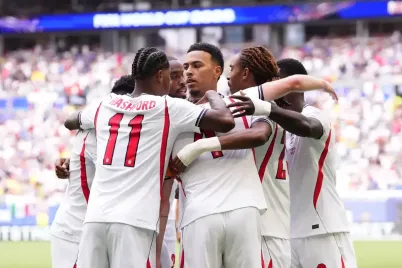
When possession is inevitably turned over, the true danger of this Norwegian side becomes glaringly apparent. The creative brilliance of Arsenal captain Martin Ødegaard serves as the vital link between defence and attack. His unparalleled ability to release runners with a single, perfectly weighted pass is a weapon that can devastate any defensive line in world football.
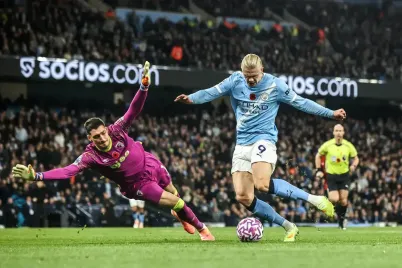
This brings into focus the defining individual duel of the match: the colossal battle between Haaland and the Brazilian central defensive pairing of Marquinhos and Gabriel Magalhães. The sheer physical presence, explosive pace, and predatory instincts of the Manchester City striker mean that even half-chances can be ruthlessly converted. The Brazilian defenders cannot afford a single momentary lapse in concentration, while goalkeeper Alisson Becker will be required to operate as an aggressive sweeper-keeper to rapidly clear any balls played over the top of a high defensive line.
At this gruelling juncture of a major summer tournament, physical conditioning and medical management become paramount. Both medical departments have worked relentlessly behind the scenes to ensure their respective squads are adequately prepared for the unique intensity of knockout football following their demanding previous fixtures.
Fortunately for the neutral spectator, neither camp has reported any verified, major injury concerns stemming from their Round of 32 encounters. Furthermore, both nations appear to have successfully navigated the perilous disciplinary tightrope. Despite yellow cards being distributed to key figures such as Casemiro and Danilo for the South Americans, and Nusa for the Europeans, no player has accumulated the required bookings to trigger an automatic suspension for this specific fixture. Consequently, both Ancelotti and Solbakken enjoy the rare luxury of selecting from fully stocked rosters, guaranteeing the tactical battle can be executed precisely as envisioned on the training ground.
While recent tournament pedigree heavily favours the South Americans, the historical context surrounding this fixture reveals a truly astonishing statistical anomaly. Norway are famously one of the only nations in global football to boast an undefeated record against Brazil at the senior international level. Across their four previous meetings, the Scandinavians have recorded two victories and two draws.
Most notably, the two nations collided in the group stage of the 1998 World Cup in France. On that occasion, late goals from Tore André Flo and Kjetil Rekdal secured a legendary 2-1 victory for Norway, a monumental result that remains deeply etched into their national sporting folklore. While nearly three decades have passed and the current squads bear absolutely no resemblance to those of 1998, that historical quirk adds a fascinating, undeniable psychological layer to Sunday’s encounter.
As the 21:00 BST kick-off rapidly approaches, the atmosphere surrounding the New York New Jersey Stadium is building to a magnificent crescendo. The stifling summer heat and high humidity of the American East Coast will undoubtedly test the endurance, hydration, and energy reserves of every player on the pitch. Pacing the game, managing physical exertion, and effectively utilising the allotted substitutes will be just as critical as the tactical setups deployed from the very first whistle.
Every tackle will carry immense weight, every defensive lapse will be heavily magnified, and every fleeting moment of individual brilliance could permanently define a generation. For the iconic five-time champions, it is a glorious opportunity to reassert their dominance and take another definitive step towards ultimate glory under their esteemed Italian manager. For their European challengers, it is a golden chance to orchestrate the ultimate upset and prove that this highly anticipated golden generation can deliver when the spotlight is blindingly bright. One supremely talented nation will march onwards into the quarter-finals, while the other will face the crushing despair of an early departure. The global footballing audience awaits the outcome with bated breath.