
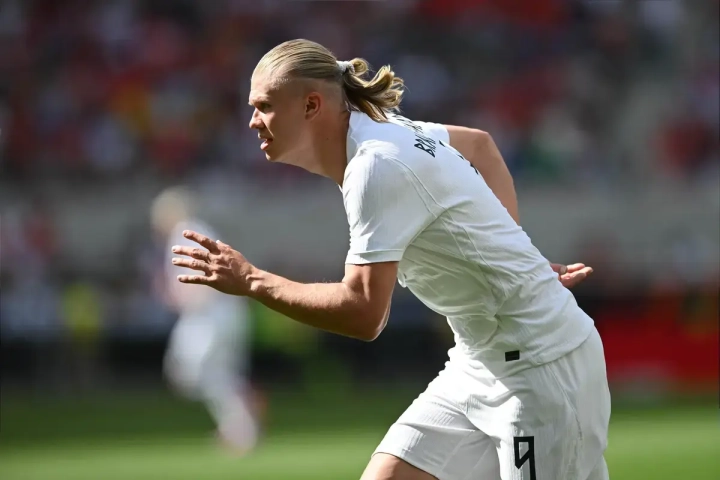
A historic moment awaits in Massachusetts this Tuesday evening as Iraq and Norway lock horns in their opening Group I fixture of the 2026 FIFA World Cup. Scheduled to kick off at exactly 23:00 BST on 16 June 2026, the highly anticipated encounter will take place at the impressive, 65,000-capacity Boston Stadium. With group rivals France and Senegal already navigating their opening clash a day earlier, the pressure is immense for both competing nations to secure a positive result and avoid immediately falling behind in the race for knockout qualification. For the Middle Eastern side, the match represents the emotional culmination of a four-decade wait to return to the global stage, while their European counterparts are equally desperate to make a lasting mark following a frustrating 28-year tournament absence.
Arnold’s Iraqi Resurgence
Navigating a highly tumultuous qualification campaign, the Lions of Mesopotamia arrive in North America possessing a profound sense of momentum and undeniable resilience. The Iraqi Football Association made the bold, highly publicised decision to dismiss former boss Jesús Casas in March 2025 following a damaging defeat to Palestine. Entrusting the long-term project to seasoned Australian manager Graham Arnold just two months later, the squad underwent a dramatic tactical and psychological revitalisation. Arnold successfully guided the team through the treacherous AFC qualifiers and the subsequent inter-confederation playoffs, ultimately securing their historic ticket with a tense, hard-fought 2-1 victory over Bolivia this past March.
Entering the tournament, recent form displays a mixed but fiercely competitive picture. Preparations for the grandest stage included a disciplined 1-0 victory over Andorra in May, followed immediately by an incredibly impressive 1-1 draw against European heavyweights Spain on 4 June. That spectacular result against the Spanish demonstrated genuine defensive organisation and emotional commitment. However, their final warm-up fixture ended in a frustrating 2-0 defeat to Venezuela. That particular match exposed lingering offensive limitations when forced to chase a game, and notably resulted in a red card for striker Ali Yousif, a disciplinary issue that significantly complicated Arnold’s final attacking preparations heading into the tournament proper.
Tactically, Arnold has instilled a highly regimented, pragmatic approach designed specifically to frustrate superior opposition. The team is fully expected to sacrifice the lion’s share of possession, deploying a compact 4-4-2 or 4-2-3-1 defensive block that relies heavily on narrow central spacing and aggressive tackling. In the middle of the park, Amir Al-Ammari serves as the indispensable anchor. The deep-lying midfielder is tasked with breaking up opposition attacks, disrupting the rhythm of the game, and launching rapid vertical transitions when the ball is recovered.
When possession is eventually secured, the primary objective is to bypass the opposition press quickly and find focal point Aymen Hussein. The imposing forward is the nation’s premier goalscoring threat, bringing exceptional aerial dominance and physical strength to the final third. Surviving the inevitable early onslaught will be absolutely critical; if Al-Ammari and his defensive colleagues can successfully maintain their rigid structure throughout the opening half-hour, opportunities to strike on the counter-attack will naturally present themselves as the opposition commits more bodies forward.
Solbakken’s Golden Generation
Stepping onto the World Cup stage for the first time since France ’98, the Nordic challengers bring a squad brimming with world-class individual talent and incredibly lofty expectations. Managed by Ståle Solbakken, the team navigated their UEFA qualification campaign with staggering efficiency. They cruised through their group, securing a perfect eight wins from eight matches while scoring an astonishing 37 goals and conceding just five. This commanding journey to North America has firmly solidified their status as genuine dark horses capable of deeply unsettling the established global hierarchy.
Recent performances suggest a squad playing with supreme confidence, despite a minor hiccup in their demanding preparation schedule. Across their last five international outings, Solbakken’s side have registered two comprehensive victories, two draws, and a solitary, narrow 2-1 defeat to the Netherlands. This brief setback aside, the players have consistently demonstrated a remarkable ability to completely dominate territory without sacrificing their underlying defensive solidity.
The undisputed talisman of this golden generation is Manchester City striker Erling Haaland, who is finally making his highly anticipated World Cup debut. Having conquered European club football, the prolific forward is desperate to translate his devastating domestic form to the international arena. Providing the creative ammunition for the towering striker is captain Martin Ødegaard. The Arsenal playmaker operates as the undisputed creative heartbeat of the side, frequently dropping into the right half-spaces to orchestrate passing networks, dictate the tempo, and unlock stubborn defensive lines with his visionary passing range.
Under Solbakken’s stewardship, the overarching tactical blueprint focuses on aggressive possession and pinning opponents deep within their own defensive third. Full-backs Julian Ryerson and David Møller Wolfe are heavily encouraged to push relentlessly forward, creating wide numerical overloads that allow the wingers to drift inside and link up with the midfield. These overlapping runs are strategically designed to supply a steady stream of accurate crosses toward Haaland and his powerful strike partner, Alexander Sørloth. To prevent devastating counter-attacks when the ball is inevitably turned over, Sander Berge operates as the crucial midfield anchor, executing a fierce counter-press to instantly reclaim possession before the opposition can effectively transition out of their own half.
Group I Implications and Historical Context
This intriguing fixture marks the first-ever senior international meeting between the two nations, adding a wonderfully unpredictable element to the encounter. Neither squad possesses extensive modern World Cup experience to draw upon. Iraq’s sole previous appearance in 1986 yielded zero points and a single goal across three group matches, which notably included a 2-1 defeat to Belgium, their only previous World Cup encounter against European opposition. Norway, meanwhile, have entirely avoided facing an Asian Football Confederation (AFC) member nation at the finals throughout their entire footballing history.
Anticipated Key Battle Areas
|
Area of the Pitch |
Iraqi Personnel |
Norwegian Personnel |
Tactical Significance |
|
Central Midfield |
Amir Al-Ammari |
Martin Ødegaard |
The battle for creative control. Al-Ammari must constantly disrupt passing lanes to starve the opposition forwards of elite service. |
|
The Penalty Area |
Iraqi Central Defenders |
Erling Haaland & Alexander Sørloth |
A monumental physical test. The backline must maintain flawless communication to track Haaland’s movement and combat aerial threats. |
|
Wide Channels |
Iraqi Full-backs |
Ryerson & Møller Wolfe |
Overlapping full-backs will attempt to create numerical overloads. The wide areas must be defended resolutely to prevent dangerous crosses. |
The stakes in Massachusetts simply could not be higher. In a fiercely competitive Group I, dropping points in the opening fixture places immense, immediate pressure on the subsequent, highly demanding matches against France and Senegal. For the European contenders, a comprehensive victory is absolutely essential to validate their pre-tournament hype and build crucial momentum for the tougher challenges ahead. The coaching staff will be acutely aware that the players must remain incredibly patient and disciplined if the opening goal does not arrive immediately against a deep, heavily fortified defensive block.
Conversely, the Asian representatives are fully embracing their distinct underdog status. Securing a historic point, or executing a miraculous giant-killing act, would send massive shockwaves through the entire tournament and instantly elevate the current squad to legendary status back home. The players carry the immense hopes, dreams, and unwavering support of a passionate footballing nation that has patiently waited 40 years for this precise moment to arrive.
As the stadium lights brightly illuminate the immaculate Boston Stadium turf, the theoretical planning and exhaustive tactical preparation decisively conclude. The global audience is set to witness a truly captivating clash of styles: a technically gifted, ruthlessly attacking European force stepping up against a fiercely resilient, emotionally charged Asian side ready to defend their penalty area with unwavering, heroic dedication.