
A Decisive Friday Night in Massachusetts
The stage is perfectly set at the Boston Stadium in Massachusetts as the FIFA World Cup 2026 group stages build towards a thrilling, high-stakes conclusion. On Friday, 26 June 2026, with a kick-off time of exactly 20:00 BST, an inspired Norway side will lock horns with European footballing aristocrats France in a heavily anticipated Matchday 3 fixture. This monumental encounter represents a direct shootout for absolute supremacy in Group I. Both proud nations have already successfully navigated their opening two fixtures, accumulating maximum points to officially guarantee their progression into the newly expanded Round of 32. While the suffocating pressure of tournament qualification has been entirely alleviated, the competitive desire to finish at the very summit of the standings remains incredibly fierce. With the tangible reward of a theoretically more forgiving knockout pathway awaiting the group winners, the passionate supporters inside the stadium can readily anticipate a fiercely contested ninety minutes between two of the continent’s most potent attacking forces.
The Group I Mathematical Landscape
Navigating the complexities of the current tournament standings reveals a deeply fascinating, razor-thin margin separating the two qualification leaders. Les Bleus currently occupy the coveted first-place position on six points, boasting a highly impressive goal difference of +5 after scoring six times and conceding just once. The Scandinavian challengers sit right on their shoulders, also possessing six points but trailing slightly with a goal difference of +4, having found the net on seven occasions while shipping three goals.
Consequently, the tactical burden falls disproportionately onto the shoulders of Ståle Solbakken’s men. A heavily contested draw would be entirely sufficient for the French side to advance as sectional winners. Conversely, the Norwegian squad must secure an outright victory to climb from second into first place. Finishing at the top of the bracket carries an enormous psychological and logistical advantage, allowing the winners to potentially avoid other heavyweight group leaders in the immediate knockout rounds.
Emotional Turmoil and French Resilience
Looming heavily over the French preparations is a deeply emotional, unexpected off-field tragedy that has profoundly united the dressing room. The French Football Federation officially announced that head coach Didier Deschamps will miss this concluding group fixture following the passing of his mother. The legendary 57-year-old manager, who is remarkably leading his nation in a third consecutive World Cup finals, has temporarily returned to Europe to attend the funeral.
In his unfortunate absence, the vast managerial responsibilities have been entrusted to his long-serving, highly respected assistant coach, Guy Stéphan. Speaking through official federation channels, the squad has expressed a resolute, unified desire to produce a commanding performance that honours their grieving manager. Navigating such profound emotional turbulence on the eve of a crucial tournament fixture requires immense mental fortitude, a quality this experienced French core possesses in absolute abundance.
Les Bleus Finding Their Attacking Rhythm
Despite the emotional challenges off the pitch, the 2018 world champions have systematically demonstrated their terrifying footballing pedigree on it. Their North American campaign commenced with a highly professional 3-1 victory over reigning African champions Senegal in New Jersey. They subsequently followed up that solid foundation by delivering a ruthless, attacking masterclass against Iraq in Philadelphia, securing a comprehensive 3-0 triumph.
The undisputed architect of their recent success has been none other than Kylian Mbappé. The talismanic forward, who is currently participating in his third World Cup, netted a spectacular brace against the Iraqis to silence any lingering pre-tournament critics. Accompanied by the blistering pace of Paris Saint-Germain winger Ousmane Dembélé—who also added his name to the scoresheet in the second match—the French forward line operates with a fluid, terrifying directness. Supported by a remarkably robust defensive unit marshalled flawlessly by Dayot Upamecano and William Saliba, the team looks remarkably balanced across all departments.
The Viking Resurgence on the Global Stage
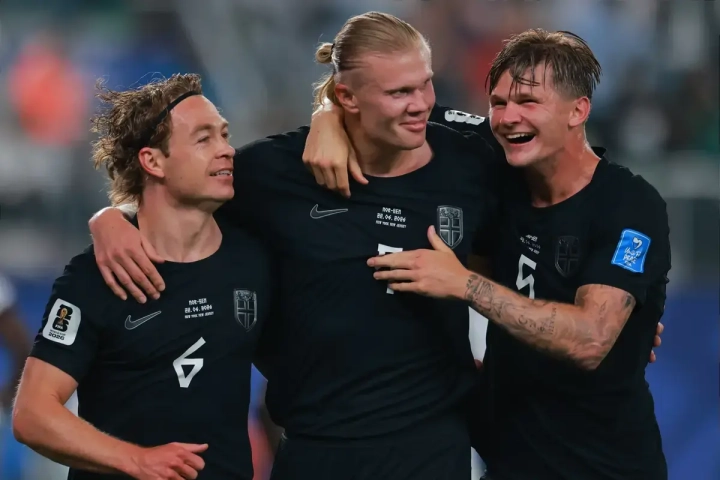
Standing resolutely across the tactical divide is a Norwegian national team currently experiencing a glorious, historic resurgence on the grandest stage of them all. Absent from the World Cup finals for far too long, the Nordic nation has emphatically announced their return with consecutive, high-scoring victories. They began their campaign by ruthlessly dismantling Iraq in a 4-1 thrashing in Boston. Demonstrating immense character and attacking ingenuity, they then navigated a thrilling, heavily chaotic 3-2 victory over Senegal. The sheer volume of goals perfectly highlights their fearless, expansive footballing philosophy under Solbakken.
At the very epicentre of this attacking storm stands Erling Haaland. The prolific Manchester City striker has effortlessly translated his terrifying domestic club form onto the international stage, brutally punishing opposition defences with his raw physical power and elite predatory instincts. Haaland struck twice during the crucial victory over Senegal, constantly terrorising the African backline. He is seamlessly supplied by the world-class creative vision of Arsenal captain Martin Ødegaard, who orchestrates the midfield tempo with supreme elegance. With dynamic full-back Marcus Holmgren Pedersen also contributing a vital goal in their previous outing, the Scandinavian outfit possesses multiple avenues of attacking threat.
Tactical Battlegrounds and Key Matchups
When analysing the granular details of this impending clash, a fascinating contrast of overarching footballing styles immediately emerges. Stéphan will likely instruct his French side to heavily monopolise possession, relying on the tireless engine of N’Golo Kanté and the tactical intelligence of Adrien Rabiot to control the central zones.
In stark contrast, the Norwegian approach heavily relies on verticality, rapid transitions, and aggressively feeding the ball into the penalty area at the earliest opportunity. The tactical battlegrounds will undoubtedly be defined by a series of colossal individual duels.
|
Area of the Pitch |
France Key Figure |
Norway Key Figure |
Tactical Significance |
|
The Penalty Box |
William Saliba |
Erling Haaland |
Elite defensive positioning and reading of the game against unparalleled physical dominance and clinical finishing. This duel will likely dictate the entire outcome of the match. |
|
Central Midfield |
Aurélien Tchouaméni |
Martin Ødegaard |
A monumental battle for creative control. Tchouaméni must aggressively disrupt the passing lanes to starve Haaland and the forward line of crucial service. |
|
The Flanks |
Kylian Mbappé |
Kristoffer Ajer |
Mbappé’s devastating, explosive dribbling ability against seasoned, robust defensive tracking. Controlling the wide channels is absolutely paramount for establishing sustained dominance. |
Team News and Squad Availability
Preparation for this monumental Group I finale has fortunately been largely unhindered by severe medical crises within either camp. Following their physically demanding encounters earlier in the week, both nations have reported pristine bills of health, completely avoiding any fresh injury concerns. Furthermore, neither squad is burdened by lingering disciplinary suspensions, affording both Stéphan and Solbakken the luxurious flexibility of selecting their absolute strongest starting elevens.
For the French, the unexpected return to full fitness of Jules Koundé and Manu Koné just prior to the tournament has provided invaluable squad depth. Given their qualification status, Stéphan might be slightly tempted to rotate his full-backs, potentially offering minutes to Lucas Digne or Malo Gusto. However, any alterations will be carefully measured against the urgent necessity of maintaining defensive cohesion against the formidable Norwegian attack. Solbakken is highly likely to retain absolute faith in the starting lineup that successfully navigated the Senegalese test, banking on the growing chemistry between Alexander Sørloth and Haaland in the final third.
Historical Context and The Final Word
Encounters between these two distinct footballing cultures are exceptionally rare on the senior international stage, adding a wonderful element of sheer unpredictability to the proceedings. The stark lack of recent historical precedent means there is absolutely no established psychological hierarchy or past tournament trauma to heavily influence the players’ mindsets. Friday’s clash offers both proud nations a completely blank canvas upon which to boldly paint their World Cup legacy.
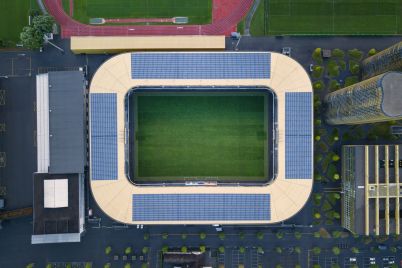
As the vibrant, deeply passionate supporters converge on the impressive modern architecture of the Boston Stadium, the extensive theoretical planning and exhaustive video analysis will immediately give way to raw, competitive tournament reality. For the seasoned French heavyweights, the evening provides a golden opportunity to definitively assert their absolute dominance, honour their absent manager with a commanding display, and firmly justify their status as genuine title contenders.
For the ambitious Norwegian challengers, it represents the ultimate test of character against elite international opposition. Millions tuning in late into the British night can readily anticipate a fiercely contested, high-stakes encounter where fleeting moments of individual genius, unwavering tactical discipline, and sheer mental resilience will ultimately determine the kings of Group I. A conservative, tentative approach will benefit absolutely no one as two of world football’s premier attacking talents share the exact same pitch.