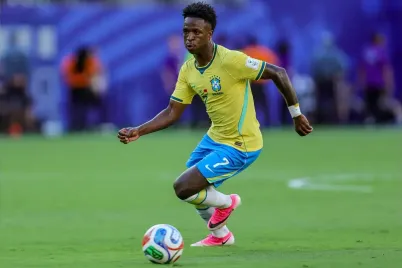

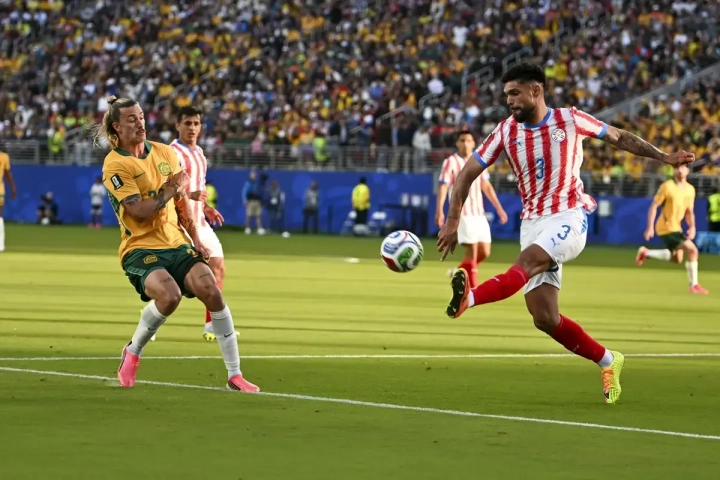
Paraguay and Australia booked their places in the knockout phase of the 2026 FIFA World Cup after battling to a tense and tactical 0-0 draw in their final Group D encounter in Santa Clara. With qualification implications hanging over every challenge, pass and decision, neither side was prepared to take unnecessary risks in a contest that became a fascinating examination of discipline, organisation and tournament management rather than attacking brilliance. The result ensured Australia finished second in the group behind the United States, while Paraguay advanced as one of the strongest third-placed teams after navigating a demanding section.
The stakes could hardly have been higher. Both teams entered the match level on three points after defeating Türkiye and losing to the United States. Australia held a slight advantage thanks to goal difference, meaning a draw would be enough to secure second place. Paraguay knew victory would guarantee them the runners-up position but also understood that a draw could still leave the South Americans in a strong position to progress. Those circumstances shaped the contest from the opening whistle and remained a constant influence throughout the evening.
The atmosphere inside the San Francisco Bay Area Stadium reflected the significance of the occasion. Supporters from both nations arrived aware that a place in the Round of 32 was within touching distance. Australian fans, encouraged by their side’s impressive victory over Türkiye earlier in the tournament, believed the Socceroos had enough resilience to secure the required result. Paraguay’s supporters, meanwhile, travelled with confidence after their hard-fought win over Türkiye had revived their campaign following a difficult opening defeat against the United States.
Australia coach Tony Popovic made several changes to his starting line-up, refreshing key areas of the team while maintaining the defensive structure that has become a hallmark of his management. Nestory Irankunda returned to the side and immediately provided energy and pace. Paraguay, meanwhile, had to cope without suspended attacking influence Miguel Almirón, forcing them to rely even more heavily on the creativity of Julio Enciso.
From the opening exchanges it became clear that neither side intended to play recklessly. Australia were compact and organised, often dropping into a disciplined defensive shape whenever Paraguay attempted to build attacks through midfield. The South Americans enjoyed periods of possession but found it difficult to create clear openings against a well-drilled Australian back line.
The first quarter of the match was characterised by caution. Midfield battles dominated proceedings, with tackles fiercely contested and space at a premium. Australia looked most threatening when breaking quickly down the flanks, particularly through Irankunda, whose pace caused occasional concern for Paraguay’s defenders. Yet final passes frequently went astray and genuine scoring opportunities remained scarce.
Paraguay gradually began to gain a greater share of possession. Their midfield trio worked tirelessly to move the ball from side to side, attempting to draw Australian defenders out of position. Enciso emerged as their primary creative outlet, drifting across the attacking third in search of pockets of space. Every time he received the ball, anticipation spread through the stadium. However, Australia’s defensive unit consistently responded with discipline, closing him down before he could fully influence the game.
The match’s physical intensity increased as the first half progressed. Both teams understood that a single mistake could alter the course of their World Cup campaigns. Challenges became stronger, aerial duels more frequent and attacking risks less common. Refereeing decisions were scrutinised by players and supporters alike as tension continued to build.
Australia produced several encouraging moments before the interval. Their right side carried particular menace, with overlapping runs stretching Paraguay’s defensive shape. Yet despite reaching promising areas, the Socceroos could not find the final touch required to break the deadlock. Paraguay remained dangerous on the counterattack but similarly lacked the precision needed to convert promising situations into meaningful chances.
By half-time, the score remained 0-0, a reflection of a contest that had been tactically intriguing but devoid of genuine clear-cut opportunities. The balance of the game remained delicate. Australia were achieving the result they required, while Paraguay still had every chance of securing progression. Neither side could afford complacency.
The second half began with slightly greater urgency from Paraguay. Recognising that their route to second place depended on victory, they attempted to increase the tempo. More players pushed forward during attacks, and their full-backs ventured higher up the pitch. Yet each advance carried risk, and Australia remained ready to exploit spaces left behind.
Enciso continued to drive Paraguay’s attacking ambitions. Several times he collected possession in dangerous areas and attempted to weave through defenders. His technical quality was evident throughout the evening, but Australia’s collective defensive commitment repeatedly frustrated him. Whenever he appeared poised to create a breakthrough, green-and-gold shirts converged around him.
As the hour mark approached, Australia appeared increasingly comfortable with the rhythm of the match. Their defenders won important headers, midfielders protected the back line intelligently and the team maintained composure under pressure. The longer the game remained goalless, the more favourable the situation became for Popovic’s side.
Paraguay’s coaching staff responded with tactical adjustments, introducing fresh legs and seeking additional attacking impetus. The substitutions injected energy into their forward line and briefly increased the pressure on Australia’s defence. Crosses began arriving more frequently into the penalty area, but clear shooting opportunities remained elusive.
One of the most significant moments arrived in the closing stages when Enciso produced a piece of individual brilliance. Cutting inside from the right, he beat one defender with clever footwork and appeared ready to unleash a dangerous effort. However, Australia’s defensive organisation once again proved decisive as bodies were thrown into the path of the shot. Moments later, another effort drifted wide, prompting groans from Paraguay’s supporters who sensed the opportunity slipping away.
Australia also had opportunities to snatch victory. Jordan Bos produced an adventurous run into the penalty area during the latter stages, driving forward with intent and creating a moment of uncertainty inside the Paraguayan defence. Yet the final execution was lacking, and the chance disappeared.
As the clock ticked toward full time, the tactical landscape became increasingly clear. Australia retreated into an unmistakable defensive block, prioritising structure and concentration over attacking ambition. Paraguay continued to probe but could not find the breakthrough. Every clearance, interception and recovered ball was greeted with increasing celebration from Australian players aware that qualification was edging closer.
The final minutes were played amid mounting tension. Paraguay pushed men forward whenever possible, while Australia focused on maintaining shape and limiting risk. Substitutions interrupted the flow, helping Australia manage the game and preserve their energy. Each passing minute strengthened the belief among the Socceroos that they would soon secure a place in the knockout rounds.
When the final whistle arrived, the immediate reactions revealed much about the significance of the result. Australian players celebrated enthusiastically, knowing they had achieved their primary objective. Their tournament journey would continue, and they had done so through discipline, organisation and collective determination.
Paraguay’s players displayed mixed emotions. There was understandable disappointment at not claiming victory and securing second place directly. Yet as news filtered through regarding qualification scenarios, relief and satisfaction gradually emerged. Progression remained intact, and their World Cup dream was still alive.
After the match, Tony Popovic praised his players for their maturity and tactical intelligence. The Australian manager highlighted the concentration levels displayed throughout the ninety minutes and commended his squad for understanding the demands of tournament football. He acknowledged that the game lacked attacking fireworks but stressed that World Cup success often depends on making smart decisions under pressure. According to Popovic, his players executed the game plan effectively, stayed compact defensively and demonstrated the resilience required to survive crucial moments.
The Australian coach also reserved special praise for his defensive unit. He pointed to the collective effort required to contain a dangerous attacking player such as Enciso and emphasised that clean sheets at major tournaments are built through teamwork rather than individual brilliance. Popovic expressed confidence that the experience gained during the group stage would prove valuable as Australia prepared for the knockout rounds.
Paraguay manager Gustavo Alfaro took a balanced view of the outcome. While disappointed not to secure victory, he recognised the determination shown by his team. Alfaro noted that his players had attempted to force the issue against a well-organised opponent and praised their commitment throughout a physically demanding encounter. He highlighted the character demonstrated after the heavy defeat to the United States earlier in the competition and emphasised that progression remained a significant achievement.
Alfaro also spoke positively about Enciso’s influence despite the lack of goals. The manager believed his young star had carried a substantial creative burden and continued to pose problems for Australia throughout the evening. He suggested that the experience gained from matches of this intensity would benefit Paraguay moving forward in the tournament.
From a broader perspective, the draw reflected the strengths and limitations of both teams. Australia once again demonstrated why they are so difficult to break down. Their organisation, discipline and work ethic allowed them to navigate a potentially dangerous fixture without conceding. While questions remain regarding their attacking output, few opponents will relish facing a team capable of defending with such consistency.
Paraguay, meanwhile, showcased their competitiveness and resilience. They controlled possession for significant periods and attempted to dictate play, yet ultimately lacked the cutting edge required to transform territorial dominance into goals. Nevertheless, their ability to recover from an opening defeat and reach the knockout phase underlined the quality within the squad.
Group D ultimately unfolded in a manner that highlighted the fine margins of international football. The United States secured top spot, while Australia claimed second place through superior goal difference and disciplined performances. Paraguay’s efforts were rewarded with advancement as a third-placed qualifier, ensuring both nations could look ahead to the next phase of the competition with optimism.
Although neutral spectators may have hoped for more goals, the match offered a compelling example of tournament football at its most strategic. Every pass carried significance, every defensive intervention mattered and every tactical decision had consequences. It was not a classic defined by spectacular attacking moments, but it was a contest rich in tension, intelligence and determination.
For Australia, the evening reinforced the belief that they possess the structure and mentality to compete with stronger opponents. For Paraguay, it demonstrated that persistence and organisation can keep a World Cup campaign alive even when victories prove difficult to secure. Both nations left the field knowing their journeys would continue.
As the knockout stage approaches, Australia will take confidence from another clean sheet and a qualification secured through disciplined execution. Paraguay will draw encouragement from their resilience and the knowledge that they remain capable of troubling opponents when opportunities arise. The road ahead becomes significantly more challenging, but both teams have earned the right to keep dreaming.
In the end, a goalless draw was enough. Australia celebrated second place, Paraguay celebrated survival, and a tense night in Santa Clara concluded with both sets of supporters looking forward to another chapter in their World Cup adventures. The scoreline may have read 0-0, but the significance of the result was anything but ordinary.