
The 2026 FIFA World Cup continues to unfold across North America, bringing together contrasting footballing narratives in a highly anticipated Group F encounter. On Monday, 15 June 2026, the spectacular Monterrey Stadium in Mexico, famously nestled against the breathtaking backdrop of the Cerro de la Silla mountain, will host the second fixture of the group, with kick-off scheduled for 03:00 BST. Following the group’s opening clash between the Netherlands and Japan hours earlier, this match takes on immense significance for both nations. Navigating such a uniquely challenging group leaves virtually zero margin for error, meaning this encounter could serve as the ultimate catalyst for a knockout stage run, while defeat may immediately consign the loser to an uphill battle for survival.
Potter’s Scandinavian Revival
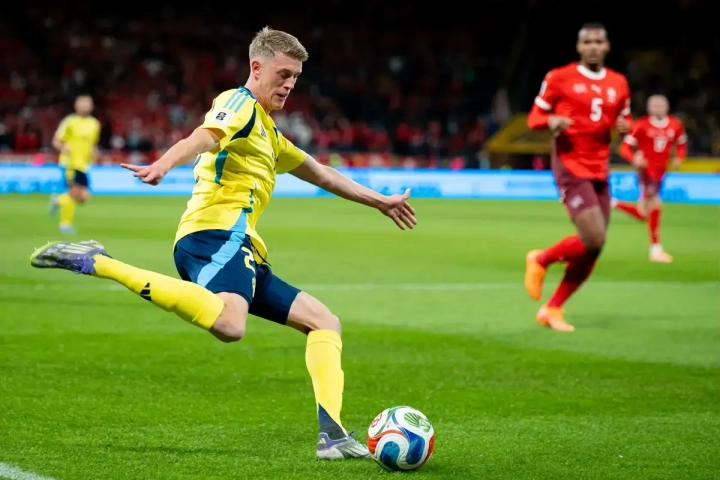
Returning to the grandest stage after missing out on the 2022 edition in Qatar, the European challengers arrive rejuvenated and highly motivated under the guidance of Graham Potter. Taking the reins in October 2025 following a difficult conventional qualifying campaign under previous management, the former Chelsea and Brighton manager has transformed the squad’s fortunes. Capitalising on a vital second chance afforded by their UEFA Nations League standing, the side secured their ticket to the Americas via dramatic, high-pressure play-off victories.
A resounding 3-1 triumph over Ukraine, followed closely by a tense 3-2 victory against Poland, showcased a newfound psychological resilience and attacking verve. At the heart of this international resurgence is arguably one of the most lethal striking partnerships in the entire tournament. Arsenal’s Viktor Gyökeres—who netted a sensational, momentum-shifting hat-trick against Ukraine—and Liverpool’s Alexander Isak provide an explosive combination of searing pace, imposing physicality, and clinical finishing.
However, the exhaustive build-up has not been entirely without setbacks for the coaching staff. Creative playmaker Dejan Kulusevski was excluded from the final 26-man squad, having failed to recover from significant knee surgery undertaken last May. Additionally, highly rated promising youngsters Roony Bardghji and Williot Swedberg were notable omissions from the final travelling party, highlighting the immense competition for places within the current setup.
Tactically, Potter has had to adapt his traditionally intricate, possession-oriented club philosophy to suit the uniquely unforgiving nature of international tournament football. Acknowledging the limited preparation time available during international breaks, the English manager has implemented a more pragmatic, results-driven approach. Observers can expect a structured defensive unit anchored by experienced captain Victor Lindelöf, designed to swiftly transition the ball to their dynamic forwards during counter-attacks. Behind him, goalkeeper Viktor Johansson is expected to take his place between the posts, tasked with providing a calming presence and elite shot-stopping abilities. Furthermore, significant emphasis has been placed on maximising set-piece opportunities, an area explicitly identified by the coaching staff as crucial for breaking down stubborn opposition blocks in the intense Mexican heat. In the middle of the park, the youthful exuberance of highly rated prospect Lucas Bergvall could offer an unpredictable creative spark, either from the start or as a dynamic impact substitute.
Lamouchi’s Rebuilding Mission
Facing the revitalised Scandinavians is a fiercely proud North African outfit currently navigating a complex transitional phase. Following a disappointing Africa Cup of Nations campaign that culminated in a last-16 exit, the Tunisian Football Federation acted decisively, appointing Sabri Lamouchi at the beginning of 2026. Tasked with comprehensively overhauling the squad’s identity, the new head coach has not shied away from making bold, potentially divisive decisions.
The finalised squad announcement sent genuine shockwaves through the passionate fanbase, as established, long-serving veterans such as Ali Maâloul, Ferjani Sassi, and Mohamed Ali Ben Romdhane were conspicuously left at home. Instead, Lamouchi has placed his unyielding faith in a refreshed, energetic core, heavily reliant on the elite tactical discipline of Eintracht Frankfurt midfielder Ellyes Skhiri and the unyielding defensive leadership of Montassar Talbi.
Recent tournament preparations have undeniably highlighted the monumental challenge lying ahead. While they successfully navigated their CAF qualification group completely undefeated, their subsequent pre-tournament friendlies against high-calibre European opposition have raised prominent tactical alarms. A narrow, hard-fought 1-0 defeat to Austria in Vienna was swiftly followed by a comprehensive, punishing 5-0 dismantling at the hands of Belgium in Brussels. Compounding the overriding frustration against the Belgians was a dismissal for young midfielder Ismaël Gharbi, a stark lapse in discipline that Lamouchi will be desperate to ensure is categorically not repeated on the global stage.
Finding the back of the net remains the single most pressing concern for the Carthage Eagles. Having failed to register a single goal in their final two warm-up fixtures, the heavy attacking burden falls squarely onto the shoulders of forwards Elias Achouri and Firas Chaouat. To successfully secure a positive result in Monterrey, Lamouchi will almost certainly deploy a compact, highly disciplined low-block defensive system. The passionate North African supporters are renowned for travelling in immense numbers, famously creating a vibrant, intimidating wall of noise during their recent exploits in Qatar. They will落 undoubtedly bring that exact same fervent energy to Mexico, transforming the stands into a sea of red and white to drive their players forward. Between the posts, experienced goalkeeper Aymen Dahmen will need to produce a flawless, career-defining performance to repel the anticipated waves of Scandinavian attacks while his teammates look to strike via rapid counter-attacks.
Group Dynamics and Tactical Battles
The rich historical context heavily shapes the immense pressure surrounding this second Group F fixture. The European side boasts a deeply proud World Cup heritage, famously reaching the semi-finals in the United States back in 1994, and are overwhelmingly eager to prove their recent tournament absence was a mere anomaly rather than a permanent structural decline. Conversely, their opponents are competing in their third consecutive finals but carry the heavy, inescapable burden of never having progressed past the group stages in six previous attempts.
With the Netherlands and Japan already having put points on the board earlier in the day, the narrative of this match alters instantly. Neither manager will want to find themselves trailing the pace-setters so early in the campaign.
Anticipated Key Matchups
|
Area of the Pitch |
Swedish Personnel |
Tunisian Personnel |
Tactical Significance |
|
The Final Third |
Viktor Gyökeres |
Montassar Talbi |
A fascinating physical mismatch could easily determine the final outcome. Talbi must flawlessly organise his defensive line to track Gyökeres’ relentless, intelligent runs into the channels. |
|
Central Midfield |
Mattias Svanberg |
Ellyes Skhiri |
The defining battle for control of the tempo. Skhiri’s elite ability to intercept loose passes and break up play will be absolutely vital in starving the opposition forwards of quality service. |
|
The Flanks |
Anthony Elanga |
Yan Valery |
Blistering raw pace against resolute positional discipline. Quick, aggressive transitions out wide will be crucial for both teams’ respective offensive strategies. |
This compelling fixture presents a classic confrontation between a side boasting overwhelming attacking firepower and an underdog desperate to emphatically prove its defensive mettle. If the match quickly settles into a predictable rhythm where Potter’s men effortlessly dominate possession, the patience of both the players on the pitch and the travelling supporters in the stands will be thoroughly tested. Breaking down a deep, highly concentrated defensive line is notoriously difficult, particularly in the sweltering, energy-sapping conditions widely expected in Guadalupe.
Should the Carthage Eagles successfully weather the inevitable early storm, growing frustration could seamlessly become their greatest ally. Capitalising on rare set-pieces or cleverly catching out an over-committed defence on the break will be the established blueprint for executing a historic tournament upset.
As the stadium lights brightly illuminate the Monterrey sky, the theoretical planning decisively ends, and the harsh reality of elite World Cup football begins. With the competitive nature of Group F already established by the preceding match, absolutely neither side can afford a tentative, cautious start. Football fans across the globe can readily anticipate a captivating, high-stakes encounter where fleeting moments of individual brilliance or slight, split-second lapses in concentration will ultimately define their respective tournament trajectories.