
Geobear ground improvement solution avoided weeks of railway disruption.
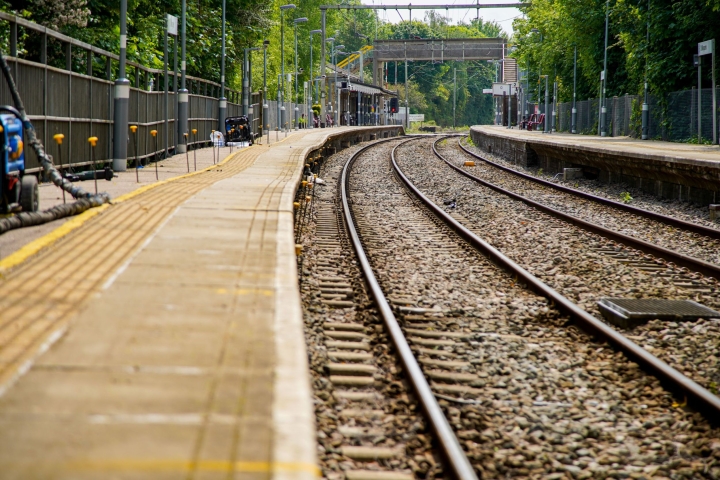
Specialist ground engineering firm Geobear has successfully stabilised a subsiding platform extension at St Margaret’s Station in Hertfordshire. Using a non-intrusive geopolymer injection solution, the stabilisation was completed during a single weekend, avoiding the need for extensive reconstruction works and prolonged disruption to railway operations.
The project was commissioned by rail operator Greater Anglia after one end of platform one experienced ongoing settlement for several years. While the original platform remained stable, a later platform extension had gradually subsided due to soft, organic ground beneath its support piers. Over time, the underlying material decayed and compressed beneath the concentrated loads of the precast concrete structure, requiring remedial works.
The original proposal was to replace the affected section of platform, but this was considered prohibitively expensive. Alternative methods, including piling and underpinning, were also assessed but would have required several weeks of possessions and extended on-site activity. Geobear proposed a targeted ground stabilisation scheme using its geopolymer injection technology, allowing engineers to treat the affected foundations directly while leaving the platform structure largely undisturbed.
Working around the platform extension, Geobear injected geopolymer beneath 15 support piers using six injection locations per pier. In total, the team carried out 90 individual injections and installed almost four tonnes of geopolymer material beneath the structure. Engineers drilled small injection points through and around the platform extension to deliver the geopolymer directly beneath each foundation, where the material rapidly expanded and hardened to improve the bearing capacity of the underlying ground and prevent further settlement.
“The challenge at St Margaret’s Station was to resolve a long-standing settlement issue without introducing significant disruption to the railway,” said Steve Farr, Rail Manager at Geobear. “Injecting geopolymer directly beneath the affected foundations meant we could stabilise the platform extension quickly and efficiently without removing the existing structure.”
Over the course of a weekend, technicians worked continuously to minimise disruption to railway services. By concentrating the works into one possession, Geobear significantly reduced the overall programme compared with traditional remediation methods, allowing normal services to continue before and immediately after the project.
“For rail operators, reducing possession time is often just as important as delivering a permanent engineering solution,” added Farr. “Projects like this demonstrate how targeted ground improvement techniques can address ageing infrastructure while keeping services moving.”
“The solution proved to be an excellent alternative to traditional underpinning methods,” said Rob Humphries, Designated Project Engineer (Civil & Building Structures) at Greater Anglia. “The geopolymer injections successfully stabilised the affected foundations with minimal disruption to station operations, passengers and the surrounding infrastructure. The process was completed efficiently, reducing both programme duration and construction-related risks when compared with conventional underpinning techniques.”
This latest project at St Margaret’s Station is one of many rail infrastructure schemes successfully delivered by Geobear. To learn more about Geobear’s ground improvement solutions for rail, visit the website.