
A group of UWE Bristol filmmaking students are hoping to reshape how films are made, shared and experienced with their new short film ‘What I Meant to Say’.
Leading the team are writer and director Jarred Sullivan and producer by Madeline Jeffs – both soon to graduate in BA (Hons) Filmmaking. The film explores themes of communication, identity and belonging, while bringing to the fore Deaf and hard‑of‑hearing perspectives that are often underrepresented on screen.
The character-led drama follows Aaron, a shy, Deaf 16-year-old adopted into a Deaf family (played by Deaf actor Ellis Kavanagh). His hearing birth-mother Marie unexpectedly reaches out; the film follows them as they spend the day together in hopes of striking up a connection.
However, communication proves far harder than imagined as they head to the seaside, where misunderstandings accumulate and Marie’s indiscretion clashes with Aaron’s over-stimulation. Their attempts to connect are obstructed until an unexpected moment of vulnerability breaks their differences. Mother and son finally begin to understand each other through their emotional resonance, rather than perfect language.
Rather than relying primarily on dialogue, the film prioritises visual storytelling, performance and carefully considered sound design, immersing audiences in Aaron’s emotional and sensory world.
The student team behind the film describe it as both a creative and cultural commitment. Made by a collaborative group including hard‑of‑hearing and working‑class creatives, the project is shaped directly by their lived experience.
Jarred said: “Filmmaking is about amplifying the voices and stories of those who are often underrepresented. As a queer, working-class filmmaker, I believe cinema needs fundamental change in both access and representation. What I Meant to Say expands the possibilities of Deaf-led, working-class storytelling by exploring how human connection can exist beyond spoken language.”
The project reflects the power of collaboration, developed through close work with Deaf individuals and British Sign Language (BSL) consultants to ensure a nuanced and authentic approach.
For Maddy, being hard-of-hearing herself has shaped the way she works as a producer: “This project was very personal and important for me as I am passionate about acknowledging unrepresented voices, and ensuring filmmaking is accessible to all. It was a challenge to complete: working with children, organising quick turn arounds, and overseeing a low budget and sustainable production that included a mix of hearing and Deaf individuals. I believe we have made an emotional, poignant and complex piece of short cinema, that celebrates disability within the everyday.”
As she approaches graduation, Maddy is now looking for a film or TV role as an access coordinator or welfare producer, where she can ensure inclusive practices are made throughout the production and that everyone involved feels supported and valued.
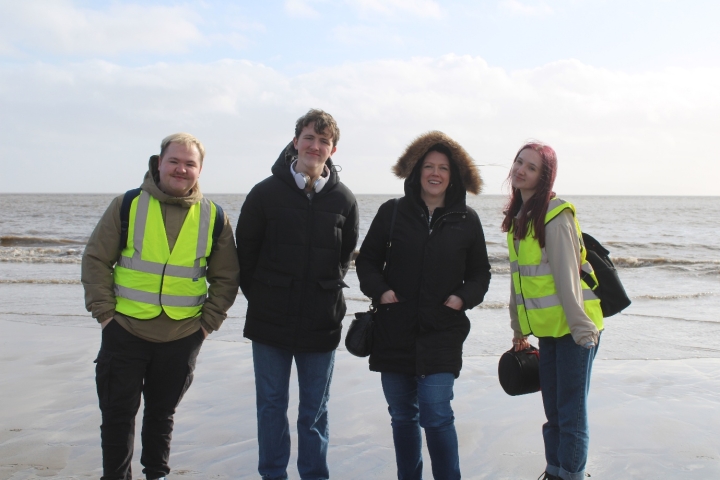
BA (Hons) filmmaking students Maddy Jeffs and Jarred Sullivan.
Maddy and Jarred’s efforts have already had an impact beyond the film itself. All graduate films shown during Showcase, the university’s degree show (4 – 10 June), will be captioned, and a screening of student films from BA (Hons) Filmmaking on 8 June will include British Sign Language (BSL) interpretation for the first time, enabling Deaf and hard‑of‑hearing cast, crew and audiences to engage fully with the entire showcase.
The project has also prompted critical conversations within the course about how accessible filmmaking practices can be embedded into the curriculum in future, encouraging students to consider access not as an afterthought but as a core creative responsibility.
“I am immensely proud of what we have created and hope it encourages more emerging filmmakers to tell accessible stories that bring often unseen lives to the screen,” added Jarred, who’s seeking a role in the industry as a script writer, with further focus on underrepresented stories and characters.
With its combination of artistic ambition, social impact and institutional change, the project highlights how UWE Bristol students are using filmmaking not only to tell compelling stories, but also to actively reshape how films are made, shared and experienced.
Dr Charlotte Crofts, Professor of Cinema Arts, said: “I could not be prouder of our students for the leadership they have shown through this project. Their commitment to rethinking accessibility – across creative practice, production processes and audience experience – has challenged us as an institution to reflect and act. While this has long been an area we aspired to develop further, it is their energy, insight and determination that has driven meaningful change, prompting us to embed accessibility much earlier and more fundamentally within the curriculum in future.
“This work sits within a broader ethos at UWE Bristol: empowering emerging filmmakers to reshape the industry from within, advancing both inclusion and sustainability. These students are not waiting for change – they are already creating it.”
The film What I Meant to Say is one of UWE Bristol’s first productions to achieve BAFTA Albert Education Partnership Production Certification demonstrating sustainable production practices.
UWE Bristol’s Showcase starts on 4 June and runs until 10 June. For people who can’t attend the physical exhibitions, the digital Showcase launches on 1 June, featuring the work from graduating students. This online platform showcases new talent to a wide audience, helping graduates join the future creative workforce.
For further information, including opening dates and times, visit the UWE Bristol website.