
A Dominant Statement in Monterrey
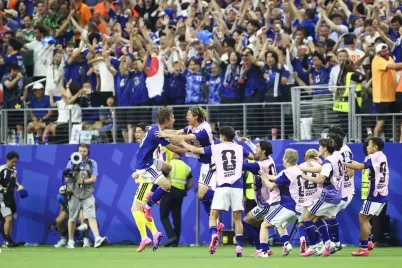
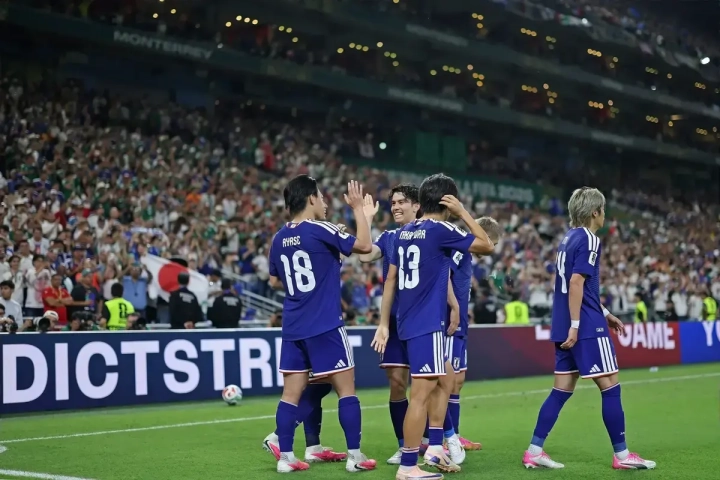
A ruthless, free-flowing performance from Japan culminated in a resounding 4-0 victory over Tunisia on Sunday morning, officially confirming the North African side’s premature exit from the Group F stage of the 2026 FIFA World Cup. Staged under the floodlights at the magnificent Monterrey Stadium in Mexico, the highly anticipated encounter officially kicked off at 05:00 BST on 21 June 2026. For the Samurai Blue, the comprehensive triumph perfectly underlined their prestigious status as genuine tournament contenders. Conversely, the heavy defeat condemned the Carthage Eagles to their second consecutive thrashing, brutally exposing a squad severely lacking in both defensive cohesion and attacking inspiration.
The Managerial Context: A Failed Resurrection
Heading into the crucial fixture, the overarching narrative was entirely dominated by the sudden, dramatic upheaval within the Tunisian camp. Following a disastrous 5-1 capitulation to Sweden in their opening assignment, the national football federation acted with unprecedented swiftness, sacking head coach Sabri Lamouchi. In a desperate bid to salvage their dwindling World Cup aspirations, they appointed the deeply experienced Hervé Renard. The Frenchman is globally renowned for orchestrating monumental tournament upsets, and the passionate travelling supporters desperately hoped his arrival would spark a miraculous new manager bounce.
However, the harsh reality of elite international football quickly shattered those optimistic illusions. Implementing a pragmatic 5-3-2 defensive structure, Renard explicitly instructed his new players to remain highly compact and frustrate their technically superior opposition. The overarching objective was to completely deny the dynamic Japanese forwards any inviting spaces between the lines. Unfortunately for the newly installed manager, this carefully constructed defensive blueprint was violently shredded within the opening five minutes of the contest.
First Half: Early Blows and Samurai Dominance
Operating in a fluid, highly interchangeable 3-4-3 system under the meticulous guidance of Hajime Moriyasu, the Asian heavyweights established absolute, suffocating control from the very first blast of the referee’s whistle. Their passing was incredibly crisp, rapidly shifting the point of attack to relentlessly stretch the Tunisian wing-backs and create overloads in the wide channels.
The relentless early pressure yielded a spectacular reward in the fourth minute. Capitalising on a momentary lapse in concentration from the retreating Tunisian defensive line, Daichi Kamada expertly found a pocket of space near the edge of the penalty area. Receiving a sharp, penetrating pass, the talented midfielder unleashed a clinical, precision strike that arrowed beautifully past helpless goalkeeper Aymen Dahmen. Following a brief pause, the Video Assistant Referee (VAR) confirmed the goal, completely altering the psychological momentum of the match and forcing Renard’s men to immediately abandon their cautious, defensive strategy.
Despite falling behind, the Carthage Eagles struggled immensely to establish any meaningful rhythm in the centre of the park. Hannibal Mejbri and Ellyes Skhiri frequently found themselves heavily outnumbered and successfully bypassed by the energetic Japanese engine room.
As the half-hour mark approached, Japan effectively killed off the contest as a competitive spectacle. In the 31st minute, Ayase Ueda doubled the advantage with a wonderfully taken goal, which was also thoroughly checked and confirmed by VAR. The lethal forward showcased elite predatory instincts, seamlessly peeling away from his marker, Montassar Talbi, before steering a composed finish into the bottom corner. The goal fully rewarded the Samurai Blue’s overwhelming territorial dominance and ensured they entered the dressing room entirely in control of their destiny.
Second Half: Tactical Shifts and Further Punishment
Recognising the dire nature of his team’s performance, Renard executed a decisive, proactive double substitution during the half-time interval. Seeking to inject much-needed energy and structural balance, he introduced Mohamed Amine Ben Hamida and Ismaël Gharbi in place of Dylan Bronn and Elias Saad. The tactical reshuffle slightly stabilised the North African side during the initial stages of the second period, as they began to apply sporadic pressure through increased physical intensity.
Nevertheless, the Japanese defensive unit, brilliantly marshalled by Takehiro Tomiyasu and Ko Itakura, remained entirely untroubled. They comfortably absorbed the isolated, disjointed waves of Tunisian pressure while maintaining an undeniable, terrifying threat on the counter-attack.
The clinical efficiency of Moriyasu’s men was demonstrated once again in the 69th minute. Rapidly transitioning from defence to attack, Junya Ito collected the ball in a dangerous wide position. Driving aggressively towards the retreating defenders, the dynamic winger cut inside with terrifying pace and unleashed a fierce strike that rippled the back of the net. The third goal completely deflated the remaining Tunisian resistance, turning the final twenty minutes into a mere procession.
To add insult to injury, Ueda registered his second goal of the evening in the 83rd minute. Taking advantage of an exhausted, thoroughly demoralised opposition backline, the outstanding forward applied the finishing touches to another beautifully constructed passing sequence. The brace rightfully earned Ueda the unofficial Player of the Match accolade, highlighting a phenomenal, world-class individual display. Statistically, the final strike marked a historic milestone, as Japan netted four goals in a FIFA World Cup fixture for the very first time in their history.
Substitutions and Game Management
As the clock mercilessly ticked down towards the final whistle, both managers heavily utilised their substitutes’ benches for vastly different reasons. Moriyasu smartly opted to rest his key personnel ahead of the demanding challenges to come. Junnosuke Suzuki, Yukinari Sugawara, Ayumu Seko, Yuito Suzuki, and Keisuke Gotō were all dispatched into the fray, ensuring the Samurai Blue saw out the comprehensive victory with absolute professionalism.
Conversely, Renard’s late alterations felt increasingly desperate. Firas Chaouat replaced Sebastian Tounekti in the 64th minute, while Elias Achouri and Rani Khedira were introduced deep into stoppage time. However, none of the changes managed to produce a single, meaningful attempt on the Japanese goal, perfectly encapsulating a deeply frustrating tournament campaign for the North African nation.
Tournament Implications and the Road Ahead
When the final whistle finally echoed across the Monterrey stadium, the contrasting emotions were incredibly stark. For Tunisia, the 4-0 thrashing officially confirms their heartbreaking elimination from the 2026 World Cup, becoming only the third nation to officially exit the tournament. Having conceded an alarming nine goals across their two opening Group F fixtures, they are mathematically guaranteed to finish firmly at the bottom of the group standings. Even if they manage to secure a miraculous victory against the Netherlands in their final match, the newly implemented head-to-head tiebreaker rules ensure they cannot possibly overtake Sweden, who comprehensively defeated them earlier in the week.
On the other side of the divide, Japan will celebrate a thoroughly sensational performance that sends a resounding, intimidating message to the rest of the footballing world. Moving smoothly to four points alongside the Netherlands, the Asian champions are perfectly poised to easily secure their safe passage into the knockout phases. Moriyasu can now approach his final group-stage assignment with the luxurious, invaluable option to heavily rotate his squad and protect crucial players from potential injuries or suspensions. On a morning where tactical cohesion and clinical finishing reigned supreme, the Samurai Blue proved they possess the elite quality required to compete deeply into the latter stages of the global showpiece.
Official Match Facts
Goalscorers:
- Japan: Daichi Kamada (4′), Ayase Ueda (31′, 83′), Junya Ito (69′)
Discipline:
- Neither team received any official bookings during the match.
Substitutions – Tunisia:
|
Minute |
Player On |
Player Off |
|
45′ |
Mohamed Amine Ben Hamida |
Dylan Bronn |
|
45′ |
Ismaël Gharbi |
Elias Saad |
|
64′ |
Firas Chaouat |
Sebastian Tounekti |
|
90′ |
Elias Achouri |
Ali Abdi |
|
90′ |
Rani Khedira |
Ellyes Skhiri |
Substitutions – Japan:
|
Minute |
Player On |
Player Off |
|
73′ |
Junnosuke Suzuki |
Daichi Kamada |
|
73′ |
Yukinari Sugawara |
Ritsu Doan |
|
78′ |
Ayumu Seko |
Takehiro Tomiyasu |
|
78′ |
Yuito Suzuki |
Keito Nakamura |
|
83′ |
Keisuke Gotō |
Ayase Ueda |