
A Gritty Victory in Guadalajara
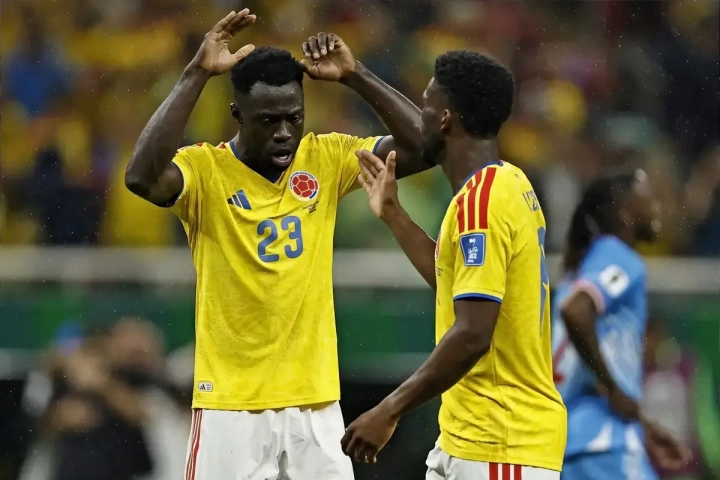
The passionate, rain-soaked atmosphere of the Guadalajara Stadium in Zapopan, Mexico, provided a magnificent setting for a pulsating Group K encounter at the 2026 FIFA World Cup. Kicking off at 03:00 BST on Wednesday, 24 June 2026, Colombia and the Democratic Republic of Congo engaged in a fiercely competitive, attritional battle. Néstor Lorenzo’s men arrived on the pitch acutely aware that a second consecutive triumph would guarantee their progression to the newly expanded Round of 32. After 75 minutes of immense frustration against an inspired Congolese goalkeeper, they accomplished precisely that. A decisive 76th-minute strike from full-back Daniel Muñoz finally broke the deadlock, securing a hard-fought 1-0 victory. Conversely, Sébastien Desabre’s deeply resilient Congolese outfit were left utterly devastated by the narrow defeat, leaving their tournament survival hanging precariously in the balance as they look towards the final group-stage matchday.
Mpasi’s Heroics and Early Colombian Frustration
From the referee’s initial whistle, the stylistic contrast between the two ambitious nations was immediately apparent. Operating within their customary 4-2-3-1 formation, the South American heavyweights sought to monopolise territorial possession and dictate the overarching rhythm of the match. The midfield pivot consisting of Jefferson Lerma and Gustavo Puerta provided a robust defensive screen, meticulously sweeping up loose balls and allowing creative talents like James Rodríguez and Jhon Arias the freedom to roam into advanced positions.
In stark contrast, the African representatives embraced a highly pragmatic, reactive posture. Desabre instructed his side to deploy a rigorous five-man defensive framework, deliberately congesting the central channels and attempting to nullify the opposition’s intricate passing networks. The Leopards sat incredibly deep, relying heavily on the imposing physical presence of Chancel Mbemba and Steve Kapuadi to command the penalty area.
The narrative of the first half was entirely dominated by a phenomenal individual performance from DR Congo goalkeeper Lionel Mpasi. The 31-year-old was in inspired form, producing a staggering five saves within the opening 20 minutes alone, a feat unmatched in a World Cup fixture since 1998. He brilliantly denied a long-range screamer from Puerta, thwarted Arias from close range, and stood firm against the creative probing of Rodríguez.
The closest Colombia came to breaking the deadlock in the opening period arrived when Mpasi saved an initial effort from Arias, only for Muñoz to bundle the rebound into the net. However, the celebrations were abruptly halted as the Video Assistant Referee (VAR) correctly ruled that the right-back had strayed into an offside position. Despite dominating possession and recording nine shots in the first 25 minutes, Los Cafeteros entered the dressing room deeply frustrated by the resolute African defence.
African Resilience and Tactical Adjustments
Stunned by the relentless early pressure, the Democratic Republic of Congo slowly grew into the contest. Rather than completely abandoning their defensive blueprint, they intelligently adjusted their pressing triggers, attempting to aggressively disrupt the Colombian midfielders before they could accurately distribute the ball. Edo Kayembe tested the waters with a long-range effort that sailed wide, but it was the long throws from defender Arthur Masuaku that caused the most genuine discomfort for the South American backline. Late in the first half, a raking cross from Masuaku narrowly evaded the head of Yoane Wissa, who was inches away from repeating his goalscoring heroics from Matchday 1 against Portugal.
Entering the second half, both managers sought to gain a decisive tactical advantage. Desabre introduced Noah Sadiki for Ngal’ayel Mukau at the interval, before swapping out the tireless Cédric Bakambu for Simon Banza in the 56th minute. Lorenzo responded with crucial alterations of his own in the 57th minute, withdrawing the fatigued Rodríguez and Luis Suárez, replacing them with the creative ingenuity of Juan Fernando Quintero and the physical presence of Jhon Córdoba.
The second period initially followed a similar pattern to the first. Mpasi was at it again, making himself incredibly big to thwart Luis Díaz at close quarters in the 50th minute. The rebound fell kindly to Arias, but his shot through a heavily crowded penalty area skewed agonisingly wide. The physical intensity of the encounter noticeably increased, culminating in a 55th-minute yellow card for Colombian defender Jhon Lucumí following a late, mistimed challenge. Díaz later saw a second goal correctly chalked off for offside after a brilliant solo run, further amplifying the mounting anxiety within the Colombian ranks.
Muñoz Provides the Breakthrough
As the match wore on, Colombia’s sheer dominance began to increasingly resemble wasteful desperation. The breakthrough they so desperately craved finally arrived in the 76th minute, heavily orchestrated by Lorenzo’s astute second-half substitutions. Quintero, operating centrally, unlocked the stubborn Congolese defence with a clever, perfectly weighted pass.
Timing his run to absolute perfection, Muñoz burst intelligently into the right side of the penalty area. The full-back drilled a powerful, low effort towards the near post. While Mpasi had saved everything thrown his way thus far, a slight but crucial deflection off a retreating defender helped the ball finally evade the goalkeeper’s grasp and nestle into the back of the net. The goal sparked overwhelming relief more than pure celebration among the Colombian players, who knew they had been made to work far harder than anticipated. The strike was incredibly significant on a personal level for Muñoz, who had scored in Colombia’s opening victory against Uzbekistan, becoming only the second Colombian defender to score multiple goals at a single World Cup alongside Yerry Mina.
Tournament Implications and The Final Word
Following the goal, Desabre desperately attempted to mount a late response, bringing on Nathanaël Mbuku for Samuel Moutoussamy in the 81st minute. However, Colombia managed the closing stages exceptionally well, protecting their slender advantage to secure back-to-back victories at the tournament. The match concluded with a flurry of disciplinary action deep into stoppage time, with both DR Congo’s Charles Pickel and Colombia’s Jefferson Lerma receiving yellow cards in the 90th minute.
The hard-fought 1-0 triumph mathematically guarantees Colombia’s progression to the Round of 32. Sitting comfortably at the summit of Group K with a maximum six points, they have completely justified their pre-tournament billing. They will now eagerly anticipate a highly demanding final group-stage clash against Cristiano Ronaldo’s Portugal, needing only a point to secure the top spot in the group.
For the Democratic Republic of Congo, the heartbreaking nature of the late defeat feels incredibly cruel after such an organised and disciplined display. They remain languishing on a single point. Desabre’s men must now urgently recover from this psychological blow and prepare for an absolute must-win clash against Uzbekistan, acutely aware that only a commanding victory, coupled with favourable results elsewhere, will provide any genuine hope of extending their historic World Cup journey.
Official Match Facts
Goalscorers:
- Colombia: Daniel Muñoz (76′)
Discipline:
- Colombia: Jhon Lucumí (Yellow Card, 55′), Jefferson Lerma (Yellow Card, 90′)
- DR Congo: Charles Pickel (Yellow Card, 90′)