
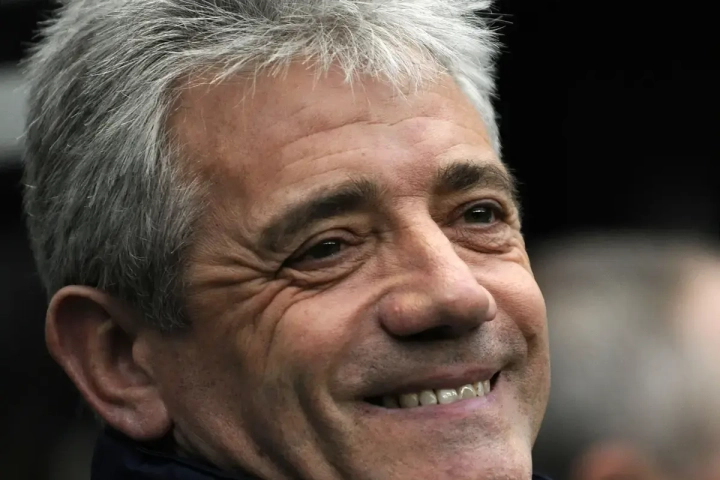
The footballing world has been plunged into a deep and profound mourning following the announcement that Kevin Keegan, one of the most iconic, passionate, and transformative figures in the history of the English game, has died at the age of 75.
A talismanic forward who conquered both domestic and European football, and a manager whose romantic, attacking philosophy captured the imagination of an entire generation, Keegan passed away surrounded by his family following a courageous battle with cancer.
The news was confirmed on Monday afternoon via a deeply poignant statement released by his family. “It is with immense sadness that we announce that Kevin Keegan has passed away at the age of 75,” the statement read. “The former England player and manager had been battling cancer and was surrounded by his wife and daughters in his final moments. Kevin, a double Ballon d’Or winner, was a much-loved husband, father, and grandfather. The family would like to thank Kevin’s incredible medical team for all their support. This is a hugely difficult time and they are requesting space and privacy.”
The devastating reality of his illness first came to public attention in January 2026, when his family announced he was undergoing tests and treatment. In June, Keegan displayed his trademark bravery by publicly revealing he was fighting stage four stomach cancer, addressing his condition with the same endearing candour and warmth that defined his public life.
The Boy from Yorkshire and the Anfield Revolution
To understand the sheer magnitude of Kevin Keegan’s legacy, one must trace his journey back to his humble beginnings. Born into a working-class family as the son of a South Yorkshire miner, Keegan was never blessed with a towering, naturally imposing physical frame. Standing at just 5ft 8in, the combative forward, affectionately dubbed “Mighty Mouse”, had to rely on a ferocious work ethic, unyielding determination, and a refusal to ever accept defeat.
His professional journey commenced at Scunthorpe United, where his raw, untamed energy and blistering pace immediately caught the discerning eye of Liverpool’s legendary manager, Bill Shankly. In 1971, Shankly brought the 20-year-old to Anfield for a fee of just £33,000, a figure that would quickly become one of the most astute pieces of business in British football history. Paired alongside the formidable John Toshack, Keegan forged one of the most devastating attacking partnerships the English First Division had ever seen.
He rapidly blossomed into the poster boy of the Anfield revolution. Under Shankly’s meticulous guidance, he absorbed the fundamental values of hard work and humility that resonated perfectly with the Kop. “I learned so much from Shanks,” Keegan once reflected. “He used to say: ‘If I was a road-sweeper, my street would be the cleanest in the borough.’ I took that to heart.”
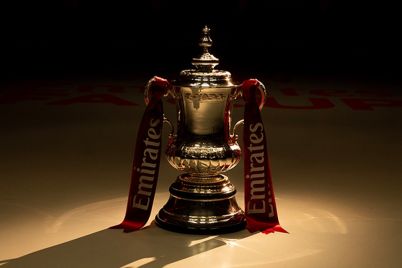
During a glittering spell on Merseyside, Keegan transformed Liverpool into an unstoppable force. He inspired the club to three First Division titles, an FA Cup, and two UEFA Cups. The crowning glory of his Liverpool tenure arrived in Rome in 1977, where he tormented Borussia Mönchengladbach to help secure Liverpool’s very first European Cup.
Conquering Europe and the Double Ballon d’Or
At the absolute peak of his powers, Keegan made a decision that stunned the British sporting public. Following the European Cup triumph, he departed Liverpool to test himself abroad, joining German outfit Hamburg. In an era where British players rarely flourished on the continent, Keegan’s move was fraught with enormous risk.
After an initial period of intense physical adjustment, he took the German top flight by storm. His relentless pressing, exceptional close-control dribbling, and clinical finishing elevated Hamburg to entirely new heights. He led the club to the Bundesliga title in 1979. A year later, he was the driving force behind their monumental run to the European Cup final in 1980, where they narrowly lost to Brian Clough’s resilient Nottingham Forest side in Madrid.
His individual brilliance during this period on the continent was formally recognised on a global scale. Keegan was awarded the Ballon d’Or in 1978 and remarkably retained the prestigious accolade in 1979. To this day, he remains the only British player in the illustrious history of the award to win it on two separate occasions—a testament to a peak that stood shoulder-to-shoulder with the greatest players the game has ever witnessed.
The Three Lions and a Hero’s Return
Upon returning to England, Keegan joined Southampton, immediately validating his superstar status by lighting up the First Division with his technical mastery and infectious enthusiasm. However, it was his subsequent move to the North East that would forge an unbreakable, lifelong bond. Joining Newcastle United in 1982, Keegan became the catalyst for a monumental revival, hauling the Magpies out of the Second Division and back into the top flight before hanging up his boots in 1984.
On the international stage, Keegan was the undeniable talisman of his generation. He earned 63 caps for the England national team, scoring 21 goals, and was entrusted with the captain’s armband on 31 occasions. Despite the heartbreak of missing out on major tournaments during the 1970s, he proudly represented his country at the 1982 World Cup in Spain, leaving an indelible mark as a true patriot who wore the Three Lions with immense pride.
The Entertainers: A Managerial Rollercoaster
If his playing career was defined by relentless success, his transition into management was characterised by pure, unadulterated emotion. In February 1992, Keegan answered an SOS call from a Newcastle United side staring down the barrel of relegation to the third tier of English football.
Not only did he save them from the drop, but he orchestrated one of the most breathtaking ascensions in modern football history. By the 1993-94 season, Newcastle were in the Premier League, and Keegan was building a team famously dubbed “The Entertainers.”
Playing a brand of swashbuckling, attack-minded football that prioritised scoring over defending, Keegan’s Newcastle came agonisingly close to winning the Premier League title in the 1995-96 season. Boasting thrilling talents such as David Ginola, Les Ferdinand, and Faustino Asprilla, they established a 12-point lead at the summit by January. However, they ultimately missed out to Sir Alex Ferguson’s Manchester United following a dramatic, emotionally charged title race. The psychological strain of that run-in culminated in his infamous, fiercely passionate “I will love it if we beat them” television interview—a moment that remains permanently etched into the cultural fabric of English football.
Following his resignation in 1997, Keegan enjoyed a highly successful stint at Fulham, securing promotion and laying the vital groundwork for their top-flight future. In 1999, he answered the ultimate call, taking the reins as the manager of the England national team. While his passion for the role was unquestionable, his tactical approach occasionally faltered at the highest international level. Following a disappointing Euro 2000 campaign, he honourably resigned in the Wembley tunnel in October 2000, immediately after a World Cup qualifying defeat to Germany.
He later returned to club management with Manchester City, winning the First Division title in style and cementing their status in the Premier League before departing in March 2005. A brief, heavily romanticised return to Newcastle United followed in 2008, though it was cut short after just eight months due to a highly publicised dispute with the club’s hierarchy over transfer policies.
A Courageous Final Battle
In his later years, Keegan remained a beloved, ubiquitous figure in the footballing community, heavily respected for his candid punditry and deep, enduring love for the game. When his cancer diagnosis was made public earlier this year, the outpouring of support from fans and former players alike was a striking testament to his universal popularity.
Speaking at a live event in Newcastle just months before his death, Keegan shared a touching, humorous anecdote about his treatment that epitomised his fighting spirit. “He [the doctor] said, ‘Kevin, this new treatment, I’ve got a tremendous strike rate’. I said, ‘What’s your strike rate?’ He said, ‘33%’. I thought it would be 80%, 90%. 33%! I’m still here at the moment.”
The tributes that have poured in following his passing reflect the immense magnitude of the loss. Current Newcastle United manager Eddie Howe perfectly encapsulated the mood of a grieving nation, stating: “Kevin is an absolute icon of this football club, not just as a player but as a manager. An inspirational figure… We wish him well, the whole city is behind him and with him every step of the way.”
Kevin Keegan was far more than just a footballer or a manager; he was a pure, unbridled emotion. In a sport increasingly dominated by cold pragmatism and data, Keegan represented the heart, the romance, and the sheer joy of the beautiful game. The Kop has lost a king, Tyneside has lost a messiah, and English football has lost one of its absolute greatest sons.