
The footballing world continues to process the profound loss of Kevin Keegan, who passed away on Monday at the age of 75 following a courageous battle with stage four stomach cancer. While the immediate aftermath of his death has rightfully been dedicated to mourning a man of immense warmth and humility, the passage of time allows us to transition from grief to celebration.
Keegan was not merely a highly decorated footballer and a pioneering manager; he was a cultural phenomenon and a purveyor of footballing romance. From the terraced streets of Doncaster to the pinnacle of European football, his journey is a testament to the power of relentless ambition. To fully appreciate Keegan’s legacy, one must examine the defining moments that punctuated a career built entirely on passion, transforming him into one of the most beloved figures in the history of the English game.
The Anfield Awakening and the Rome Swansong
Joseph Kevin Keegan’s rise was the quintessential working-class triumph. Rejected by professional academies as a teenager for being deemed too small, the 5ft 8in forward began his professional journey in the relative obscurity of Scunthorpe United. It was there that his raw, untamed energy caught the eye of Liverpool manager Bill Shankly, who brought the 20-year-old to Anfield for a mere £33,000 in 1971.
Under Shankly’s meticulous guidance, Keegan was transformed from an energetic midfielder into a devastating, dynamic forward. He formed a legendary, telepathic partnership with the towering Welshman John Toshack, a ‘little and large’ combination that terrified First Division defences. Keegan absorbed the ethos of the Kop, marrying his natural flair with a ferocious, unrelenting work ethic.
His playing legacy at Liverpool is neatly encapsulated by his glorious swansong: the 1977 European Cup Final at the Stadio Olimpico in Rome. Facing a formidable Borussia Mönchengladbach side, Keegan produced a performance of mesmerising intensity. In his final appearance for the club, he ran the esteemed German defender Berti Vogts utterly ragged. His tireless running culminated in a darting surge into the penalty area, where he was unceremoniously brought down by Vogts, winning the decisive penalty that Phil Neal converted to secure a 3-1 victory and Liverpool’s first-ever European Cup. It was the perfect, triumphant exit.
Conquering the Continent: A British Trailblazer
In an era when British players rarely ventured beyond the English Channel, and even more rarely succeeded when they did, Keegan’s decision to join Hamburger SV in the summer of 1977 was fraught with immense risk. Initially, he struggled to adapt to the rigorous physical demands of the Bundesliga and the intense scrutiny of the German media.
However, his response defined his character. Through sheer force of will, he adapted his game, elevating Hamburg to unprecedented heights. Keegan led the club to the Bundesliga title in 1979 and drove them to the 1980 European Cup final, where they narrowly fell to Brian Clough’s Nottingham Forest.
His individual brilliance on the continent was formally recognised when he was awarded the Ballon d’Or in 1978. Remarkably, he retained the award in 1979. To this day, he remains the only British player to win football’s most prestigious individual honour in consecutive years, cementing his status not just as an English great, but as a genuine global superstar.
The First Modern Celebrity Footballer
Beyond the confines of the pitch, Keegan inadvertently laid the cultural groundwork for the modern celebrity footballer. Long before David Beckham transcended the sport, there was Kevin Keegan. With his trademark bubble perm, infectious smile, and unmistakable charisma, he was a marketer’s absolute dream.
He featured in iconic television advertisements for Brut 33 aftershave alongside British heavyweight boxing legend Henry Cooper. He released a hit pop single, Head Over Heels in Love, which reached the top 10 in the German music charts and peaked at number 31 in the UK. He even became a staple of Saturday night television, famously crashing his bicycle during a gruelling cycling event on the BBC’s Superstars programme, only to immediately get back up, a perfect metaphor for his entire career. Despite the immense fame, Keegan remained remarkably grounded, never losing his deep connection to the working-class supporters who adored him.
The Tyneside Messiah: Act One
Upon returning to England, Keegan enjoyed a wildly prolific spell at Southampton, finishing as the First Division’s leading scorer with 30 goals across all competitions in the 1981-82 campaign. However, the most romantic chapter of his playing career was yet to be written.
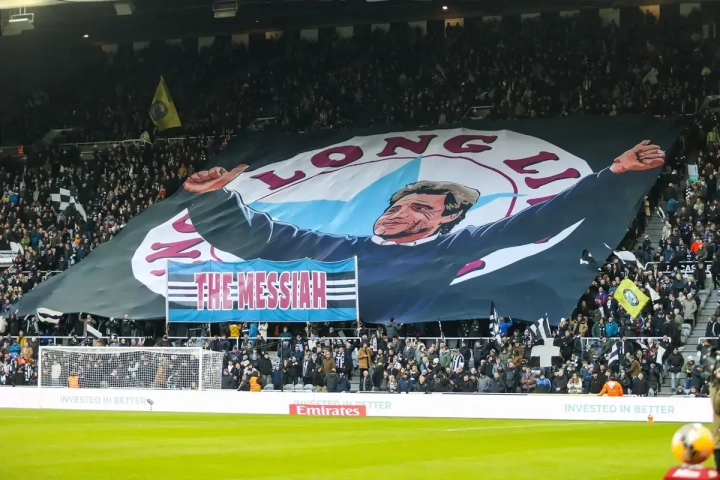
In 1982, he made the stunning decision to drop into the Second Division to sign for Newcastle United. Driven by his father’s North East heritage, Keegan viewed the sleeping giant as a personal crusade. His arrival electrified the city. The turnstiles at St James’ Park, which had been suffering from dwindling attendances, suddenly required repair due to the sheer volume of supporters flocking to see him play. Over two seasons, Keegan scored 48 goals in 78 appearances, dragging the club back into the top flight before retiring in 1984 via an emotional, tear-soaked farewell.
The Entertainers and the 1996 Title Race
If his playing career at Newcastle was a rescue mission, his managerial tenure was an absolute revolution. In February 1992, Keegan answered an SOS call with the club facing the catastrophic prospect of relegation to the third tier of English football. Lacking any formal managerial experience, he relied entirely on his unparalleled motivational abilities.
He saved the club from the drop, secured promotion to the newly formed Premier League, and systematically built one of the most culturally significant sides in English football history. Dubbed “The Entertainers”, Keegan’s Newcastle played a brand of swashbuckling, high-octane attacking football that captured the imagination of the nation. Featuring immense talents such as David Ginola, Les Ferdinand, and Faustino Asprilla, they were a team that preferred to win 4-3 rather than 1-0.
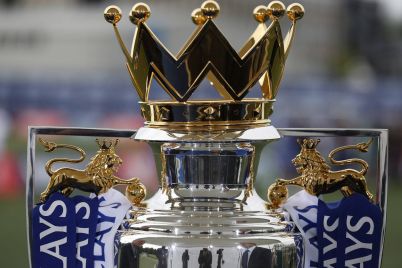
The defining moment of his managerial career arrived during the climax of the 1995-96 Premier League title race. Having relinquished a 12-point lead to Sir Alex Ferguson’s relentless Manchester United, the psychological warfare took its toll. Following a crucial victory over Leeds United, Keegan delivered his impassioned television interview, famously declaring: “I will love it if we beat them! Love it!”
While occasionally cited as the moment the pressure broke him, historians of the game view the interview through a much kinder lens. It was the raw, unfiltered honesty of a man who cared far too much, entirely stripping away the cold, corporate media training that often defines modern football. It was pure emotion, and it endeared him to millions.
National Duty and The Final Chapters
Keegan’s burning passion made him the populist choice to manage the England national team in 1999. He successfully guided the Three Lions through a turbulent qualification play-off against Scotland to reach Euro 2000. However, the international arena often demands cold pragmatism, a trait completely alien to Keegan’s romantic philosophy. Following a disappointing group-stage exit and a subsequent defeat to Germany in a World Cup qualifier, the final match played at the old Wembley Stadium in October 2000, Keegan famously resigned in the stadium toilets, brutally honest in his assessment that he had fallen short of the required tactical level.
He later proved his enduring managerial capabilities by guiding Manchester City to the First Division title in 2002, firmly establishing the foundations for the club’s modern Premier League presence. A brief, nostalgic return to Newcastle United followed in 2008, though it was tragically cut short by disputes with the club’s hierarchy.
An Enduring Legacy
As the floral tributes continue to pile up outside the Milburn Stand at St James’ Park, and Anfield lowers its flags to half-mast, the statistics of Kevin Keegan’s career, the 204 club goals, the 63 England caps, the 21 international strikes, and the glittering array of silverware, tell only a fraction of the story.
Kevin Keegan’s true legacy lies in the profound emotional connection he forged with supporters. He proved that an undersized boy from Yorkshire could conquer Europe through sheer determination. He proved that football could be played with a smile, and that management could be driven by hope rather than fear. As former Newcastle captain Alan Shearer so eloquently stated this week: “My Hero. My manager. My friend. Sleep easy Boss.”
Keegan leaves behind a sport that is significantly richer for his contributions, and a legacy that will forever resonate in the hearts of footballing romantics around the globe.