
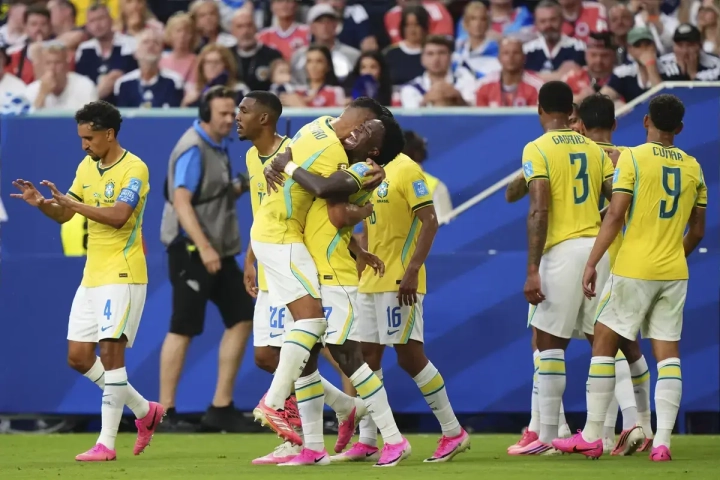
The sweltering humidity of Florida provided the ultimate test of endurance as Scotland faced off against five-time champions Brazil in the final round of Group C fixtures at the 2026 FIFA World Cup. Kicking off at exactly 23:00 BST on Wednesday, 24 June 2026, beneath the spectacular architecture of the Miami Stadium in Miami Gardens, the stakes were phenomenally high. Steve Clarke’s Scottish side entered the fray desperately searching for a historic result to secure an unprecedented spot in the newly expanded Round of 32. However, they were ultimately outclassed by a scintillating, clinical Brazilian performance. The South American giants ruthlessly dispatched the European challengers, securing a commanding 3-0 victory to cement their status as group winners and genuine title contenders, while abandoning Scotland to a nervous, agonising wait for the final group-stage calculations.
A Disastrous Start for the Tartan Army
Heading into this monumental encounter, manager Steve Clarke opted for a compact 4-2-3-1 formation, designed to congest the central channels and carefully absorb the inevitable waves of Brazilian attacking pressure. He introduced centre-back Scott McKenna for his very first World Cup appearance, tasking him with anchoring a defensive line alongside Jack Hendry. Across the tactical divide, Carlo Ancelotti’s star-studded Seleção lined up in their fluid, aggressive 4-3-3 system, determined to monopolise possession and exploit the flanks through their devastating wide players.
Unfortunately for the passionate legions of the Tartan Army who had made the trans-Atlantic journey, their carefully laid tactical blueprint was completely shattered within the opening exchanges. Merely seven minutes into the contest, the persistent deadlock was broken through a catastrophic defensive error rather than a moment of attacking brilliance. Attempting to pass the ball out from the back under immense pressure from 19-year-old Brazilian forward Rayan, McKenna saw his clearance decisively charged down. The ricochet fell perfectly into the path of Vinícius Júnior. Demonstrating elite predatory instincts, the Real Madrid superstar seamlessly sidestepped Scottish goalkeeper Angus Gunn before calmly tucking the ball into the empty net. The early breakthrough completely deflated the European underdogs and instantly shifted the psychological momentum firmly into the hands of the South American heavyweights.
VAR Reprieve and Brazilian Dominance
Stunned by the early setback, Scotland struggled to establish any meaningful foothold in the match. The midfield pivot of Scott McTominay and Kenny McLean was frequently overwhelmed by the dynamic Brazilian trio of Casemiro, Bruno Guimarães, and Lucas Paquetá. The South Americans completely dictated the match rhythm, effortlessly switching the point of attack and forcing the Scottish full-backs, Nathan Patterson and Andrew Robertson, into desperate, last-ditch defensive interventions.
Midway through the first half, it appeared the contest had effectively been put beyond doubt. Vinícius Júnior once again broke through the defensive lines, capitalising on a momentary lapse in concentration from Jack Hendry before clinically finishing past Gunn. However, following a tense, meticulous Video Assistant Referee (VAR) review in the 24th minute, the goal was officially ruled out. The officials adjudged that Vinícius had committed a foul on the Scottish defender during the build-up, offering the European hopefuls a vital, desperately needed lifeline.
Despite surviving that severe scare, Scotland remained heavily pinned back inside their own half, completely failing to trouble Alisson Becker in the Brazilian goal. Their defensive resilience was ultimately broken for a second time just as the half-time whistle beckoned. Deep into stoppage time (45+3′), Bruno Guimarães collected the ball on the right flank following a partially cleared corner. The Newcastle United midfielder delivered a beautifully weighted, inviting cross towards the back post. Evading the radar of Patterson and the outstretched arm of Gunn, Vinícius Júnior timed his movement to absolute perfection, rising highest to power a downward header into the net. The second goal crushed Scottish spirits and ensured Brazil entered the dressing room with an unassailable 2-0 advantage.
Second-Half Adjustments and the Final Blow
Recognising the urgent necessity for a completely different approach, Clarke made an immediate tactical alteration at the interval, withdrawing his captain Andrew Robertson and introducing Kieran Tierney to provide fresh energy and defensive solidity on the left flank. The Scottish side emerged with renewed vigour, attempting to push their defensive line higher up the pitch and engage the Brazilians closer to the halfway line. McTominay began to assert his physical presence in the final third, forcing a solid, early save from Alisson with a firm header.
However, committing extra bodies forward inevitably presented the lethal Brazilian attackers with the exact transitional spaces they relentlessly crave. Exactly on the hour mark (60′), the Seleção ruthlessly exploited these gaps to seal the victory. Guimarães, acting as the primary architectural force in midfield, effortlessly shrugged off the physical challenge of McLean before threading a precise, defence-splitting pass. Matheus Cunha latched onto the delivery with blistering pace, driving into the penalty area before fizzing a powerful, unstoppable strike inside the right post. The third goal effectively ended the match as a competitive contest, allowing Ancelotti to carefully manage the physical workload of his squad.
Neymar’s Return and Late Stroll
With the three points and top spot securely in their grasp, the Brazilian coaching staff utilised their luxurious substitutes’ bench. The 65th minute saw Gabriel Martinelli and Fabinho introduced for Paquetá and Casemiro, refreshing the midfield engine room. Ten minutes later, the stadium erupted in deafening cheers as Neymar made his highly anticipated return to the World Cup stage. The legendary forward, appearing in his fourth successive global tournament, replaced the goalscorer Cunha in the 75th minute, injecting a tremendous sense of celebration among the vast Brazilian contingent in the crowd.
The closing stages devolved into a relatively pedestrian affair, punctuated by tactical fouls and further substitutions. Clarke threw caution to the wind, bringing on Anthony Ralston, Ryan Christie, Ché Adams, and Findlay Curtis in a desperate attempt to improve their worsening goal difference. Despite creating a handful of half-chances, including another saved effort from McTominay and a dangerous Lewis Ferguson free-kick, they failed to genuinely threaten the Brazilian clean sheet. The frustration within the Scottish ranks boiled over slightly, culminating in late yellow cards for Ryan Christie and Brazilian substitute Fabinho.
Tactical Analysis and Statistical Context
When analysing the overarching statistical narrative of the encounter, the sheer dominance of the South American champions is undeniable. Brazil monopolised territorial possession, executing intricate passing networks that completely bypassed the Scottish pressing triggers. Their ability to seamlessly transition from patient build-up play to devastating, rapid attacks proved entirely impossible for the European defenders to contain.
Vinícius Júnior was universally praised and rightfully awarded the Player of the Match accolade. His spectacular brace not only secured the victory but also cemented his place in Brazilian footballing history. He became the first Brazilian player in 24 years, since Ronaldo Nazário and Rivaldo in 2002, to score in all three group-stage matches of a World Cup. Furthermore, the two goals propelled him to four goals for the tournament, placing him firmly in the race for the prestigious Golden Boot alongside the likes of Lionel Messi, Kylian Mbappé, and Erling Haaland.
Post-Match Implications and The Road Ahead
When the final whistle mercifully echoed across the cavernous Miami arena, the contrasting emotions displayed by the two respective nations perfectly encapsulated the dramatic essence of tournament football. The comprehensive 3-0 triumph ensures Brazil finish at the very summit of Group C with an unbeaten record of seven points, having previously secured a 1-1 draw against Morocco and a 3-0 victory over Haiti. They will now eagerly anticipate a highly demanding Round of 32 clash in Houston on 29 June, carrying immense momentum and completely justifying their status as genuine contenders for the trophy.
For Scotland, the heartbreaking reality of the defeat leaves their World Cup dreams hanging precariously by a thread. Finishing third in the group with three points and a damaging goal difference of minus three, they face an agonising, incredibly nervous wait. The Tartan Army must now heavily rely on favourable results across the remaining group-stage fixtures to determine if they can somehow scrape through as one of the eight best third-placed teams. Following the match, a visibly dejected Steve Clarke admitted the monumental difficulty of their situation, acknowledging that they fell significantly short on quality despite giving absolutely everything on the pitch. The coming days will be filled with intense anxiety as millions of Scottish supporters constantly refresh the tournament standings, desperately hoping for a miraculous mathematical reprieve.