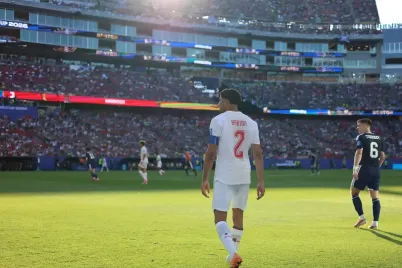

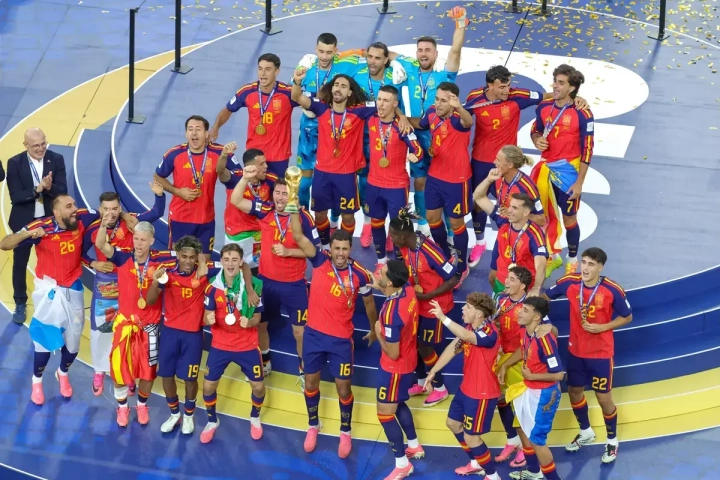
When FIFA announced the expansion of the World Cup to 48 teams and 104 matches, traditionalists and purists expressed profound scepticism. Critics argued that diluting the qualification process would result in a bloated tournament, devoid of the elite jeopardy that has defined football’s grandest stage for nearly a century. However, as the confetti settles on Spain’s historic 1-0 extra-time victory over Argentina at the New York New Jersey Stadium, the raw data paints an entirely different picture.
The 2026 FIFA World Cup, sprawling across the vast expanses of the United States, Mexico, and Canada, did not just silence the doubters; it completely rewrote the sport’s statistical rulebook. It was a five-week festival of relentless attacking football, defining veteran swansongs, and unprecedented global engagement. From the overall tournament aggregates to the bitter, individual races for immortality, here is the comprehensive breakdown of the staggering statistics and broken records that will define the legacy of North America 2026.
The Grand Scale: Goals, Crowds, and Unprecedented Volume
The most immediate and striking takeaway from the 2026 edition is the sheer volume of attacking output. The tournament delivered an astonishing 308 goals across its 104 matches. To place this into context, the previous record for total goals at a World Cup was 172, set just four years ago in Qatar during the traditional 64-match format. The 2026 average of 2.96 goals per match demonstrates that the expanded format did not lead to defensive stalemates, but rather encouraged an open, expansive brand of football.
Equally staggering was the engagement from the terraces. The co-hosts welcomed a record-breaking 6,810,966 fans through the turnstiles, averaging an incredible 65,490 spectators per match. This monumental figure entirely shattered the previous benchmark of 3.6 million, which was famously set during the 1994 World Cup, also hosted by the United States. The towering capacities of NFL mega-stadiums and the iconic Estadio Azteca ensured that the 2026 World Cup was the most heavily attended sporting event in human history.
The Ultimate Goalscoring Duel: Mbappé Eclipses Messi
While Spain ultimately claimed the collective prize, the individual narrative of the tournament was entirely dominated by the breathtaking goalscoring arms race between France’s Kylian Mbappé and Argentina’s Lionel Messi.
Messi, operating in what is almost certainly his final international tournament at the age of 39, delivered a campaign of extraordinary defiance. The Argentine maestro scored eight goals, officially moving past Germany’s Miroslav Klose (16) on the all-time World Cup scoring charts. Along the way, Messi shattered a multitude of individual records. He became the first player to reach 32 career World Cup appearances, significantly extending his own historic landmark. Furthermore, he became the oldest player in World Cup history to score a hat-trick, achieving the feat at 38 years and 357 days old, and extended his unprecedented streak of scoring in consecutive World Cup matches to nine games.
Yet, despite Messi’s remarkable 21 career World Cup goals, he was forced to relinquish the all-time crown during the tournament’s final weekend. Kylian Mbappé, armed with devastating pace and ruthless efficiency, captured his second consecutive Golden Boot by netting ten times during the tournament. His brace in the third-place play-off against England catapulted his career World Cup tally to an astonishing 22 goals. At just 27 years of age, the Real Madrid forward has already established himself as the premier goalscorer in the history of the competition, cementing a statistical legacy that may remain untouched for decades.
Alongside the two heavyweights, Portugal’s Cristiano Ronaldo also solidified his legendary status. Appearing in a record-equalling sixth World Cup alongside Messi and Mexico’s Guillermo Ochoa, Ronaldo netted three times to push his career tally to 11, extending his record as Portugal’s all-time leading scorer at the finals.
The Ten-Goal Thriller and England’s Historic Haul
The pursuit of statistics often leads to matches of chaotic abandon, and nowhere was this more evident than in the bronze medal match. England eventually defeated France 6-4 to claim third place, a fixture that sent shockwaves through the record books.
It was the first World Cup match in 64 years, since the Soviet Union’s 4-4 draw with Colombia in 1962, to feature both teams scoring four or more goals. Furthermore, it became the highest-scoring World Cup fixture of any kind since Hungary’s infamous 10-1 demolition of El Salvador in 1982, and the ten goals represent the most ever scored in a World Cup third-place play-off.
Within that chaotic encounter, English records tumbled. Bukayo Saka netted a brilliant hat-trick, joining Geoff Hurst and Harry Kane in the exclusive club of Englishmen to achieve the feat on the global stage. Jude Bellingham, the dynamic heartbeat of Thomas Tuchel’s side, added his seventh goal of the tournament, becoming the first Englishman to ever score seven times in a single World Cup campaign. Not to be outdone, captain Harry Kane pushed his career World Cup tally to 14, comfortably overtaking Gary Lineker (10) as the Three Lions’ greatest ever marksman at the tournament.
On the French side of the divide, Michael Olise was a creative revelation. The dynamic winger provided five assists throughout the competition, officially equalling the legendary Pelé’s long-standing record for the most assists provided in a single World Cup tournament.
Defensive Dominance and Playmaking Prodigies
While the attackers naturally claimed the headlines, the defensive and playmaking statistics highlighted the tactical evolution of the modern game. Spain’s ultimate triumph was anchored by a historically impenetrable defensive unit. Goalkeeper Unai Simón, who rightfully claimed the Golden Glove, kept a tournament-leading six clean sheets. In doing so, Spain set a new, staggering record for the most consecutive FIFA World Cup matches without conceding a goal, a streak of six matches that remarkably stems back to their time in Qatar in 2022.
At the other end of the pitch, Spain’s teenage sensation Lamine Yamal proved to be the ultimate disruptor. The 19-year-old completed 30 successful dribbles across the tournament, the highest figure of any player in North America. While he fell short of Diego Maradona’s legendary record of 53 successful take-ons from Mexico 1986, Yamal’s ability to constantly unbalance opposition defences was a cornerstone of Spain’s success.
Meanwhile, a new generation of goalscorers announced their arrival on the global stage. Norway’s Erling Haaland, making his highly anticipated World Cup debut, proved that his domestic ruthlessness perfectly translates to international football. Despite Norway exiting the competition in the quarter-finals at the hands of England, the 25-year-old scored seven goals in just four matches. This remarkable strike rate makes him one of the most prolific debutants in World Cup history, tying him with Poland’s Grzegorz Lato (1974) and placing him alongside legends such as Just Fontaine and Sándor Kocsis in the pantheon of immediate tournament impacts.
The Minnows Make Their Mark
The expanded 48-team format was specifically designed to provide opportunities for emerging footballing nations, and the 2026 tournament delivered a historic milestone for one of its smallest competitors. Curaçao, an island nation with a population of just over 150,000 and a land mass of a mere 171 square miles, became the smallest country to ever compete at a FIFA World Cup.
Despite suffering a heavy 7-1 defeat to Germany in their Group E opener, the match was immortalised by Livano Comenencia. His 21st-minute strike ensured that Curaçao also laid claim to the record of being the smallest nation to ever score a goal at the men’s World Cup, providing a moment of pure, unadulterated joy that perfectly encapsulated the inclusive spirit of the expanded competition.
A Legacy Cast in Numbers
As the global footballing calendar pivots back towards the domestic leagues, the 2026 FIFA World Cup will be remembered as an era-defining spectacle. It was a tournament that validated FIFA’s ambitious expansion, proving that more football did not inherently mean a drop in entertainment value.
From Kylian Mbappé’s relentless march to the summit of the all-time scoring charts to the record-shattering crowds that filled North America’s colossal arenas, the statistics from the past five weeks tell a story of a sport operating at the absolute peak of its global powers. Records that had stood for decades were systematically dismantled, setting a terrifyingly high benchmark for the 2030 centenary edition. The 2026 World Cup was a celebration of excess, perfectly anchored by the undeniable, historic greatness of the players who graced its pitches.