

By Sam Wayne
Donald Trump sold America a political revolution. This week’s midterm elections have delivered a devastating warning about what happens when the excitement of disruption meets the experience of being governed by it.
For Nigel Farage and Reform UK, the implications stretch far beyond Washington. A political movement that drew confidence and credibility from Trump’s return to power must now confront the other half of that association: the American public’s willingness to punish the project when its promises collide with reality.
The argument that Britain needs its own version of Trump has become considerably harder to sell.
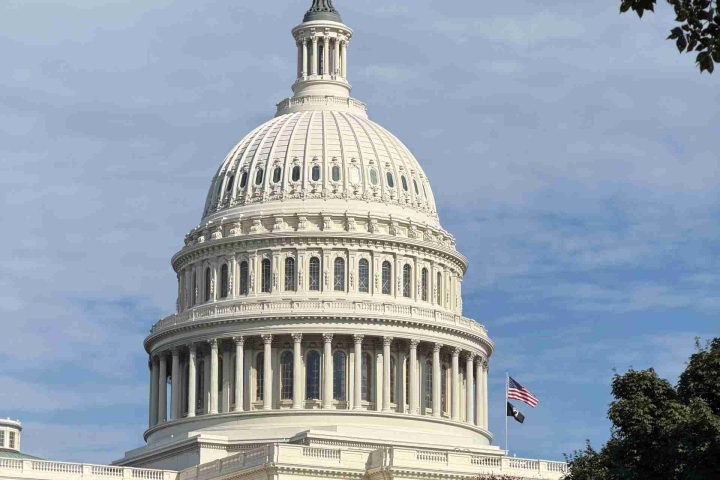
Democrats have won control of both chambers of Congress, with Republican-held Senate seats changing hands in Texas, North Carolina, South Carolina, Kansas, Iowa, Ohio and Maine. These are different contests in different political environments, but together they amount to a striking rebuke to the president’s party.
Some of the breakthroughs carry exceptional historical weight. James Talarico’s Texas victory is the first Democratic Senate win there since 1988, a gap of 38 years. Adam Hamilton’s victory in Kansas ends a drought stretching back to 1932. South Carolina has elected a Democratic senator for the first time since 1998, while North Carolina has done so for the first time since 2008. These are Senate victories, rather than evidence that every institution in each state has changed allegiance. Texas, in particular, has supplied a powerful symbol of how far the backlash has travelled.
The lesson deserves more thought than the usual celebration of one party defeating another. My reading is that voters have challenged a governing proposition: that permanent confrontation, sweeping promises and the relentless identification of enemies can provide a durable substitute for improving ordinary lives.
Economic disappointment is central to that judgment. It would be too convenient to describe every Democratic vote as a conscious rejection of division. Midterms often punish the president’s party, and candidates, turnout and local circumstances matter. But when a leader makes himself the answer to almost every national problem, he cannot reasonably expect to escape responsibility when the answers fail to arrive.
Trump returned to office with a seductive offer. Traditional politics had failed; conventional politicians lacked courage; the established rules were preventing solutions. Break those rules, empower the strong leader and the country would recover its prosperity, confidence and place in the world.
For frustrated voters, that offer had an immediate emotional appeal. It resembled a political placebo: the promise of decisive action created hope before the treatment had demonstrated that it worked. The test came when households opened their bills.
There are at least ten promises against which that offer should be judged. Some were plainly missed; others were diluted or remain unfulfilled. The distinction matters, because an argument about broken trust should itself be accurate.
First, Trump promised to end inflation from the beginning of his presidency. Inflation persisted. Slower price increases, where they occurred, would in any event have been different from reversing the increases households had already suffered.
Second, he promised cheaper groceries. By August, PolitiFact’s examination of official data found grocery prices about 3.4 per cent above their level when his second term began. Individual products had become cheaper, but the overall shopping basket had not.
Third, he promised to halve energy costs within his first year. That deadline passed without the promised reduction. Electricity and natural gas had become more expensive during that first year, even while petrol initially fell.
Fourth, he held out the prospect of petrol below two dollars a gallon. A report released by Democratic staff on the Senate Budget Committee recorded a national average of $4.47 on 23 September. A highly specific promise of relief had collided with the consequences of conflict and an internationally traded commodity.
Fifth, he maintained that foreign countries would bear the burden of tariffs. American importers pay those duties, and costs can pass through to businesses and consumers. The nonpartisan Congressional Budget Office has explained how higher tariffs raise import costs and reduce household purchasing power.
Sixth, he promised to protect Medicaid. His signature 2025 legislation instead reduced projected federal spending on the programme. Whatever the administration’s justification for changing eligibility and financing, a substantial reduction against the previous spending baseline cannot honestly be presented as an untouched programme.
Seventh, he promised a balanced budget. That remains undelivered, with the Congressional Budget Office projecting a federal deficit of roughly $1.9 trillion for 2026. He still has time in office, but the promised transformation in the public finances has plainly not arrived.
Eighth, he promised to end the Russia-Ukraine war within 24 hours. That deadline was missed. Subsequent diplomacy cannot retrospectively fulfil a promise built around immediate personal mastery of a deeply entrenched conflict.
Ninth, he promised to keep America out of new wars. The US-Israeli military campaign against Iran, beginning on 28 February, is the most consequential contradiction of that assurance. The politician who presented himself as an alternative to foreign entanglement took America into another Middle Eastern conflict, with consequences extending to energy markets and households far beyond its borders.
Tenth, he promised no tax on Social Security benefits. The legislation provided an additional, temporary deduction for eligible older taxpayers, bringing real relief to some. It did not abolish the taxation of Social Security benefits. A narrower benefit was delivered in place of the universal assurance.
These failures and shortfalls are connected. War affects fuel prices. Fuel prices affect transport and food. Tariffs affect the cost of imported goods and business supplies. Political decisions made in the language of national strength can leave ordinary households carrying an entirely different kind of burden.
There is also the question of how people are treated. Immigration and Customs Enforcement, ICE, has become a defining expression of the administration’s approach. Amnesty International’s September report documented degrading treatment, discriminatory enforcement, restrictions on access to lawyers and inhumane detention conditions. These are the organisation’s findings, and they demand serious scrutiny.
A country is entitled to control its borders and enforce immigration law. It also has a responsibility to treat people as human beings. The suggestion that dignity somehow obstructs effective government is one of the most corrosive ideas in modern politics.
The same appetite for humiliation extends into Trump’s treatment of political colleagues. His description of former ally Marjorie Taylor Greene as a traitor, and his attacks on Republican Thomas Massie, illustrate a political culture in which disagreement becomes evidence of disloyalty. Loyalty to the leader displaces the freedom to exercise independent judgment.
This is where the British implications become particularly uncomfortable for Farage. His longstanding embrace of Trump helped position Reform within an apparently ascendant international movement. America seemed to demonstrate that a confrontational outsider could overwhelm the established parties and command the political agenda.
Now that association supplies a warning as well as a sales pitch. If the American model produces disappointment, voters here are entitled to ask why Britain should import it.
The familiar saying is that when America sneezes, Europe catches a cold. Political influence is less automatic than the phrase suggests, but the relationship matters. Europe’s empires once dominated the international order. The world wars, especially the second, accelerated America’s rise to extraordinary economic, military and cultural influence. Hollywood, consumer brands, technology and political campaigning all helped transmit American ideas abroad. Its influence was already growing before 1945; the postwar settlement gave it a new scale.
The traffic in political ideas can carry warnings as readily as inspiration. European parties that welcomed Trump’s victory cannot reasonably insist that his electoral humiliation has no relevance to their own arguments.
For Reform, that relevance meets a domestic problem: the difference between attracting a protest vote and assembling people fit to govern.
October’s ITV investigation recorded racist, sexist and violent language among Reform councillors and candidates. Alan Feeney, Jamie Campbell and Chris Whelan subsequently resigned their council positions. Feeney apologised for comments he acknowledged were unacceptable. Reform said investigations and suspensions had followed and that it had strengthened its vetting procedures, while arguing that individuals who did not share its values could still get through.
That response belongs in the record. So does the question it leaves unanswered: how often can a party promise to professionalise before voters expect evidence that it has done so?
These cases do not establish that every Reform councillor is unfit. They do expose weaknesses in selection and standards that deserve examination before the party is entrusted with greater power. Public office requires the ability to serve residents who did not vote for you, who look different from you and who disagree with you. A councillor’s responsibility extends to the whole community.
Britain’s grievances are real. The cost of living and immigration dominate much of the argument, although their ranking varies by poll and by the question asked. Ipsos’s recent Issues Index has placed immigration first, alongside substantial concern about the economy and inflation. Any serious political response must also address NHS access, housing affordability, social care, crime, insecure work, weak local services and opportunities for younger people.
Those problems justify demanding change. They do not establish that Trump’s style of leadership is the solution.
Farage and Zia Yusuf therefore face a test that cannot be answered by repeating the immigration message more loudly. What is Reform’s credible programme for growth, public services and household finances? How will it fund its commitments? How will it recruit capable ministers and administrators? How will it reconcile lower taxes with the expectations people have of the NHS, policing and social care?
Reform has policies beyond immigration. The question is whether those policies form a coherent and deliverable programme that can withstand scrutiny. Identifying public frustration has helped it grow. Resolving that frustration requires a much greater range of skills.
Andy Burnham’s premiership offers a competing political proposition. His appeal rests partly on the possibility that politics can become more recognisable, practical and attentive to community. Voters who want to feel heard may respond to a leader who appears to understand their everyday lives without making permanent hostility the price of being represented.
There is evidence of Labour’s recovery. Survation’s early October poll put Labour on 30 per cent and Reform on 24 per cent, with the Conservatives on 19 and the Liberal Democrats on nine. In September, Ipsos found that, in a direct choice, 52 per cent preferred a Burnham-led Labour government to 28 per cent preferring a Farage-led Reform government. Those findings predate the American result, so the recovery cannot be attributed to the midterms.
Nor is Burnham entitled to assume that a more reassuring manner will protect him indefinitely. Ipsos also found that more than half thought Labour was doing a bad job reducing the cost of living. His opportunity depends on converting personal appeal into measurable improvement. The warning from America applies to him too.
Even Kemi Badenoch has demonstrated that political disagreement can coexist with personal recognition. She described Burnham as empathetic following the Heaton Park synagogue attack and said she liked him as an individual, while strongly criticising his politics and performance. That does not establish a wholesale change in her approach. It does show that an opponent can be challenged without denying their humanity.
Could Reform eventually fall to fourth, behind the Liberal Democrats? It is a possible political scenario, rather than a conclusion supported by those polling figures. Reform remains a substantial force, and Britain’s electoral geography makes national vote share an imperfect guide to seats. Two days of American results cannot establish that British voters have already changed their minds.
But the risk is clear. If Labour consolidates its recovery, the Conservatives regain credibility and Liberal Democrats strengthen their local appeal, Reform could find its claim to be the inevitable next government unravelling. Its momentum depends partly on persuading people who have never regarded themselves as ideological loyalists. Those voters can reconsider.
The midterms have weakened a precedent on which Farage drew, and increased the pressure on him to explain what his party would actually deliver. They have not erased Europe’s grievances or ended populism. Mainstream parties would make a serious mistake if they treated an American defeat as permission to ignore the conditions that made insurgent politics attractive.
The more compelling lesson is that public anger is a responsibility to be answered. Politicians who turn it into a permanent campaign against neighbours, minorities and dissenters may discover that the anger eventually turns towards them.
Britain can demand controlled borders, functioning services, affordable homes and a fairer economy while expecting its leaders to preserve the bonds that allow a society to live together. Those ambitions belong in the same political programme.
Trump persuaded millions that disruption was the route to renewal. This week’s verdict exposes how costly the gap between the two can become. Reform must now persuade Britain that it has learned something from that failure, and that it can offer more than another version of it.