
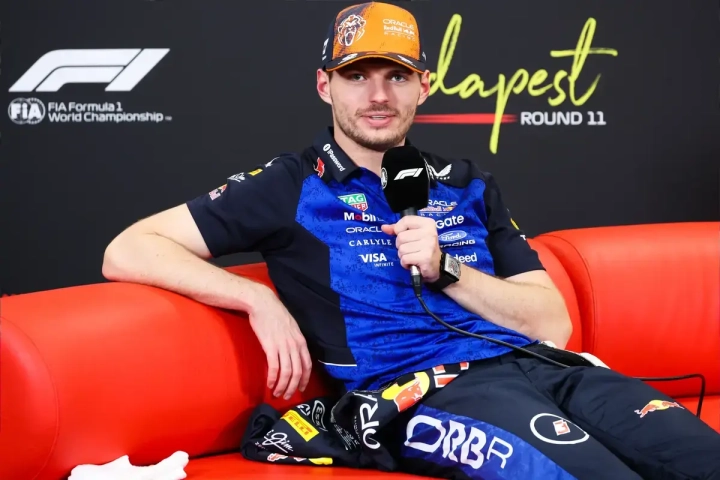
Ending months of intense speculation that threatened to permanently alter the Formula One landscape, four-time World Champion Max Verstappen has officially signed a new contract with Oracle Red Bull Racing. The landmark agreement, formally announced on Thursday, 20 August 2026, commits the Dutch driver to the Milton Keynes-based outfit until the conclusion of the 2030 season.
Revealed on the eve of his home race at the Dutch Grand Prix in Zandvoort, an event currently marking its final planned edition on the calendar, the extension serves as a monumental statement of intent from both the driver and the team. Prior to this updated arrangement, Verstappen’s existing deal was set to expire at the end of 2028, though it famously contained performance-related exit clauses that could have been triggered early. By essentially adding two further years to his tenure and nullifying those escape mechanisms, the 28-year-old has firmly anchored his prime racing years to the constructor that initially elevated him to global superstardom.
Quashing the Mercedes Rumours
Throughout the past eighteen months, the Formula One paddock has been ablaze with persistent rumours linking Verstappen to a sensational switch to Mercedes. Following McLaren’s recent resurgence, which culminated in Lando Norris narrowly eclipsing Verstappen for the drivers’ crown by a mere two points last season, Red Bull found themselves slipping down the competitive pecking order. This dip in form coincided with sweeping alterations to the sport’s technical regulations set for 2026, creating a perfect storm of uncertainty.
Rival teams actively monitored the Dutchman’s situation. Mercedes Chief Executive Ola Kallenius reportedly gave the green light for the Silver Arrows to aggressively pursue the reigning champion, viewing him as the ultimate long-term successor to the departed Lewis Hamilton. Whispers of a transfer grew louder when it emerged that performance clauses could allow Verstappen to break his contract prematurely if Red Bull failed to meet specific championship benchmarks prior to the summer break.
However, today’s announcement decisively shuts the door on those complex manoeuvres. Choosing loyalty and long-term stability over a highly publicised manufacturer switch, the driver has silenced the paddock gossip. His decision to remain effectively locks down the most significant piece of the driver market puzzle, forcing rival outfits to look elsewhere as they finalise their respective line-ups for the impending regulatory revolution.
Navigating a Changing of the Guard
What makes this extended commitment particularly striking is the drastically altered internal landscape at Red Bull Racing. The fabric of the team that Verstappen has called home for the past decade has undergone a profound transformation, with long-standing foundational pillars of the organisation departing to initiate a completely new era of leadership.
Christian Horner, the formidable former team principal who guided Red Bull from its inception and oversaw its evolution into a sporting juggernaut, has stepped away. Similarly, motorsport advisor Helmut Marko, the man widely credited with identifying Verstappen’s generational talent and fast-tracking him into Formula One as a teenager, is no longer present in the garage. Furthermore, legendary aerodynamicist Adrian Newey, whose design genius penned the very cars that delivered Verstappen his four world titles, has exited the design office, leaving a significant void in the technical department. Even inside the inner sanctum of the garage, shifts are occurring; Gianpiero Lambiase, Verstappen’s famously stoic and highly successful race engineer, has agreed to join McLaren no later than 2028.
Despite this sweeping exodus of familiar faces, Verstappen has opted to place his unwavering trust in the team’s newly appointed management structure. Operating under the leadership of current Team Principal Laurent Mekies, Red Bull is aggressively attempting to rebuild its championship-winning culture. Verstappen’s signature represents a massive vote of confidence in Mekies’ vision and the overhauled technical personnel tasked with returning the team to the absolute pinnacle of the sport.
The 2026 Engine Regulations and Red Bull Powertrains
A central factor in securing the Dutchman’s signature was undoubtedly the progress of Red Bull Powertrains. Next season, the team will embark on its most ambitious technical endeavour yet, manufacturing its own power units for the very first time in collaboration with American automotive giant Ford. This represents a significant departure from their highly successful era powered by Honda, who are transitioning to a partnership with Aston Martin.
The 2026 regulation changes place an immense emphasis on electrical power generation, mandating a roughly fifty-fifty split between the internal combustion engine and the electrical battery output, alongside the introduction of fully sustainable fuels and active aerodynamics. Inevitably, such a dramatic shift carries inherent risks, particularly for a newly established engine department competing against legacy manufacturers like Ferrari, Mercedes, and Audi, who enter the fray in 2026.
By signing through to 2030, Verstappen is demonstrating immense faith in the Red Bull-Ford project. He is explicitly backing the Milton Keynes engine facility to deliver a competitive package, dismissing outside suggestions that a customer or established works team might offer a safer haven during the transition period.
An Era-Defining Legacy
Since his dramatic mid-season promotion from Toro Rosso (now Racing Bulls) in 2016, where he famously won his debut race at the Spanish Grand Prix, Verstappen has become the undisputed focal point of Red Bull Racing. Over the ensuing decade, the partnership has evolved into one of the most statistically dominant alliances in the history of motorsport.
To date, the collaboration has yielded four Drivers’ World Championships, two Constructors’ World Championships, and an astonishing 71 Grand Prix victories. He sits among the sport’s all-time greats, and at just 28 years of age, he possesses the longevity to challenge nearly every historical record in the Formula One archives. His aggressive, uncompromising driving style, paired with relentless consistency, has defined the modern era of the sport.
The Driver Market Fallout
With Verstappen now officially off the market until the turn of the decade, the ripple effects across the Formula One grid will be immediate and profound. Mercedes, having exhausted their pursuit of the Dutchman, must now solidify their long-term plans around George Russell and their emerging academy talents like Andrea Kimi Antonelli. Aston Martin, armed with Honda power from 2026, will also need to temper any ambitious dreams of luring the four-time champion to Silverstone.
Furthermore, the extension solidifies the benchmark against which the rest of the grid will be measured. Drivers like Lando Norris at McLaren and Charles Leclerc at Ferrari now know definitively that their primary antagonist will remain entrenched in the Red Bull machinery. The rivalry that blossomed brilliantly last season, culminating in Norris’s historic championship triumph, is now guaranteed to feature multiple thrilling sequels in the years ahead.
Statements and Future Outlook
In a statement accompanying the official announcement, Verstappen articulated his enthusiasm for the renewed partnership and acknowledged the collective desire to reclaim their dominant status.
“I am really pleased with the contract extension,” the Dutch driver confirmed. “We have the best people and I’m excited to keep working together with everyone to get back to the top again. This remains the ultimate goal that all of us have been working towards and will continue to pursue.”
Oracle Red Bull Racing mirrored this sentiment, releasing a statement that underscored the driver’s intrinsic value to the brand’s identity. “The four-time World Champion will remain at the heart of Oracle Red Bull Racing as the Team embarks on the next chapter of its journey,” the team noted. The constructor praised his uncompromising competitiveness, relentless determination, and the courage to challenge convention, characterising the extension as a powerful statement of mutual trust.
As the Formula One circus descends upon the coastal dunes of Zandvoort this weekend, the atmosphere will undoubtedly be electric. The grandstands, awash with a sea of orange, will celebrate not only their national hero’s return but also the guarantee that he will remain a fixture of the grid well into the next decade. For Red Bull Racing, securing Max Verstappen ensures that, regardless of the regulatory challenges ahead, they possess the ultimate driving weapon to navigate them.