
Argentina strengthened their grip on Group J and took a major step toward defending their world title with a hard-fought 2-0 victory over Austria in Dallas. While the final scoreline suggested a comfortable evening for the South Americans, the match itself was far more competitive than the result might indicate. Austria produced a disciplined and determined performance, frustrating Argentina for long periods, but once again Lionel Messi proved to be the difference-maker on the biggest stage.
The encounter carried significance long before kickoff. Both nations entered the match having won their opening group games, meaning the winner would move into a commanding position in the race for qualification. The atmosphere inside the stadium reflected the occasion, with thousands of Argentine supporters creating a sea of blue and white and turning the venue into something resembling a home match. Their expectations were high, especially after Messi’s remarkable opening-game display, and the veteran captain delivered yet another unforgettable performance.
Argentina began the match with confidence, controlling possession from the opening whistle and attempting to stretch Austria’s compact defensive shape. Lionel Scaloni’s side looked determined to establish an early lead and nearly achieved that objective within the first few minutes. Austria struggled to deal with Argentina’s movement around the penalty area, and a challenge on an attacking player prompted a lengthy video review. After consulting VAR, the referee pointed to the penalty spot, handing Argentina a golden opportunity to move ahead.
The stadium expected the net to bulge when Messi stepped forward. Few players in football history have been more reliable from such situations. However, in one of the match’s most surprising moments, the Argentine captain failed to convert. The miss stunned the crowd and immediately injected fresh belief into the Austrian players. Instead of falling behind, they suddenly felt they had been given a lifeline.
Austria responded positively to the missed penalty. Rather than retreating into a defensive shell, they began to venture forward with greater confidence. Their midfield pressed aggressively, denying Argentina easy passing lanes and forcing mistakes in areas where Scaloni’s team normally operates comfortably. For a period during the first half, Austria looked increasingly dangerous. They managed several promising attacks and caused concern inside the Argentine defensive third.
Argentina, though, remained patient. The reigning champions understood that opportunities would arrive if they continued moving the ball quickly and exploiting spaces between the Austrian defensive lines. Julián Álvarez, Alexis Mac Allister and Enzo Fernández all contributed to periods of sustained pressure, while the full-backs pushed high to support attacks from wide positions.
Despite Argentina’s territorial dominance, Austria’s defensive organization remained impressive. David Alaba provided leadership at the back, marshaling teammates effectively and making several crucial interventions. Austria limited clear-cut chances and forced Argentina into speculative efforts from distance. For much of the opening half, it appeared the European side might reach the interval level.
Everything changed in the 38th minute.
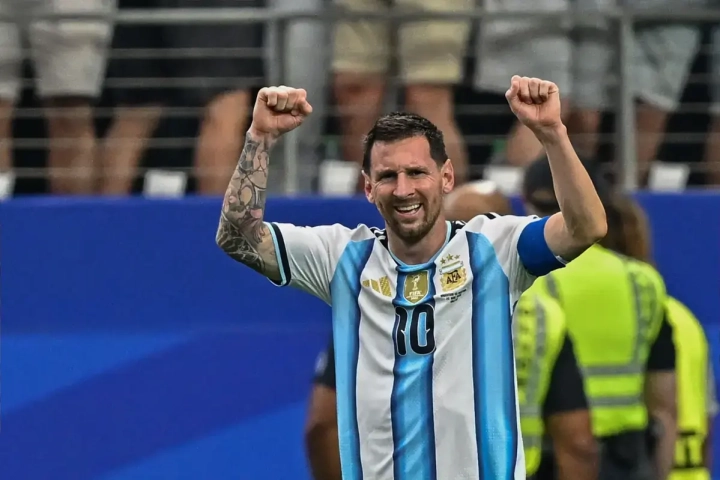
Messi, who had endured the frustration of the earlier penalty miss, collected possession just outside the penalty area. In a flash, he created a yard of space and unleashed a trademark left-footed finish that curled beyond the goalkeeper and into the corner of the net. It was a goal that combined precision, composure and brilliance, qualities that have defined his extraordinary career.
The strike sparked celebrations among Argentine supporters and represented another milestone in Messi’s remarkable World Cup journey. More importantly for Argentina, it broke Austria’s resistance and provided the breakthrough they had been searching for throughout the opening half.
The goal altered the emotional complexion of the match. Austria suddenly faced a difficult dilemma. They could no longer remain solely focused on defensive stability. At some stage they would need to take risks and commit additional players forward in pursuit of an equaliser.
Argentina almost doubled their advantage before halftime as confidence surged through the team. The attacking combinations became sharper, while Austria appeared shaken by conceding so close to the break. Nevertheless, the Europeans managed to survive until the interval trailing by only a single goal, keeping themselves firmly in contention.
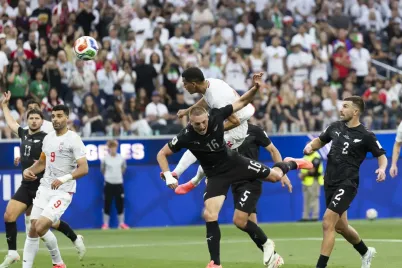
The second half developed into a fascinating tactical battle. Austria emerged from the dressing room determined to respond and produced arguably their most aggressive spell of the contest. Their midfielders pressed higher up the pitch, and several attacks forced Argentina to defend deeper than they would have preferred.
One of Austria’s best opportunities arrived when a dangerous ball was delivered into the penalty area, creating uncertainty among the Argentine defenders. Emiliano Martínez, however, demonstrated once again why he is considered one of the world’s elite goalkeepers. His positioning and decision-making helped preserve Argentina’s lead at a crucial stage.
As the match entered its final half-hour, tensions began to rise. Challenges became more robust, tempers occasionally flared, and both teams understood the importance of the result. Austria sensed they were still within touching distance, while Argentina knew a second goal would likely end the contest.
Scaloni turned to his bench in search of fresh energy. The Argentine manager introduced substitutes capable of maintaining intensity and stretching an increasingly tired Austrian defence. The changes allowed Argentina to regain greater control of possession and reduce the pressure they had experienced earlier in the half.
Austria continued fighting admirably. They refused to accept defeat and kept searching for openings. Their work rate remained impressive throughout, and they demonstrated why many observers had viewed them as a potentially difficult opponent in Group J. Yet the longer the game continued, the more evident it became that Argentina’s experience and quality were gradually taking over.
The closing stages featured several moments when Austria threatened to level the score. Crosses flashed across the penalty area, shots were blocked by desperate defenders, and Argentina occasionally looked vulnerable. However, every challenge was met by a composed response from the reigning champions.
Then, deep into stoppage time, the match produced one final defining moment.
With Austria committing players forward in a last desperate attempt to rescue a point, spaces opened at the back. Argentina exploited those gaps brilliantly. The ball eventually found its way to Messi inside the penalty area, and the captain showed ruthless efficiency to finish calmly and secure his second goal of the evening.
The strike effectively ended the contest and triggered wild celebrations among Argentine fans. It also underlined a recurring theme of the tournament so far: whenever Argentina require inspiration, Messi continues to provide it.
The final whistle confirmed a 2-0 victory and another important three points for Scaloni’s men. Argentina had not produced a flawless performance, but championship-winning teams are often judged by their ability to navigate difficult matches, and this was precisely that type of test. Austria challenged them physically, tactically and mentally, yet Argentina found a way to emerge victorious.
The statistics only told part of the story. Argentina enjoyed more possession and created the better chances, but Austria’s resilience ensured the match remained competitive for long periods. The scoreline reflected Argentina’s superior quality in decisive moments rather than total domination from start to finish.
Following the game, Lionel Scaloni praised his players for their patience and maturity. The Argentine manager acknowledged that Austria had presented significant challenges and noted that his team had been forced to work extremely hard for the victory. He highlighted the importance of remaining calm after the missed penalty and commended the squad for maintaining belief throughout the contest. Scaloni also emphasized that qualification had not yet been fully secured mathematically and insisted that his players must remain focused for the remainder of the group stage.
Scaloni reserved special praise for Messi, describing his captain as a unique footballer who continues to influence matches at the highest level despite approaching his 39th birthday. The coach spoke about Messi’s leadership, professionalism and ability to inspire teammates, suggesting that his impact extends far beyond goals and assists.
Austria manager Ralf Rangnick expressed mixed emotions after the defeat. While disappointed with the result, he took encouragement from many aspects of his team’s performance. Rangnick believed Austria had competed well against one of the tournament favourites and pointed to the missed Argentine penalty as evidence that his players had made life difficult for the world champions. He acknowledged that Messi’s quality ultimately proved decisive and admitted that there are few teams capable of containing the Argentine star for an entire match.
The Austrian coach also praised his squad’s discipline and commitment, insisting that the performance provided reasons for optimism ahead of their remaining group fixtures. Rangnick argued that if Austria can replicate the same intensity and organisation in future matches, they will still have a strong chance of advancing to the knockout rounds.
For Argentina, the victory represented another statement of intent. Two matches into the tournament, they remain unbeaten, defensively solid and increasingly confident. Their ability to manage difficult situations, absorb pressure and rely on individual brilliance when necessary makes them one of the strongest contenders for the trophy.
The performance also reinforced the enduring significance of Messi. Every World Cup seems to generate fresh chapters in his legendary career, and this match added another memorable entry. After missing a penalty that might have unsettled many players, he responded with two goals of immense importance. That resilience has become one of his defining characteristics over the years.
Austria left the field disappointed but far from disgraced. Their organization, work ethic and willingness to compete suggested they remain capable of progressing from the group. On another day, with slightly better fortune in key moments, they might have earned a more favourable outcome.
Ultimately, however, the night belonged to Argentina and their iconic captain. In a tournament where every match carries enormous pressure, the defending champions once again demonstrated why they remain among football’s elite. They overcame a determined opponent, handled adversity and secured a result that moves them closer to the knockout stage.
As supporters streamed out of the stadium, the conversation centred on a familiar figure. Messi had once again stolen the spotlight, delivering when it mattered most and guiding Argentina to another significant World Cup victory. With the tournament still in its early stages, the possibility of even greater achievements lies ahead, and performances like this suggest Argentina’s dream of retaining their crown remains very much alive.