

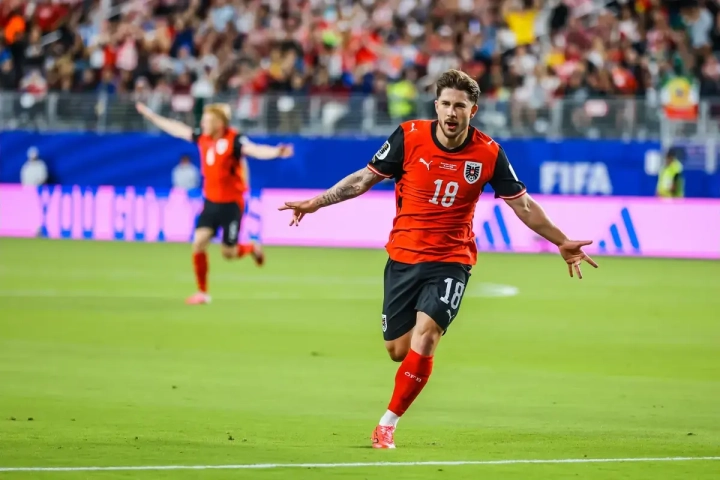
The 2026 FIFA World Cup produced a captivating encounter in Group J on Wednesday morning, as Austria marked their long-awaited return to the global stage with a tense 3-1 victory over tournament debutants Jordan. Taking place beneath the bright lights of the San Francisco Bay Area Stadium in California, the fixture kicked off at 05:00 BST on 17 June 2026. For the European side, the triumph ended a 28-year wait for a World Cup win, while their Middle Eastern opponents delivered a spirited performance that included a historic first-ever goal at the finals. Despite the relatively comfortable-looking final scoreline, the match was a tightly contested affair that required a late own goal and a stoppage-time penalty to finally separate the two ambitious nations.
Early Exuberance and a Thunderous Breakthrough
Entering the cavernous American venue, the overarching narrative heavily favoured a routine victory for Ralf Rangnick’s experienced squad. Operating in their trademark, high-pressing 4-2-3-1 formation, the Austrians sought to dominate possession and overwhelm their opponents early on. However, the Nashama, guided by the tactical acumen of manager Jamal Sellami, refused to be intimidated by the grand occasion. Deploying a resilient 3-4-3 setup designed to absorb pressure and hit back on the counter-attack, the debutants started with remarkable exuberance.
Within the opening two minutes, Jordan carved out the first genuine opportunity of the contest. Captain Ihsan Haddad found a pocket of space on the right flank and unleashed a fierce drive that rippled the side-netting, immediately sending a wave of anxiety through the Austrian defensive ranks. A quarter of an hour later, Odeh Al-Fakhouri sent another stark warning shot toward the European goal. Striking the ball cleanly from distance, the forward’s effort forced an acrobatic, fingertip save from goalkeeper Alexander Schlager, who tipped the ball safely over the crossbar.
Having successfully weathered the unexpected early storm, the European outfit gradually established their rhythm and ruthlessly punished their opponents in the 21st minute. Collecting a loose ball on the edge of the penalty area, midfielder Romano Schmid shifted his body weight expertly before whipping an unstoppable, curling drive into the back of the net. The spectacular strike broke the deadlock and seemingly settled the nerves of the heavily favoured Austrian side, allowing them to control the remainder of the first half with patient, methodical passing.
A Historic Milestone for the Nashama
Emerging from the half-time interval, Sellami undoubtedly demanded greater attacking bravery from his squad. His passionate instructions yielded magnificent dividends just five minutes into the second period. In the 50th minute, the Middle Eastern nation secured a moment of pure footballing history that will be endlessly celebrated in Amman.
Gathering possession deep inside the Austrian half, Noor Al-Rawabdeh delivered a perfectly weighted through ball to the feet of Ali Olwan. Showcasing elite composure and blistering pace, the dynamic forward carried the ball into the penalty area, isolated his marker, and jinked cleverly inside. Without a moment’s hesitation, Olwan bent an inch-perfect shot beyond the despairing dive of Schlager, officially becoming the first Jordanian player to ever score at a FIFA World Cup. The phenomenal solo effort sent the travelling supporters into absolute delirium and completely reset the tactical landscape of the match.
Tactical Adjustments and VAR Drama
Shocked by the equaliser, Rangnick immediately turned to his bench in search of a decisive response. The veteran manager had already introduced talismanic forward Marko Arnautović at half-time in place of Saša Kalajdžić, but he further altered the complexion of the game with a bold triple substitution in the 58th minute. Kevin Danso, Paul Wanner, and Carney Chukwuemeka were all thrust into the fray, replacing David Alaba, Phillipp Mwene, and Xaver Schlager respectively. These proactive changes injected fresh legs and renewed urgency into the Austrian attacking movements.
The relentless pressure almost paid off in the 67th minute during a chaotic goalmouth scramble. Following a deep corner kick, Jordanian goalkeeper Yazeed Abulaila failed to get enough purchase on a desperate punch clear. The ball dropped kindly into the six-yard box, allowing the opportunistic Arnautović to stab it into the unguarded net. As the Austrian players rushed to celebrate, the joy was abruptly halted by an intervention from the Video Assistant Referee. Following a lengthy on-field review, the match official correctly ruled the effort out due to a clear handball by defender Stefan Posch during the chaotic build-up, offering the debutants a massive, temporary lifeline.
Late Austrian Surge Seals the Points
Despite the frustrating setback, the European side maintained their suffocating intensity, pinning the tiring Jordanian defence deep inside their own third. The decisive breakthrough eventually materialised in the 76th minute, albeit under highly unfortunate circumstances for the valiant underdogs. Delivering a dangerous, inswinging corner into the heart of the six-yard box, Marcel Sabitzer caused absolute panic among the marking defenders. In a desperate attempt to clear the danger, centre-back Yazan Al-Arab inadvertently deflected the ball past his own goalkeeper, restoring Austria’s slender advantage in the cruellest fashion possible.
Tensions briefly threatened to boil over shortly after the goal, with Sabitzer receiving a yellow card in the 77th minute for a cynical tactical foul. Sensing the match slipping away, Sellami executed a flurry of late substitutions, introducing Mahmoud Al-Mardi, Saed Al-Rosan, and Mohammad Al-Dawoud in a frantic bid to salvage a point. Jordan bravely committed men forward, leaving vast, inviting spaces at the back for the Austrian attackers to exploit.
Deep into stoppage time, the match was officially put to bed following another dramatic VAR intervention. In the 90th minute, an Austrian attack resulted in a hurried shot that was blocked by the sliding challenge of substitute Salim Obaid. Replays clearly showed the ball striking the defender’s raised arm, leaving the referee with no alternative but to point to the penalty spot. Stepping up with immense confidence, Arnautović coolly slotted the resulting spot-kick into the top left corner in the 11th minute of added time (90+11′), sealing a hard-fought 3-1 victory and cementing his status as the game’s ultimate difference-maker.
Group J Implications and the Road Ahead
This thrilling encounter immediately alters the dynamic of Group J, providing Austria with a vital foundation for knockout progression. Joining reigning world champions Argentina at the top of the standings with three points, Rangnick’s unified squad will now turn their undivided attention towards a monumental clash against Lionel Messi’s side on 22 June. Securing a positive result against the South American heavyweights would virtually guarantee their passage to the latter stages of the competition, marking a highly successful return after a near three-decade absence.
Conversely, Jordan face an uphill battle to keep their tournament dreams alive. However, they can extract immense pride and numerous positives from their spirited World Cup debut. The tactical discipline and attacking bravery displayed throughout the contest prove they belong on the elite global stage. They must now rapidly regroup and prepare for an incredibly demanding fixture against Algeria, fully aware that a victory is absolutely essential to maintain any realistic ambitions of advancing beyond the group phase.