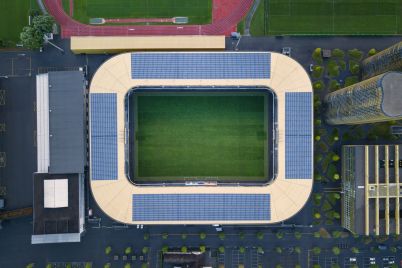

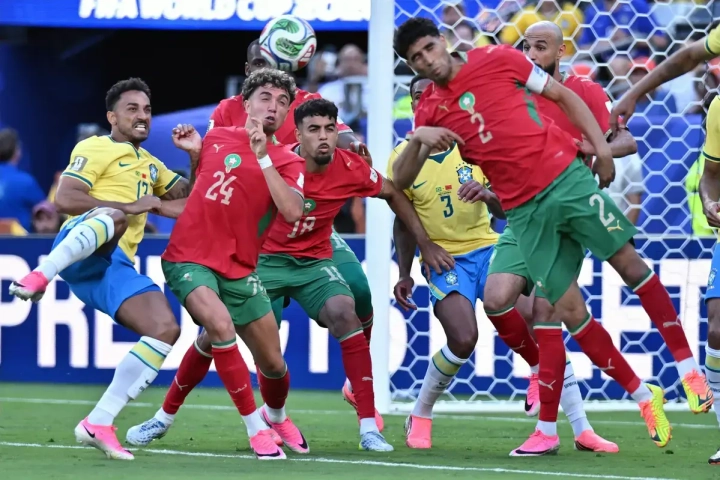
The 2026 FIFA World Cup delivered a captivating Group C opener on Saturday evening, as five-time champions Brazil were held to a 1-1 draw by an industrious and fiercely organised Moroccan side. Staged beneath the towering, illuminated stands of the New York New Jersey Stadium, the highly anticipated encounter saw Carlo Ancelotti’s star-studded ensemble forced to navigate a punishing physical examination by the history-making Qatar 2022 semi-finalists. Kicking off at exactly 23:00 BST on 13 June 2026, this fiercely contested fixture immediately established a competitive tone for a group that promises to be entirely unforgiving.
For the esteemed South American heavyweights, the result represents a stuttering, frustrating start to their latest quest for global supremacy. Conversely, the North African outfit will undoubtedly view this hard-fought point as a monumental validation of their continued elite-level credentials on the world stage. Featuring prolonged periods of breathless end-to-end transition, moments of exquisite individual brilliance, and stretches of incredibly rigid defensive discipline, the ninety minutes perfectly showcased two ambitious nations possessing vastly different tactical philosophies but matching levels of sheer, unadulterated determination.
A Blistering North African Opening
Heading into the match, the prevailing narrative heavily favoured a routine victory for the Seleção, but the reality on the pitch quickly dismantled those assumptions. Operating in the relatively forgiving evening temperatures of the East Coast, the Atlas Lions exploded out of the blocks with an aggressive, high-pressing system that genuinely shocked their illustrious opponents. Time after time, the Brazilian midfield line was completely bypassed by simple, incisive forward passing, leaving their exposed back four continually forced into highly uncomfortable one-on-one defensive situations.
The constant pressure ultimately yielded a thoroughly deserved breakthrough in the 21st minute. Seizing upon a loose ball in the congested central midfield area, Brahim Díaz demonstrated spectacular vision to thread an absolutely perfect, delicately weighted pass between two of European football’s premier centre-backs, Gabriel Magalhães and Marquinhos. Arriving onto the ball with perfectly timed momentum, midfielder Ismael Saibari showed supreme composure to execute a breathtaking lob over the rapidly advancing Alisson Becker, sending the vocal travelling Moroccan contingent into absolute delirium.
Midfield Mismatches and Brazilian Brilliance
If there was one singular aspect of the first-half performance that would have deeply concerned the Brazilian coaching staff, it was the structural fragility whenever possession was turned over. On paper, Ancelotti’s chosen midfield trio of Casemiro, Lucas Paquetá, and Bruno Guimarães appeared to possess the ideal blend of defensive control, tireless energy, and elite technical quality. In stark reality, the physical distances between the three players were far too large, allowing the North Africans to repeatedly drive aggressively through the gaping spaces that consequently opened up. Registering a staggering 12 shots before the half-time whistle, the underdogs could quite easily have secured further reward for their remarkably adventurous approach.
However, the enduring brilliance of the Brazilian squad lies in its overwhelming abundance of individual difference-makers. Even when functioning poorly as a collective unit, they invariably possess the firepower to alter a game in a single heartbeat. Cometh the hour, cometh Vinícius Júnior. In the 31st minute, deeply against the established run of play, the wondrous winger received a seemingly innocuous pass from Bruno Guimarães wide on the left flank. Dropping his shoulder to sharply cut inside, he seamlessly shifted his body weight and unleashed a truly blistering right-footed strike that rocketed mercilessly into the top corner, leaving the helpless Yassine Bounou grasping entirely at thin air.
Tactical Interventions and the Battle for Attrition
Despite the spectacular equaliser, the overall dynamic of the first period prompted drastic action from the touchline. Both Casemiro and defender Roger Ibañez had found their names entered into the referee’s notebook following cynical challenges in the 36th and 42nd minutes respectively, reflecting the immense pressure they were absorbing. Recognising the imminent danger of a dismissal, Ancelotti acted decisively during the interval. The veteran Casemiro was withdrawn alongside Ibañez, replaced by the combative Fabinho and experienced defender Danilo.
These alterations subtly shifted the balance of power. The removal of the isolated Casemiro instantly provided a more robust screen ahead of the defensive line, while the reduction in the North Africans’ attacking threat felt equally like a natural consequence of their intense, energy-sapping first-half exertions finally taking a physical toll.
As the second half progressed, the encounter developed into a fascinating, attritional battle of tactical wills. Paquetá attempted a spectacular acrobatic effort just before his substitution, but the ever-reliable Bounou proved equal to the challenge, diving dramatically to his left to parry the ball to safety. The veteran goalkeeper was brilliantly positioned once again midway through the second period, demonstrating remarkable reflexes to deny Raphinha following a dangerous cut-back from the irrepressible Vinícius Júnior.
Late Drama and Historic Anomalies
Recognising the shifting momentum, both managers turned repeatedly to their respective benches in search of a decisive breakthrough. The Brazilian attack was completely refreshed on the hour mark, as Matheus Cunha and Luiz Henrique were introduced at the expense of Paquetá and Igor Thiago. Morocco answered with a flurry of strategic changes across the final half-hour, notably introducing Samir El Mourabet, Chemsdine Talbi, and Anass Salah-Eddine in a concerted effort to maintain their structural integrity and inject fresh legs into their tiring pressing traps. In the 79th minute, a second Brazilian player named Danilo entered the fray, replacing Guimarães in the engine room.
The closing stages offered immense tension but no further goals, thanks largely to exceptional goalkeeping at both ends. Bounou expertly cleared his lines to rescue Issa Diop from a dangerous defensive mix-up, while Alisson remained incredibly alert deep into added time. The Liverpool shot-stopper plunged low to block a vicious long-range drive from Neil El Aynaoui, before displaying outstanding agility to instinctively smother the immediate follow-up attempt from substitute Ayoube Amaimouni.
When the final whistle eventually pierced the New Jersey night, it cemented a highly unusual statistical anomaly: this fixture became the very first match in which Vinícius Júnior has scored for the national team that did not ultimately result in a Brazilian victory.
Post-Match Fallout and Group C Implications
Speaking candidly in the immediate aftermath, Ancelotti made absolutely no attempt to mask his overriding frustration with the collective performance. “I think we didn’t start very well, I’m a little worried,” the Italian tactician openly conceded. “We lost a lot of duels and possession, but we improved in the second half of a difficult match, because Morocco is a good team. In the first half, we had difficulty getting out of the pressure.”
Those sentiments were closely echoed by the squad’s defensive leadership, who recognised the failure to capitalise on periods of dominance. “The draw was fair because in the second half we managed to push them back,” noted half-time substitute Danilo. “But obviously, we had opportunities to score more goals. I think in this type of match we also have to be more clinical.”
For Morocco, the narrative is entirely positive. They survived the undeniable individual quality of their opponents and proved that their historic run in Qatar was definitively not a fleeting phenomenon. As Group C progresses, this precious point provides them with an exceptional foundation for knockout qualification. Brazil, meanwhile, are left to conduct an intense period of soul-searching. To navigate the treacherous waters of this expanded global tournament, they will urgently need to discover the collective cohesion required to truly match their devastating individual talent.