
A Match of Contrasting Destinies
The iconic, highly intimidating atmosphere of the Estadio Azteca in Mexico City will provide an electrifying backdrop for a truly decisive Group A encounter at the 2026 FIFA World Cup. Scheduled to kick off at exactly 02:00 BST on Thursday, 25 June 2026 (translating to Wednesday evening local time), this highly anticipated Matchday 3 fixture pits tournament co-hosts Mexico against a deeply desperate Czech Republic outfit. For the passionate, vibrant home crowd filling the historic venue, the evening represents a golden opportunity to celebrate early progression and confirm their absolute dominance in the group stages. Conversely, the European challengers arrive in the capital facing a brutal, completely unforgiving mathematical reality. Having stumbled through their opening two assignments, ninety minutes of football will definitively determine whether their long-awaited return to the global stage extends into the knockout rounds or ends in premature, bitter heartbreak.
Group A Permutations and the Current Landscape
Navigating the treacherous, highly unpredictable waters of the newly expanded tournament format has proven to be an exercise in extreme contrast for these two nations. The co-hosts currently sit majestically at the summit of Group A, boasting a flawless record of six points from two matches. Javier Aguirre’s men have systematically dismantled their opposition, securing a comfortable 2-0 victory over South Africa before grinding out a tense 1-0 triumph against South Korea, impressively shutting out their opponents in both fixtures. A solitary point from this concluding match will guarantee their status as group winners, theoretically rewarding them with a more favourable pathway through the newly introduced Round of 32.
On the opposite side of the tactical divide, the situation is increasingly bleak. Making their first World Cup appearance since 2006, the European contingent finds themselves languishing in third place with just a single point. A deeply frustrating 2-1 defeat to South Korea on the opening day was swiftly followed by a gritty 1-1 stalemate against South Africa in Atlanta. The permutations are entirely straightforward for Miroslav Koubek’s side. Securing maximum points is an absolute, non-negotiable necessity. A victory would propel them to four points, presenting a genuine opportunity to either leapfrog South Korea for the runner-up spot, depending heavily on overall goal difference and the outcome of the simultaneous fixture in Monterrey, or advance as one of the eight best third-placed teams. Anything less than a monumental victory will mathematically condemn them to an early elimination.
The Co-Hosts’ Pursuit of Perfection
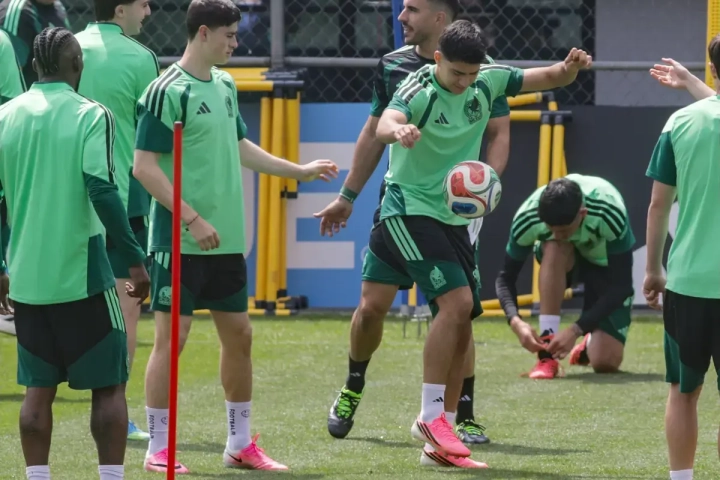
Operating under the immense pressure and intense media scrutiny that naturally accompanies hosting a World Cup, El Tri has responded with commendable maturity and phenomenal structural rigidity. Aguirre has masterfully cultivated a highly pragmatic, disciplined unit that excels at controlling the tempo of the match and aggressively suffocating opposition attacks before they can truly materialise. Their defensive foundation, marshalled superbly by Genoa centre-back Johan Vásquez and Lokomotiv Moscow’s César Montes, has yet to be breached in the competition. Behind them, veteran goalkeeper Guillermo Ochoa remains a commanding, reassuring presence during his record-equalling sixth World Cup tournament.
With qualification essentially secured, the coaching staff might be tempted to carefully rotate their squad to protect key personnel from fatigue and potential disciplinary suspensions. However, maintaining tournament momentum is a crucial psychological component of deep knockout runs. The midfield pivot of Luis Chávez and West Ham United enforcer Edson Álvarez provides an exceptionally robust screen, allowing their creative talents absolute freedom to flourish. Up front, AC Milan striker Santiago Giménez serves as a potent focal point, while the blistering pace of Julián Quiñones and Alexis Vega out wide ensures they remain a terrifying prospect on the counter-attack. The tactical blueprint against a desperate opposition will likely revolve around absorbing early pressure, frustrating the European playmakers, and ruthlessly punishing the inevitable spaces left behind as the match progresses.
The Invisible Adversary: Altitude and Endurance
An additional, entirely invisible adversary awaits the European contingent in the form of the gruelling Mexican climate and geography. The historic Estadio Azteca is situated at an imposing altitude of over 2,200 metres above sea level. This incredibly thin air notoriously drains stamina at an accelerated rate, heavily punishing teams that attempt to maintain a relentless, high-intensity pressing system for the full ninety minutes.
Koubek’s medical and conditioning staff will have undoubtedly tailored their physical preparation to mitigate these severe physiological challenges, but the harsh reality of competing in such an oxygen-deprived environment often proves overwhelming for nations unaccustomed to such extreme topographical conditions. Managing their physical exertion and strategically picking the correct moments to launch rapid attacking transitions will be absolutely paramount to surviving the gruelling physical toll.
European Desperation and Tactical Dilemmas
Arriving in Mexico City requiring a minor miracle, the Czechs must fundamentally alter their offensive approach if they are to successfully dismantle one of the tournament’s most stubborn defensive blocks. Koubek’s men have significantly struggled to manufacture high-quality scoring chances from open play during their North American adventure. Their traditional reliance on physical dominance and precise set-piece deliveries has thus far proven entirely insufficient against elite, highly mobile international opposition.
Finding a viable, consistent route to goal is the immediate priority. Bayer Leverkusen talisman Patrik Schick remains the undisputed focal point of the attacking machinery, but he has frequently found himself hopelessly isolated against heavily fortified central defences. West Ham United captain Tomáš Souček will need to aggressively dictate the midfield battle alongside Lukáš Provod, pushing significantly higher up the pitch to support the forward line and offer a genuine aerial threat from late, surging runs into the penalty area.
An intriguing narrative surrounding the squad involves the rapid, highly publicized emergence of 17-year-old sensation Hugo Sochurek. The Sparta Prague midfielder became the youngest player to ever represent the national team during a pre-tournament warm-up fixture and possesses the fearless, unpredictable creativity that his older colleagues currently seem to lack. Throwing the teenager into the intense cauldron of the Estadio Azteca would represent a massive, potentially defining gamble, but Koubek’s desperate circumstances may heavily dictate such bold tactical interventions.
Team News and Squad Availability
Preparation for this monumental clash has fortunately been unhindered by severe medical crises within either camp. Both managers currently boast virtually fully fit squads, allowing them the luxurious flexibility of selecting their absolute strongest starting elevens.
The European side received a significant pre-tournament boost with the timely return to full fitness of attacking midfielder Adam Hložek, who successfully recovered from long-term calf and foot injuries to participate in the group stages. Furthermore, Koubek retains the vital services of forward Tomáš Chorý and defender David Doudera, both of whom were controversially included in the final 26-man squad despite serving domestic disciplinary suspensions at Slavia Prague. Importantly, neither side has reported any lingering disciplinary suspensions resulting from their opening two fixtures, meaning all key personnel are completely available for selection.
Tactical Battlegrounds
Analysing the granular details of the impending matchup reveals a fascinating clash of overarching footballing philosophies, heavily influenced by the undeniable mathematical context of the group standings.
|
Area of the Pitch |
Mexico Key Figure |
Czech Republic Key Figure |
Tactical Significance |
|
Central Midfield |
Edson Álvarez |
Tomáš Souček |
A brutal battle for physical dominance and control of the tempo. Souček must aggressively push forward to support the attack, while Álvarez is tasked with sweeping up the spaces behind. |
|
The Flanks |
Julián Quiñones |
Vladimír Coufal |
Coufal’s necessary overlapping runs will intentionally leave vast defensive gaps. Quiñones possesses the devastating pace required to ruthlessly exploit these spaces on the rapid counter-attack. |
|
The Penalty Box |
Johan Vásquez |
Patrik Schick |
Elite defensive positioning against world-class predatory movement. Vásquez must command the aerial duels to entirely nullify the primary European offensive threat. |
Historical Context and the Final Word
Encounters between these two distinct footballing cultures are exceptionally rare on the international stage, adding a wonderful element of sheer unpredictability to the proceedings. While they have briefly crossed paths in minor international friendlies throughout the decades, competitive fixtures of this sheer magnitude are entirely unprecedented. Consequently, there is absolutely no established psychological hierarchy or historical trauma for either set of players to actively draw upon, presenting both ambitious nations with a completely blank canvas.
As the passionate, vibrant supporters converge on the magnificent, deeply intimidating architecture of the Estadio Azteca, the extensive theoretical planning and exhaustive video analysis will immediately give way to raw, competitive tournament survival. For the seasoned hosts, the evening provides a golden opportunity to definitively assert their absolute dominance, secure top spot in Group A, and send a resounding, intimidating message to their future knockout opponents in front of an adoring home crowd.
For the desperate European challengers, it represents one final, monumental chance to salvage their pride and execute a historic giant-killing act on the grandest global stage. Millions of fans tuning in around the world can readily anticipate an intriguing, fiercely contested encounter that perfectly encapsulates the unforgiving, dramatic essence of the FIFA World Cup. With the punishing reality of elimination looming menacingly over the visitors, a conservative, tentative approach will benefit absolutely no one.