
The 2026 FIFA World Cup delivers a quintessential clash of contrasting footballing pedigrees this Sunday, as four-time champions Germany face tournament debutants Curaçao in their opening Group E fixture. Scheduled for Sunday, 14 June 2026, the match will take place at the sprawling Houston Stadium in Texas, with kick-off set for 18:00 BST.
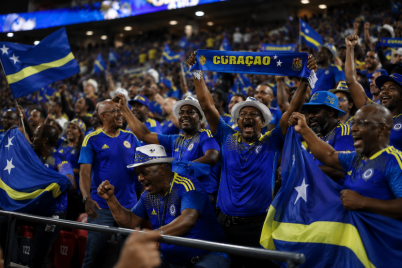
For both nations, this opening encounter carries profound, albeit entirely different, significance. Germany step onto the pitch carrying the heavy burden of recent history, desperate to avoid the humiliating group-stage exits that marred their campaigns in Russia in 2018 and Qatar in 2022. Conversely, Curaçao are already living a footballing fairy tale. Representing a Caribbean island with a population of approximately 150,000, they are the smallest nation ever to qualify for the global showpiece, making simply being in Houston a monumental triumph.
The German Renaissance Under Nagelsmann
Julian Nagelsmann has spent the build-up to this tournament meticulously reconstructing the German national team’s tactical identity and restoring their damaged confidence. The former Bayern Munich head coach has successfully blended an exciting generation of youthful attacking talent with seasoned veterans, producing a formidable unit that arrives in North America in imperious form.
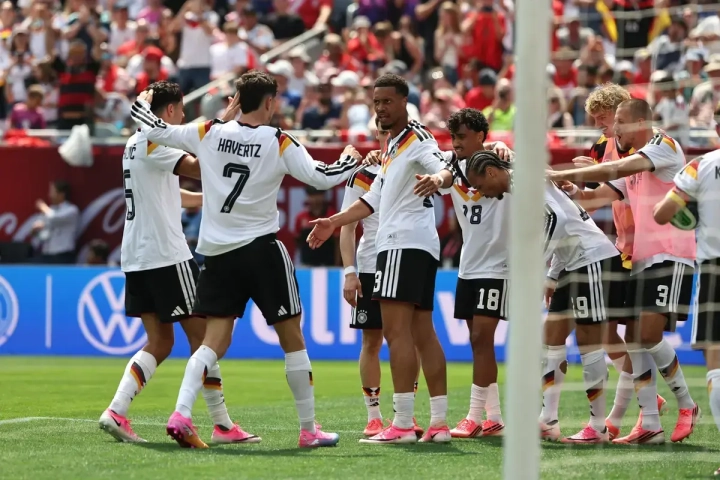
Germany’s recent performances suggest they are peaking at exactly the right moment. They enter the tournament riding a wave of nine consecutive victories, highlighting a renewed defensive solidity and an increasingly ruthless attacking edge. Their preparations concluded with a hard-fought 2-1 victory over tournament co-hosts the United States at Soldier Field in Chicago on 6 June. In a display of tactical maturity, goals from Arsenal forward Kai Havertz and Bayern Munich winger Leroy Sané overturned an early deficit to secure the win. That victory followed a comprehensive 4-0 dismantling of Finland, demonstrating the squad’s ability to dismantle deep-lying defensive blocks.
Tactically, Nagelsmann has implemented a high-intensity, possession-based system. The creative burden falls squarely on the shoulders of two of European football’s most exciting attacking midfielders: Jamal Musiala and Florian Wirtz. Their ability to operate in tight spaces, interchange positions, and provide incisive passes will be crucial against a Curaçao side expected to defend deeply. Defensively, the team is anchored by the imposing presence of Jonathan Tah and Nico Schlotterbeck, with Joshua Kimmich providing tactical flexibility on the right flank.
The squad features a significant talking point in the shape of 40-year-old goalkeeper Manuel Neuer. Recalled to the national setup in May after a lengthy hiatus, the 2014 World Cup winner offers unparalleled tournament experience. Although Neuer was rested during the recent friendly against the United States as a precautionary measure, he is widely expected to start the tournament opener, provided he proves his fitness.
However, the German camp was rocked by a late injury blow during their final week of preparation. Eighteen-year-old Bayern Munich sensation Lennart Karl, who had enjoyed a breakout domestic season and impressed against Finland, suffered a torn thigh muscle in training and was subsequently ruled out of the tournament. The German Football Association acted swiftly, calling up RB Leipzig’s 20-year-old midfielder Assan Ouedraogo to fill the vacant squad position. Despite the enforced change, the squad retains immense depth.
Curaçao’s Caribbean Fairy Tale
While the European heavyweights are focused on redemption, Curaçao are preparing to write the most significant chapter in their sporting history. The island nation navigated a flawless CONCACAF qualifying campaign, topping a group that included Jamaica, Trinidad and Tobago, and Bermuda. Their presence in Texas is the culmination of a decade-long project to harness the talent of the Dutch-Caribbean diaspora.
The narrative surrounding the squad has been dominated by the managerial situation. Veteran Dutch coach Dick Advocaat was the architect of their qualification success but sensationally resigned in February due to family health issues. Former PSV Eindhoven manager Fred Rutten temporarily took the reins, overseeing two difficult friendlies in March that ended in heavy 5-1 defeats to Australia and China. Following a player-led request and the subsequent resignation of Rutten, the 78-year-old Advocaat dramatically returned to the position in May. Taking his place in the dugout in Houston, Advocaat will officially become the oldest manager in World Cup history.
Recent form highlights the monumental challenge facing the Caribbean side. Their most recent warm-up fixture on 30 May resulted in a 4-1 defeat to Scotland. Despite taking an early lead and showing flashes of attacking intent, Advocaat’s side ultimately succumbed to the superior fitness and tactical organisation of their European opponents.
Curaçao’s squad is heavily populated by players plying their trade in the European leagues, predominantly in the Netherlands. Eloy Room provides crucial experience between the posts. The veteran goalkeeper is renowned for his shot-stopping ability and leadership, qualities that will be severely tested by the German forward line.
In midfield, the team relies heavily on the Bacuna brothers. Captain Leandro Bacuna offers structure, tenacity, and a threat from set-pieces, while Juninho Bacuna serves as the primary creative outlet, tasked with driving the team forward during transition phases. Defensively, Juriën Gaari and Sherel Floranus will need to produce career-defining performances to contain the overlapping runs of the German full-backs.
Advocaat’s tactical approach will invariably focus on survival and containment. Curaçao are expected to deploy a rigid, low defensive block, aiming to frustrate their illustrious opponents, deny space between the lines, and force Germany into wide areas. If they can weather the anticipated early storm, they will look to exploit any defensive lapses through quick counter-attacks, utilising the pace of forwards like Jearl Margaritha and Brandley Kuwas.
Key Matchup Areas
- Managers: Julian Nagelsmann (Germany) vs Dick Advocaat (Curaçao)
- Key Attackers: Jamal Musiala (Germany) vs Juninho Bacuna (Curaçao)
- Defensive Anchors: Jonathan Tah (Germany) vs Leandro Bacuna (Curaçao)
- Primary Goalkeepers: Manuel Neuer (Germany) vs Eloy Room (Curaçao)
Group E Implications and Key Battles
This fixture marks the first official meeting between the two nations, adding an element of unpredictability to proceedings. For Germany, nothing less than a convincing victory will suffice. In a group that also features a resilient Ecuador and a dangerous Ivory Coast, securing three points and building early momentum is paramount. Nagelsmann will be acutely aware that his side cannot afford the slow starts that have plagued their recent tournament appearances.
For Curaçao, success will not necessarily be measured solely by the final scoreline. A disciplined, competitive performance that limits the damage and showcases their undeniable progress would be viewed as a triumph back home. Snatching a point or even registering a historic first World Cup goal would elevate the players to legendary status on the island.
The match is likely to be defined by a series of critical individual battles. The central midfield area will be fiercely contested, with Godfried Roemeratoe and Leandro Bacuna tasked with disrupting the rhythm of Germany’s playmakers. Should they fail to contain Musiala and Wirtz, it could be a long and punishing evening for the underdogs.
On the flanks, Curaçao’s full-backs must remain disciplined. The overlapping threat provided by the likes of David Raum or Joshua Kimmich, combined with the inverted runs of the German wingers, requires constant communication and flawless positional awareness. Eloy Room will undoubtedly be the busiest man on the pitch, and the goalkeeper will need to produce an exceptional performance to keep his side in contention.
Building Anticipation
As the thousands of travelling fans converge on the Houston Stadium, the atmosphere promises to be electric. The contrasting narratives, the pressure-cooker environment surrounding a traditional superpower desperate to reclaim their elite status, versus the joyous, unburdened enthusiasm of the ultimate underdogs, make this a compelling opening fixture.
The heat and humidity of Texas in June will add another variable to the contest, potentially testing the stamina and concentration of both squads as the match progresses into its latter stages. While Germany are overwhelming favourites to dictate the tempo and secure a routine victory, the beauty of the World Cup lies in its capacity to deliver the unexpected.
Curaçao step onto the pitch not just as participants, but as history-makers, ready to embrace the occasion and prove they belong among the global elite. Germany, meanwhile, understand that their journey towards redemption begins with a single, crucial step. The stage is set for a fascinating encounter in Houston.