
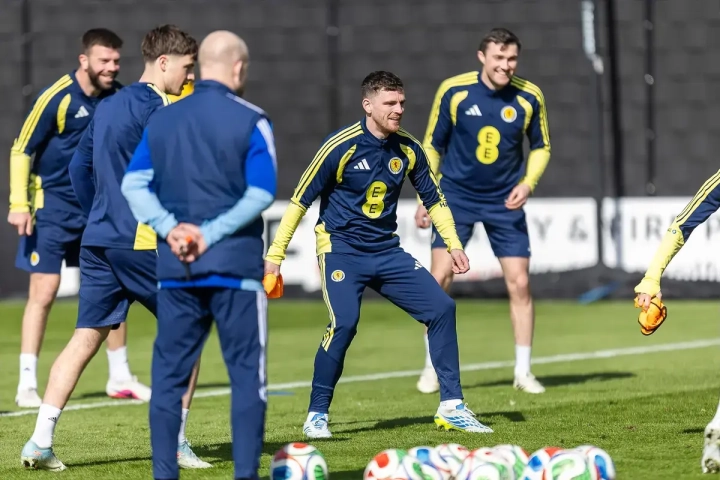
Scotland’s return to the World Cup has already delivered one long-awaited release of emotion, but the scale of the opportunity in front of Steve Clarke’s side now makes Friday night’s meeting with Morocco feel even bigger than the occasion that preceded it. The Group C fixture takes place on Friday, 19 June 2026, at Gillette Stadium in Foxborough, Massachusetts, with kick-off scheduled for 6pm local time and 11pm in the UK, and it arrives with Scotland unexpectedly leading one of the tournament’s most intriguing sections after one round of matches.
A 1-0 win over Haiti in Boston gave Scotland their first World Cup victory since 1990 and placed them on three points before they face the two strongest names in the group, Morocco and Brazil. Morocco, meanwhile, opened with a 1-1 draw against Brazil, a result that underlined their status as a side capable of shaping the tournament rather than merely surviving it. With the expanded 48-team format sending the top two in each group, along with the eight best third-placed teams, into the round of 32, the mathematics are already significant. A Scotland win would put them within touching distance of a first knockout-stage appearance at a men’s World Cup, while Morocco know that victory would move them above Clarke’s team and give their own campaign a firmer sense of control before the final round.
The mood around Scotland is a mixture of pride, caution and possibility. Clarke has built his tenure on structure, collective discipline and a refusal to get carried away, qualities that were visible again against Haiti. The performance was not always fluent, but it was efficient enough to secure the result Scotland needed. Their most recent competitive fixture was defined by patience, physical commitment and the ability to protect a narrow advantage, all traits that will be tested far more severely against a Moroccan team with pace in wide areas, technical midfielders and tournament experience running through the spine of the side.
Clarke’s selection choices will be shaped by the need to balance ambition with containment. Scotland used a front-foot approach against Haiti, but the prospect of facing Morocco’s full-backs and attacking midfielders could encourage a more compact system, with a back three or back five an obvious option. Andy Robertson remains central to Scotland’s identity, both as captain and as a source of energy down the left, while John McGinn’s timing around the box and competitive personality give the midfield an edge that can lift the tempo of the whole team. Scott McTominay, one of Scotland’s most important goal threats in recent campaigns, is likely to be just as important without the ball as with it, because Morocco’s midfield combinations can quickly turn defensive gaps into running lanes.
There is also an emotional dimension to Scotland’s challenge. This is their first men’s World Cup appearance since 1998, and the echoes of that tournament are impossible to avoid because Brazil, Morocco and Scotland were drawn together then as well. In France, Scotland’s campaign ended with a painful 3-0 defeat by Morocco in Saint-Etienne, a result that lives in the memory of both nations for different reasons. For Scotland, this meeting is not about revenge in a simple sporting sense, but it does offer a chance to rewrite a familiar World Cup story: hope, noise, commitment and then early elimination. The difference this time is that Clarke’s players arrive with points already on the board.
The injury picture has been relatively contained. Scott McKenna was the main Scottish fitness issue after a calf problem kept him out of the Haiti match, though his return to training has left him in contention rather than ruled out. Billy Gilmour is not part of the squad after withdrawing before the tournament through injury, with Tyler Fletcher called in as his replacement, so Clarke’s midfield planning has already been adjusted. There are no confirmed Scotland suspension concerns going into the Morocco game, which gives the manager room to choose on tactical grounds rather than disciplinary necessity.
Morocco’s position is different but no less demanding. Mohamed Ouahbi inherited a side with enormous expectation attached to it, and the draw with Brazil only increased the sense that the Atlas Lions can again become one of the defining stories of a World Cup. Four years after Morocco became the first African team to reach a men’s World Cup semi-final, the squad no longer carries the same element of surprise. Opponents know their level, their intensity and their ability to rise to elite occasions, which makes the challenge for Ouahbi less about convincing the world and more about sustaining standards under pressure.
Their most recent competitive fixture, the 1-1 draw with Brazil, was a statement of balance and personality. Morocco did not simply cling to the result; they competed with confidence, handled long spells without panic and showed enough technical assurance to suggest they can control parts of matches against high-class opposition. Azzedine Ounahi remains a key rhythm-setter in midfield, Sofyan Amrabat provides bite and positional discipline, and Achraf Hakimi gives Morocco a weapon few teams can replicate from right-back. With Yassine Bounou behind the defence and attacking options including Brahim Diaz, Ismael Saibari and the highly regarded Ayyoub Bouaddi, Ouahbi has a squad capable of changing the speed and shape of a game quickly.
The tactical contrast is one of the most compelling elements of the fixture. Scotland will want the match to be tight, physical and carefully managed, with the central midfield protecting the defensive line and the wing-backs choosing their moments to advance. Morocco will look to stretch the pitch, draw Scotland across and then attack spaces around the outside of the midfield block. Hakimi’s duel with Robertson’s side of the pitch could become one of the game’s defining areas, particularly if Scotland ask their captain to provide attacking width while also managing one of the most dangerous forward-running defenders in world football.
Set-pieces may also carry considerable weight. Scotland have often used dead-ball situations as a route into difficult matches, especially when open-play chances are limited. Delivery from wide areas, second balls around the edge of the box and the movement of centre-backs could all be important if Clarke’s side spend long periods defending. Morocco, however, are not a team that can be reduced to flair alone. Their defensive organisation was central to their 2022 run and remains a major part of their tournament profile, meaning Scotland are unlikely to find many cheap chances.
For Morocco, the importance of the result is shaped by what comes next. A draw with Brazil was valuable, but it will only truly look strong if followed by a performance that confirms momentum. Their final group match against Haiti offers opportunity, yet Ouahbi will not want his side entering it with unnecessary pressure or with qualification still dependent on results elsewhere. Beating Scotland would take Morocco to four points and restore them to a position more in line with the expectations placed on a squad that believes it can go deep again.
For Scotland, even a draw would be meaningful. Four points before facing Brazil would leave Clarke’s side in a strong position in the wider third-place picture and could also keep automatic qualification alive. That does not mean they can play passively from the first whistle, because Morocco’s quality makes a purely defensive plan dangerous, but it does explain why control of emotion will matter as much as tactical detail. Scotland’s players must carry the energy of their opening win without allowing the occasion to pull them out of shape.
The broader storyline is a meeting between two nations at different stages of World Cup identity. Morocco are trying to prove that Qatar was the beginning of a sustained era, not a peak that cannot be repeated. Scotland are trying to turn a long-awaited return into something more than participation. Both teams have travelled with support, belief and a sense of history, but the pressure sits differently. Morocco are expected to be dangerous. Scotland are expected to be stubborn. The team that best expands beyond those labels may take a decisive step towards the knockout rounds.
Clarke’s experience should help Scotland manage the emotional noise. His squad contains players hardened by major club football and previous international disappointment, from Robertson and McGinn to McTominay and Kieran Tierney. Ché Adams offers movement and work rate at the top end of the pitch, while Ryan Christie’s tactical intelligence could be valuable if Scotland seek an extra midfielder to close passing angles. Younger options such as Ben Gannon-Doak give Clarke a different kind of threat if the match opens up, but any attacking changes will have to be weighed against Morocco’s ability to counter at speed.
Ouahbi, for his part, has to decide how aggressively Morocco pursue the game. The Atlas Lions have the tools to dominate possession for spells, yet Scotland’s best route may come from transitions after Moroccan full-backs advance. That creates a delicate balance. Hakimi’s surges can overwhelm opponents, but they also create space behind him if possession is lost. Amrabat’s positioning, Ounahi’s ability to receive under pressure and the choices made by Morocco’s wide players will all influence whether the game is played in Scotland’s half or in the tense middle third where Clarke would prefer it to remain.
The historical meeting in 1998 adds texture, but this is not the same Scotland and not the same Morocco. The modern World Cup, expanded and staged across North America, has created new routes through the group stage and new types of pressure. A single win no longer guarantees anything, but it can change a tournament’s emotional temperature. Scotland felt that after Haiti. Morocco felt something similar after taking a point from Brazil. Now both must prove they can follow a strong start with the kind of mature performance that turns possibility into genuine progress.
By the time the teams walk out in Foxborough, the group will already feel sharper than it did a week earlier. Scotland will know that another result could move them closer than they have ever been to the knockout phase. Morocco will know that their own ambitions require more than admiration and memories of past achievement. In a section containing Brazil, margins are unlikely to be generous, and this meeting has the look of a match that could define the path for both. For Scotland, it is a chance to make history feel real. For Morocco, it is a chance to show that they remain one of the tournament’s most serious and compelling sides.