

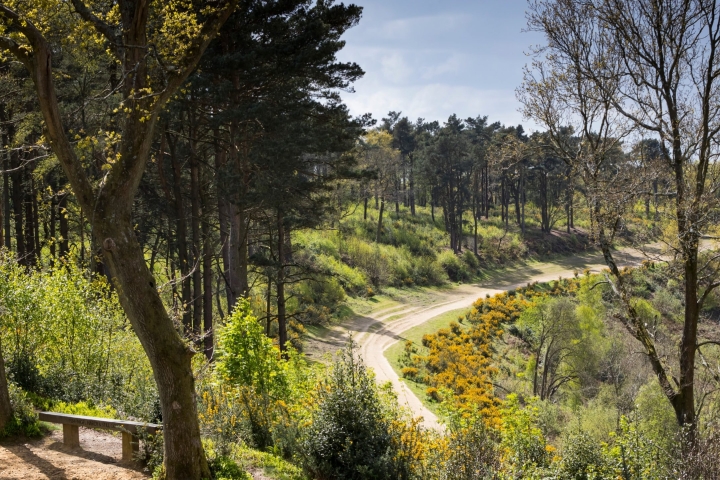
Fifteen years ago, the opening of the Hindhead Tunnel transformed one of the country’s most iconic landscapes. By rerouting the A3 beneath the Devil’s Punch Bowl, the scheme removed traffic from the surface, restoring a nationally important landscape while improving safety and delivering faster journeys for millions of road users.
Today, the A3 remains a vital route between London and the south coast, with around 48,000 vehicles travelling through the tunnel each day. Above ground, the former road corridor has been returned to nature, creating a thriving heathland that is now enjoyed by both wildlife and visitors.
The tunnel has also benefited local residents by reducing delays on surrounding roads and improving air quality, making nearby communities healthier and more pleasant places to live.
Behind the scenes, a dedicated team of National Highways control room operators is based at the Hindhead Tunnel Control Room, discreetly located beside the southbound carriageway of the A3, adjacent to the northern portals. Providing 24/7 cover, they monitor the tunnel, respond to incidents and coordinate its day-to-day operation, helping to keep this key route in the South East safe and running smoothly.
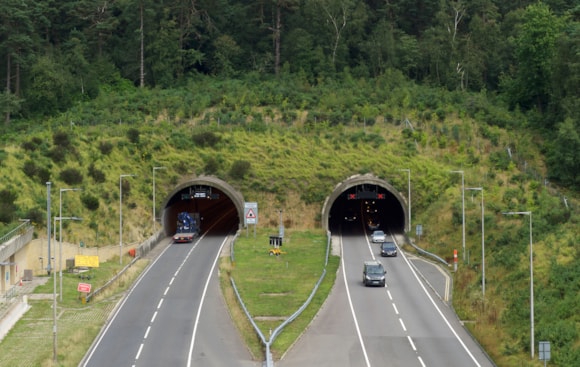
Caption: A room with a view: the Hindhead Tunnel Control Room is on the left of this image.
Dominic Holyoak, National Highways Control Operator, said: “It’s a unique place to work. On one side we’re helping keep one of the region’s busiest roads moving, and on the other you’ve got the peace and quiet of beautiful countryside and all the wildlife that’s returned since the old A3 was removed. Most people drive through the tunnel every day without realising there’s a team here making sure everything keeps running safely.
“The tunnel has made a real difference over the last 15 years. Journeys are more reliable for drivers, while above ground the landscape has been transformed into a place where nature has been able to thrive again. It’s something we’re all proud to play a part in.”
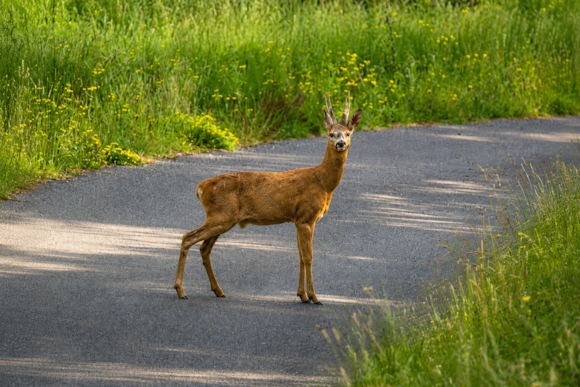
Caption: A roe deer near the Hindhead Control Room during a breaktime walk
Image credit: Dominic Holyoak
Since the Hindhead Tunnel opened 15 years ago, the National Trust, working with Natural England, has restored the former A3 corridor into a thriving heathland landscape. The restoration has helped rare species return, including woodlark, nightjar, the heath tiger beetle and the silver-studded blue butterfly, with Hindhead Common now in favourable condition for nature conservation.
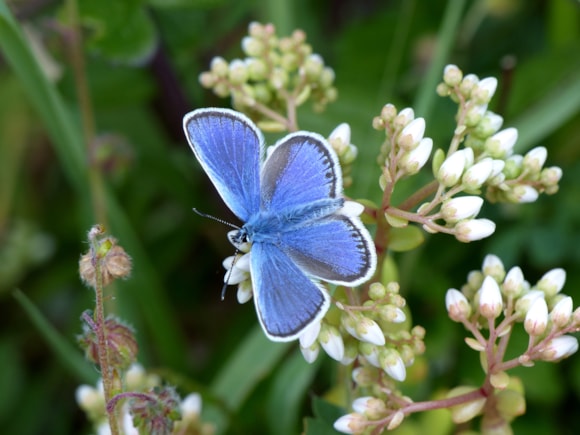
Caption: Silver-studded blue butterfly captured in its natural heathland habitat
Image credit: National Trust / Matthew Oates
Matt Cusack, Lead Ranger for the National Trust said: “The removal of the A3 in July 2011 was a major milestone, enabling us to thin trees and transform the site into a swathe of heathland. The site has been under a Higher Level Stewardship agreement since 2008 and we are currently midway through an ambitious programme of heathland regeneration funded by Biffa Award. Scrub management, heather and bracken cutting, the expansion of woodlark nesting areas and grazing by ponies and cattle, conducted under these schemes, has transformed it – and we want to thank our countryside volunteers, partner organisations and funders for their support.”
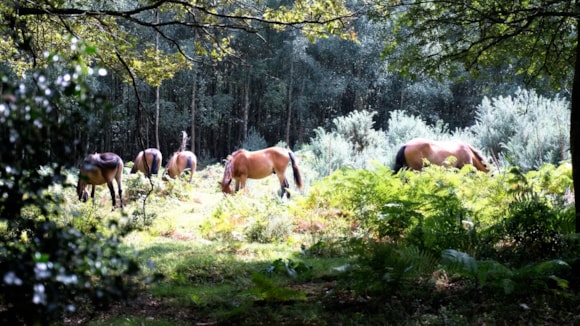
Caption: Ponies at Hindhead
Image credit: National Trust / Kat Milsom
Stephen Rudd, Principal Manager, Thames Solent Area, Natural England, said: “Fifteen years on, the Hindhead Tunnel stands as a fantastic example of how reconnecting landscapes can benefit both nature and people. The recovery of this nationally important heathland is a testament to the long-term commitment of the National Trust, Natural England and its partners, and to the opportunities created when space is given back to nature. We look forward to building on these successes at Hindhead as part of the wider Wealden Heaths National Nature Reserve.”
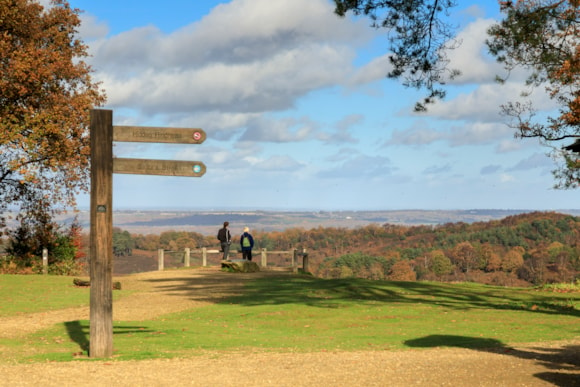
Caption: Hindhead Commons and the Devil’s Punch Bowl
Image credit: National Trust / John Miller
Today, Hindhead Commons and the Devil’s Punch Bowl welcome more than 970,000 visitors each year. New walking routes, including accessible paths, allow people to experience the restored landscape while helping to protect sensitive wildlife habitats. The site also forms part of the Wealden Heaths National Nature Reserve, a partnership dedicated to conserving one of the South East’s most important heathland landscapes.