
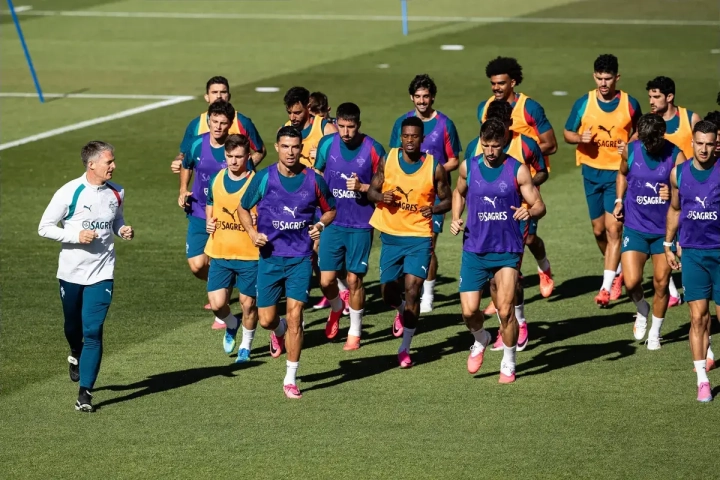
The searing heat of Texas provides the backdrop for a deeply intriguing Matchday Two encounter at the 2026 FIFA World Cup, as European heavyweights Portugal prepare to face tournament debutants Uzbekistan. Scheduled for today, Tuesday, 23 June 2026, the highly anticipated Group K fixture will kick off at exactly 18:00 BST beneath the imposing architecture of the Houston Stadium. Following an opening round of fixtures that produced contrasting emotions but ultimately identical winless outcomes for both nations, the stakes in the American South could scarcely be higher. For the seasoned Portuguese squad, securing three points is an absolute necessity to appease a demanding public and avoid a precarious group-stage scenario. Conversely, for the Central Asian debutants, stepping onto the pitch against one of world football’s most storied nations presents a monumental opportunity to register a historic shock and keep their own knockout ambitions alive.
Group K Permutations and Tournament Context
Entering the expanded 48-team tournament, Group K was immediately identified as a deceptively complex bracket. The opening matchday thoroughly validated those pre-tournament assessments, leaving the standings delicately poised. South American contenders Colombia currently set the pace with three points following their opening victory, while Portugal and the Democratic Republic of Congo sit deadlocked on a single point apiece. Uzbekistan find themselves rooted to the bottom of the table, desperately needing a positive result to avoid a premature exit.
In this modern, unforgiving tournament format, securing a top-two finish or emerging as one of the best third-placed teams is essential for reaching the newly introduced Round of 32. A victory for either side in Houston would drastically alter their respective trajectories. Claiming maximum points would ease the suffocating pressure on the Portuguese camp ahead of a daunting final fixture against Colombia. For the Uzbeks, navigating a path to victory, or even securing a fiercely contested draw, would represent the greatest single achievement in their footballing history, ensuring they remain firmly in the qualification conversation heading into Matchday Three.
Portugal Searching for Attacking Fluidity
Arriving in North America heavily tipped as genuine title contenders, Portugal endured a surprisingly sluggish start to their campaign. Guided by the vastly experienced Roberto Martinez, the 2016 European champions were held to a deeply frustrating 1-1 draw by a resilient DR Congo outfit. Despite dominating the tempo with overwhelming possession and completing hundreds of passes, the Portuguese attacking machinery lacked its trademark cutting edge.
The encounter began brightly enough, with dynamic Paris Saint-Germain midfielder João Neves opening the scoring in the sixth minute with a glancing header. However, a failure to capitalise on subsequent periods of dominance allowed the African side a route back into the contest, culminating in Yoane Wissa’s equaliser deep into first-half stoppage time. Martinez’s side finished the match having managed a remarkably low number of shots on target, raising immediate, pressing questions regarding their attacking cohesion against disciplined, deep-lying defensive structures.
Addressing this glaring lack of final-third penetration will naturally be the primary focus for the coaching staff. The tactical blueprint heavily relies on what many consider the premier midfield trio of the entire tournament: Neves, Vitinha, and Manchester United captain Bruno Fernandes. Their elite ability to dictate the rhythm, manipulate tight spaces, and thread decisive vertical passes will be severely tested. Wide players such as Pedro Neto and Francisco Conceição are heavily relied upon to provide horizontal pitch-stretching, isolating defenders and creating central pockets of space.
At the back, defensive cornerstone Rúben Dias missed the starting lineup in the opening fixture due to fitness concerns, with Renato Veiga preferred in central defence. The Manchester City stalwart’s anticipated return to the heart of the backline would offer an enormous psychological and structural boost, ensuring defensive stability against sudden transitions.
Uzbekistan’s Historic Challenge
Standing proudly across the tactical divide is an Uzbekistan national team currently experiencing the greatest chapter in their sporting history. Qualifying as the very first Central Asian nation to reach a senior FIFA World Cup finals, the White Wolves arrived in the United States buoyed by an impassioned, deeply supportive domestic fanbase. However, the unforgiving reality of elite international football was swiftly exposed during their opening 3-1 defeat to an exceptionally talented Colombian side.
Guided by legendary Italian defender and 2006 World Cup winner Fabio Cannavaro, the squad showcased commendable resilience and tactical discipline, but were ultimately overwhelmed by South American flair. Cannavaro has meticulously instilled a rigid, highly organised 3-4-2-1 formation, prioritising structural compactness and attempting to deny the opposition any inviting spaces through the central channels.
The team relies heavily on a solid defensive foundation spearheaded by Lens centre-back Abdukodir Khusanov, whose aerial dominance and reading of the game are critical to surviving sustained periods of pressure. Moving forward, the rapid, transition-based threat of Abbosbek Fayzullaev provides a genuine attacking outlet. The winger’s pace and technical proficiency in the half-spaces will be weaponised to exploit the vast areas vacated by aggressively advancing Portuguese full-backs like Nuno Mendes and João Cancelo. Spearheading the attack is veteran talisman Eldor Shomurodov, whose intelligent hold-up play and imposing physical presence are vital for relieving defensive pressure and initiating counter-attacks.
Tactical Battlegrounds and Key Matchups
When analysing the granular details of this impending matchup, a truly compelling clash of overarching footballing philosophies emerges. Martinez’s men will naturally seek to heavily monopolise the possession statistics, constructing patient, intricate passing networks to systematically manipulate the opposition’s defensive block. By pushing their full-backs incredibly high up the pitch, Portugal actively attempt to create numerical overloads in the wide channels, deliberately forcing the opposition defence to expand.
Conversely, the Asian debutants will likely embrace a highly pragmatic, reactive posture. Acknowledging their opponents’ elite technical superiority, Cannavaro will instruct his team to remain incredibly compact, completely denying the Portuguese playmakers any inviting spaces between the lines. Deploying a disciplined low block, the tactical focus will remain purely on systematic frustration.
|
Area of the Pitch |
Portugal Key Figure |
Uzbekistan Key Figure |
Tactical Significance |
|
Central Midfield |
Bruno Fernandes |
Otabek Shukurov |
A monumental battle for creative control. Fernandes must unlock the deep defensive block, while Shukurov is tasked with aggressive disruption and protecting the back three. |
|
The Flanks |
Nuno Mendes |
Abbosbek Fayzullaev |
Mendes’s relentless overlapping runs must be carefully balanced to prevent Fayzullaev from ruthlessly exploiting the vacated space on the counter-attack. |
|
The Penalty Box |
Cristiano Ronaldo |
Abdukodir Khusanov |
Elite movement and historical pedigree against youthful defensive dominance. Khusanov must command his area against an aerial onslaught. |
Historical Context and Storylines
Encounters between these two distinct footballing cultures are completely unprecedented at the senior international level. Having never previously met in a competitive or friendly fixture, Tuesday’s clash represents a historic first. While the nations have crossed paths at the Under-20 level in recent years, the lack of senior historical precedent means there is absolutely no established psychological hierarchy, presenting Uzbekistan with a completely blank canvas upon which to boldly paint their World Cup legacy.
The narrative surrounding the fixture is inevitably dominated by the towering presence of Cristiano Ronaldo. Against DR Congo, the legendary forward became the oldest outfield player to ever feature at a World Cup at 41 years of age. However, his ongoing pursuit of international goals remains a heavily scrutinised storyline. Should he fail to find the net in Houston, it would extend a surprisingly barren run in major tournament football. Consequently, the spotlight will be glaringly focused on his movement, clinical execution, and integration into Martinez’s fluid attacking system.
For the passionate Uzbek supporters, the match provides an emotional paradox. Ronaldo has long been revered as a supreme footballing idol across the Central Asian nation, inspiring a whole new generation of players. Tonight, that immense admiration must be temporarily suspended as their homegrown heroes attempt to systematically nullify his profound influence.
The Final Word
As the vibrant, deeply passionate supporters converge on the impressive modern architecture of the Houston Stadium, the extensive theoretical planning and exhaustive video analysis will immediately give way to raw, competitive tournament survival. For the seasoned European heavyweights, the evening provides a golden opportunity to definitively assert their dominance, overcome the bitter disappointment of their opening stalemate, and firmly justify their status as genuine knockout contenders.
For the ambitious Asian debutants, it represents another monumental test of character against elite international opposition. Millions tuning in across the world can readily anticipate a fiercely contested, high-stakes encounter where fleeting moments of individual genius, unwavering tactical discipline, and sheer mental resilience will ultimately separate the victors from the vanquished. With the punishing reality of Group K looming menacingly over the result, a conservative, tentative approach will benefit absolutely no one.