
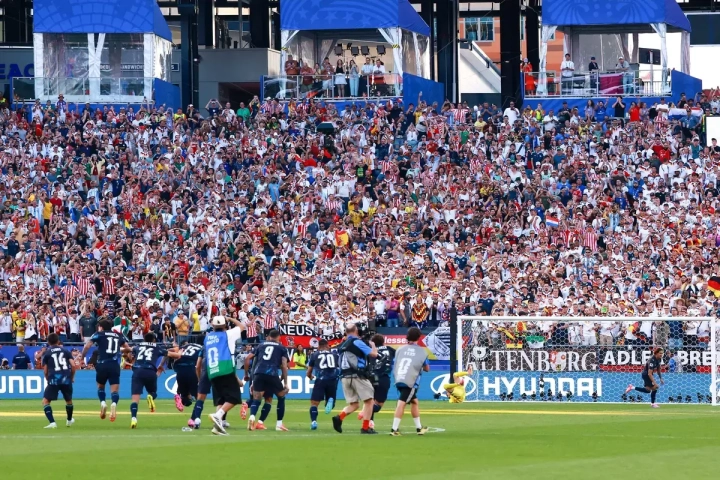
A Dramatic Night in Foxborough
The electric atmosphere at Boston Stadium in Foxborough, Massachusetts, provided an unforgettable setting for a FIFA World Cup 2026 Round of 32 clash that will be etched into footballing folklore. Kicking off at 21:30 BST on Monday, 29 June 2026, four-time world champions Germany faced a fiercely determined Paraguay side. Following a grueling 120 minutes of action that ended in a 1-1 stalemate, the South Americans triumphed 4-3 in a chaotic penalty shootout. The monumental result handed the European heavyweights their first-ever World Cup penalty shootout defeat, sending them crashing out of the tournament while catapulting the underdogs into the last 16.
Tactical Dominance Meets Defensive Discipline
Heading into the contest, Julian Nagelsmann deployed his side in their familiar 4-2-3-1 formation, instructing his players to seize control of the midfield and dictate the tempo. Gustavo Alfaro countered with a highly structured 4-5-1 setup, purposefully designed to absorb pressure, congest the central channels, and strike on the counter-attack.
The overarching pattern of the match was established immediately. Dictating the flow of the game, the European giants monopolised possession, pinning their opponents deep into their own half. Joshua Kimmich and Aleksandar Pavlović orchestrated the play from deep, constantly looking to feed the creative trio of Leroy Sané, Florian Wirtz, and Kai Havertz. However, they were repeatedly met by an impenetrable wall of red and white shirts.
Despite completing an astonishing 170 passes to their opponents’ 21 before the first hydration break, Nagelsmann’s men lacked the crucial cutting edge required to break the deadlock. The South American defensive block, superbly marshalled by Gustavo Gómez and José Canale, maintained extraordinary tactical discipline, ensuring goalkeeper Orlando Gill was rarely tested by clear-cut opportunities during the opening exchanges.
A Shock Breakthrough Against the Run of Play
As the first half drew to a close, the narrative took a sudden and unexpected twist. Having defended brilliantly for over forty minutes, La Albirroja snatched a shock lead against the run of play in the 42nd minute.
Earning a rare foray into the opposition half, the underdogs won a corner on the right flank. Miguel Almirón delivered an outswinging cross that was firmly punched clear by Manuel Neuer. However, the danger was far from averted. Almirón quickly recycled the loose ball, shifting it towards Matías Galarza on the wing. Assessing his options, the midfielder whipped a magnificent, inviting cross back into the heart of the penalty area. Evading his markers with brilliant movement, Julio Enciso found himself completely unmarked and expertly guided a downward header past the stranded Neuer.
The stadium erupted as the South American supporters celebrated an unlikely 1-0 advantage. It marked a historic moment for the young forward, registering his nation’s first goal in the knockout stages of a World Cup and sending his team into the dressing room with a precious lead. The sheer unexpected nature of the goal left the German players looking visibly bewildered as they walked down the tunnel, fully aware that a monumental second-half effort was now required.
Nagelsmann’s Adjustments and the Equaliser
Recognising the urgent need for a tactical shift, the German coaching staff wasted no time making changes. Leon Goretzka was introduced in place of Felix Nmecha at the interval, providing a more physical presence in the engine room. The tactical approach also shifted noticeably, with the wide players instructed to deliver earlier crosses into the box rather than attempting to meticulously pass their way through the congested centre.
This alteration paid dividends almost immediately. Pinning the opposition back once more, the four-time champions found their equaliser in the 54th minute. Finding a pocket of space on the left flank, Wirtz delivered a beautifully flighted cross towards the near post. Havertz reacted quickest, darting across his defender to glance a deft header into the far corner of the net, leaving Gill with absolutely no chance.
Seeking to capitalise on the shifting momentum, both managers turned to their substitutes. Jamal Musiala replaced Deniz Undav to inject fresh creativity, while Paraguay brought on Gustavo Caballero and Maurício for Gabriel Ávalos and the goalscorer Enciso, respectively. Despite intense pressure and a flurry of late chances, including another headed opportunity for Havertz, the South Americans dug deep. The match concluded 1-1 after ninety minutes, forcing the exhausting prospect of extra time.
Extra Time and VAR Controversy
The physical toll of the grueling encounter became increasingly apparent during the additional thirty minutes. Tackles grew heavier, spaces began to open up across the pitch, and the referee was forced to issue a string of yellow cards, cautioning Havertz, Musiala, and Galarza as tempers inevitably flared under the immense pressure of knockout football.
A moment of massive controversy arrived in the 104th minute. Winning a corner, Germany appeared to have completed a dramatic comeback when Jonathan Tah rose highest to power a header into the back of the net. The European players wheeled away in celebration, believing they had secured their passage to the next round. However, the celebrations were abruptly cut short by a Video Assistant Referee (VAR) intervention. Following a meticulous review, the goal was disallowed after it was determined that substitute Waldemar Anton had illegally impeded Gill in the build-up.
The decision incensed the German bench, resulting in a yellow card for a furious Nagelsmann. Despite further attacking substitutions, including the introduction of Nadiem Amiri and Malick Thiaw, the scoreline remained deadlocked at 1-1, sending the tie to a penalty shootout.
The Ultimate Shootout Drama
History weighed heavily on the ensuing shootout. Since 1982, the European powerhouse had converted 20 consecutive World Cup penalties, building a legendary reputation for unshakeable composure from the spot. That 44-year streak was about to be spectacularly dismantled.
Opting to shoot first, Germany suffered an immediate setback when Havertz saw his opening penalty brilliantly saved by Gill. Maurício confidently stepped up to convert for Paraguay, immediately putting the pressure on. Kimmich and Gómez traded successful strikes, as did Musiala and Galarza, bringing the score to 3-2 in favour of the underdogs.
The momentum violently swung again when Nick Woltemade saw his effort thwarted by the phenomenal Gill, giving Antonio Sanabria the chance to win the tie. Astonishingly, the striker pulled his shot wide of the post. Handed a miraculous lifeline, Amiri buried his penalty to equalise at 3-3. The tension reached a boiling point as Neuer produced a vintage, magnificent save to deny Fabián Balbuena, sending the shootout into sudden death.
Stepping up under unimaginable pressure, Tah blazed his penalty high over the crossbar. Canale was presented with the opportunity to write his name into national folklore, and the defender made absolutely no mistake. He sent Neuer the wrong way to seal a historic 4-3 shootout victory, sparking scenes of unrestrained jubilation among the South American contingent.
Tournament Implications and The Road Ahead
When the dust finally settled in Massachusetts, the statistical narrative highlighted the sheer grit of the victors. Germany finished the match with 75 percent possession, 753 completed passes, and 21 shots, yet it was Paraguay’s disciplined defensive masterclass that prevailed. Goalkeeper Orlando Gill was universally praised and rightfully awarded the Player of the Match accolade for his heroic saves during both normal time and the shootout.
The stunning triumph ensures Paraguay advance to the Round of 16, where they will travel to Philadelphia on 4 July to face the winner of the highly anticipated clash between France and Sweden. For Germany, the heartbreaking defeat marks the end of an era. Not only are they eliminated from the tournament much earlier than their passionate fanbase expected, but their aura of absolute invincibility in penalty shootouts has finally been shattered on the grandest global stage. They face a long flight back to Europe filled with profound regret and serious questions about their ability to translate overwhelming possession into tangible results.
Official Match Facts
Competition: FIFA World Cup 2026 – Round of 32
Venue: Boston Stadium, Foxborough, Massachusetts
Date: 29 June 2026
Kick-off Time: 21:30 BST
Final Score: Germany 1 – 1 Paraguay (Paraguay win 3-4 on penalties)
Goalscorers:
-
Paraguay: Julio Enciso (42′)
-
Germany: Kai Havertz (54′)
Penalty Shootout (3-4):
-
Germany: Kai Havertz (Miss), Joshua Kimmich (Goal), Jamal Musiala (Goal), Nick Woltemade (Miss), Nadiem Amiri (Goal), Jonathan Tah (Miss)
-
Paraguay: Maurício (Goal), Gustavo Gómez (Goal), Matías Galarza (Goal), Antonio Sanabria (Miss), Fabián Balbuena (Miss), José Canale (Goal)
Discipline:
-
Germany: Julian Nagelsmann (Yellow Card, 105′), Kai Havertz (Yellow Card, 106′), Jamal Musiala (Yellow Card, 115′)
-
Paraguay: Andrés Cubas (Yellow Card, 65′), Matías Galarza (Yellow Card, 117′)