
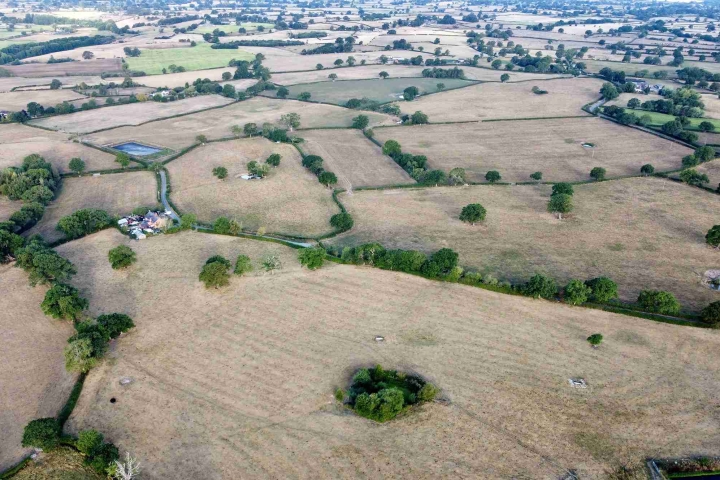
With large swaths of grassland suffering the effects of the UK’s ongoing drought, livestock farmers are being advised to play the long game when it comes to preserving the productivity and quality of existing forage swards.
“Despite the recent spell of hot and dry weather, the majority of livestock farms in the UK have access to decent crops of silage and hay which were safely gathered into sheds and silos during the favourable conditions at the start of summer,” explains James White, Barenbrug Account Manager. “Since then, however, the weather has been less than favourable, with the lack of rain and record-breaking temperatures putting grass and forage production at the mercy of Mother Nature and forcing many livestock farmers to break into their winter forage reserves.”
While there’s nothing farmers can do to make up for the lack of fresh grass growth while the drought endures, they should be thinking about how to mitigate any long-term damage to swards once more advantageous conditions return.
“Other than practicing their rain dance routines and using winter feed reserves to bolster lacklustre summer grazing, there’s not much livestock farmers can do to alleviate the current situation,” James continues. “However, when the weather breaks and rain finally arrives, farmers should adhere to a few simple guidelines to maximise the potential of their existing swards.
“For example, despite the temptation to graze new grass growth as soon as it appears, a safer option, and one which will safeguard the long-term productivity and quality of current swards, is to keep stock off the worst affected fields until fresh regrowth reaches the three-leaf stage.
“Grazing too hard, too soon will be counterproductive, with future regrowth stunted resulting in less forage available later in the season,” James continues.
In extreme circumstances, James advises farmers to choose a field, or fields, which can be sacrificed in the short-term so that the farm’s remaining grazing area has longer to recover.
“Forfeiting a handful of fields by grazing them hard so that the remainder of the grazing platform has longer to recover could be the best option where swards have been under severe drought stress,” he explains. “Then, when the sacrificed swards have been completely depleted, they can be reseeded with a rapid establishing multi-species mixture of ryegrasses, fescue, clover, Timothy and Cocksfoot such as Barmix, or overseeded with a specialist mixture such as Barmix Renew.
“Alternatively, to maximise protein production, an SFI mixture such as CSAM3 Barmix which also benefits from the inclusion of herbage species such as plantain and chicory, could be used to provide a more diverse rooting structure and extended growth curve.”
Key to a successful reseeding season is to prioritise those fields most in need of renovation and, where possible, to introduce new seed while the ground is still warm from the summer’s hot weather.
“But don’t be tempted to reseed too soon,” James cautions. “Wait until adequate soil moisture is available. That way, a fast-establishing mixture such as those mentioned will be ready to graze within a handful of weeks.
“Only time will tell what the autumn will bring,” James concludes, “but with a bit of luck and help from Mother Nature, hopefully we’ll see an extended grazing window which will take the pressure off any winter forage stocks which have had to be used early. Either way, there’s no time like the present to start planning and to talk to your agronomist or Barenbrug seed rep to discuss the best seeding options for your farm and its unique set of circumstances.”
For more information visit the Barenbrug UK website at www.barenbrug.co.uk