
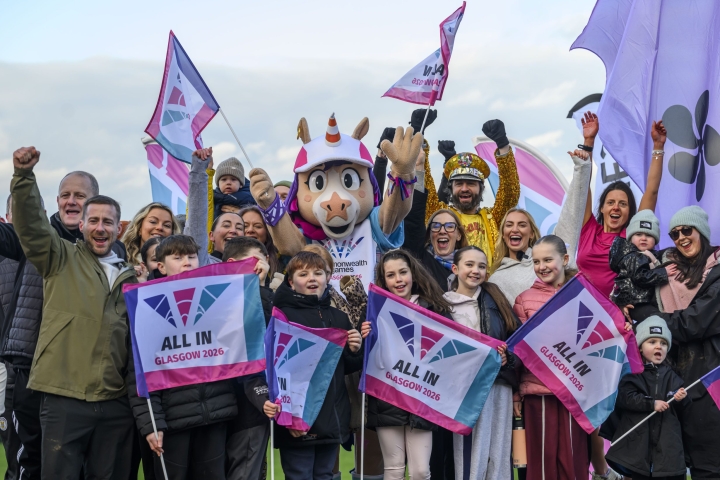
As the final fireworks illuminated the Scottish sky above the OVO Hydro on Sunday evening, the 2026 Commonwealth Games officially drew to a close. Born out of administrative necessity and executed with remarkable efficiency, the Glasgow edition will be remembered not merely for the spectacular athletic feats it hosted, but for fundamentally rewriting the operational playbook for modern multi-sport events.
Over 11 days of intense competition, approximately 3,000 athletes representing 74 Commonwealth nations and territories converged on the city, competing across a highly streamlined 10-sport programme. From the roar of the crowds at Scotstoun Stadium to the frantic, condensed drama of 3×3 Wheelchair Basketball at the Scottish Event Campus (SEC), the Games delivered a potent reminder of the unifying power of international sport.
With the baton now officially passed to Ahmedabad for the 2030 centenary edition, it is time to reflect on a tournament defined by Australian dominance, individual immortality, and a host city that successfully rescued the Commonwealth movement.
The Rescue Act: Delivering the ‘Glasgow Model’
To fully appreciate the triumph of the past fortnight, one must acknowledge the perilous circumstances under which Glasgow 2026 was conceived. Following the abrupt withdrawal of the Australian state of Victoria in the summer of 2023 due to spiralling cost projections, the Commonwealth Games Federation faced a profound existential crisis. With no immediate host stepping forward, the very future of the historic event hung in the balance.
Stepping into the breach, Glasgow, which had successfully hosted the 2014 edition, proposed a radically altered, financially sustainable vision. The sprawling, massively expensive formats of previous iterations were discarded. In their place was a highly concentrated, fully integrated model. The sporting programme was halved to just 10 disciplines, heavily utilising existing infrastructure within a tight eight-mile venue corridor.
The strategy paid massive dividends. By centralising the action across four primary venues, Scotstoun Stadium, Tollcross International Swimming Centre, the Glasgow International Arena, and the SEC, the city cultivated a vibrant, electric atmosphere without placing an undue burden on the public purse. Crucially, the Games maintained a deep commitment to inclusivity, featuring six fully integrated Para sports running seamlessly alongside their able-bodied equivalents. The ‘Glasgow Model’ has successfully proven that international sporting festivals do not require crippling civic debt to capture the imagination of the public.
Australia Rules the Roost
In the sporting arenas, the narrative was undeniably dictated by the sheer, overwhelming power of the Australian contingent. As has become customary at the Commonwealth Games, the athletes in green and gold established an iron grip on the medals table from the opening morning and flatly refused to let go.
Australia concluded the 2026 Games with a staggering 158 medals, consisting of 65 golds, 41 silvers, and 52 bronzes. Their dominance was deeply foundational, built upon another spectacular showing in the Tollcross pool and a ruthless execution in the track cycling events at the Sir Chris Hoy Velodrome. The Australian swimmers, picking up the mantle from historic greats, effectively suffocated the competition by sweeping multiple podiums throughout the opening week.
England, forced to settle for a distant second place, produced a highly respectable haul of 102 medals (26 gold, 41 silver, 35 bronze). While the English delegation may rue a handful of narrow defeats in high-profile track and field finals, their overall depth across gymnastics, boxing, and weightlifting ensured they remained comfortably ahead of the chasing pack.
Canada secured third position with 59 medals (18 gold), while India mounted a spectacular late surge to finish fourth with 39 medals (13 gold). The Indian campaign was heavily fuelled by an incredibly dominant boxing squad. Taking the rings by storm, the Indian pugilists alone contributed seven gold medals to the national tally, featuring phenomenal victories from the likes of Sakshi Chaudhary in the women’s 51kg and Sachin Siwach in the men’s 60kg divisions. This boxing prowess was bolstered by vital podium finishes from the national weightlifting and para-athletics squads. The host nation, Scotland, rounded out the top five, claiming 38 medals (13 gold) to the persistent delight of the partisan home crowds.
Table: Final Medal Standings (Top 5)
| Rank | Nation | Gold | Silver | Bronze | Total |
| 1 | Australia | 65 | 41 | 52 | 158 |
| 2 | England | 26 | 41 | 35 | 102 |
| 3 | Canada | 18 | 20 | 21 | 59 |
| 4 | India | 13 | 17 | 9 | 39 |
| 5 | Scotland | 13 | 8 | 17 | 38 |
Le Clos Achieves Sporting Immortality
If the team narrative belonged to Australia, the individual headlines were emphatically claimed by a South African legend. Entering the Glasgow Games, 34-year-old swimmer Chad le Clos required a single podium finish to equal the all-time Commonwealth Games medal record held by Australian swimming icon Emma McKeon (20 medals).
Le Clos did not merely equal the record; he shattered it. On the evening of Wednesday, 29 July, the Tollcross International Swimming Centre witnessed history. Competing alongside Pieter Coetzé, Michael Houlie, and Ruard van Henen in the men’s 4x100m medley relay, Le Clos helped the South African quartet secure a hard-fought bronze.
That podium finish marked his 21st career Commonwealth Games medal, a journey that began 16 years ago in Delhi and has spanned five consecutive editions. Finishing the 2026 Games with three additional medals to his name, Le Clos now stands alone as the single most decorated athlete in the history of the competition.
“Tonight was emotional,” an audibly moved Le Clos remarked following the historic medal ceremony. “The way the boys swam, they swam their hearts out. They keep saying ‘legacy’, we are doing this for Chad before they walked down. It just means the world to me.”
His achievement serves as a profound testament to longevity and competitive resilience, firmly cementing his status within the pantheon of global swimming greats.
Integration at Its Finest
Beyond the headline-grabbing records, the true success of Glasgow 2026 lay in its unwavering dedication to Para-sport integration. The seamless weaving of able-bodied and Para events within the exact same daily sessions created an atmosphere of absolute equality.
The 3×3 Wheelchair Basketball tournament, expanding to eight teams per gender following its successful debut in Birmingham four years ago, provided some of the most visceral and frantic entertainment of the entire fortnight at the SEC Centre. Similarly, the deafening roars at Scotstoun Stadium for the Para-athletics finals, where athletes like India’s Dilip Gavit claimed gold in the men’s 100m T47, demonstrated that audiences respond to raw sporting excellence, regardless of classification. This fully integrated format is arguably Glasgow’s greatest gift to the future of the Commonwealth movement.
The Baton Passes to Ahmedabad
The festivities culminated on Sunday evening with a spectacular closing ceremony at the OVO Hydro. Following a tournament officially opened by King Charles III, his first as Head of the Commonwealth following the passing of Queen Elizabeth II, the closing act provided a vibrant celebration of Scottish culture.
Iconic Scottish rock band Simple Minds headlined the evening, supported by energetic performances from BEMZ, Cammy Barnes, and Sandi Thom. Australian pop royalty Delta Goodrem also returned to the Commonwealth stage, marking her third appearance at a Games ceremony.
However, the ceremonial highlight arrived during the traditional handover of the Host Baton. As the Commonwealth flag was lowered, the spotlight shifted drastically towards the subcontinent. Ahmedabad, India, was officially confirmed and celebrated as the host city for the 2030 Commonwealth Games.
The transition segment offered a mesmerising preview of what awaits the global sporting community in four years’ time. A tribute to the 150th anniversary of Vande Mataram seamlessly blended into a classical jugalbandi featuring sitar maestro Rishabh Rikhiram Sharma and Scottish piper Ross Ainslie, perfectly symbolising the cultural handover between the two nations.
As the 2030 edition will mark exactly 100 years since the inaugural British Empire Games in Hamilton, Canada, the pressure on Ahmedabad to deliver a spectacular centenary celebration is immense, requiring a delicate balance of historical reverence and modern sporting spectacle. Yet, as the crowds dispersed into the cool Glasgow night, the prevailing sentiment was one of profound optimism.
Just two years ago, the Commonwealth Games were staring into the financial abyss. Over the past 11 days, Glasgow has proven that with pragmatism, passionate crowds, and world-class athletes, the movement still possesses an incredibly vibrant pulse. The 2026 Games may have been scaled down in physical size, but in terms of impact, sustainability, and sporting drama, they were an unmitigated triumph.