
The 2026 FIFA World Cup narrative continues to unfold across North America this Wednesday, 17 June 2026, as Ghana face Panama in a highly consequential Group L encounter. Scheduled for a 22:00 BST kick-off beneath the impressive architecture of the Toronto Stadium in Canada, the fixture represents a monumental opportunity for two ambitious nations eager to make their mark on the global stage. Situated in a notoriously difficult group alongside European heavyweights England and Croatia, both camps acutely understand that securing three points in this opening fixture is virtually paramount for any realistic hopes of progressing to the knockout rounds.
With the newly expanded 48-team tournament format allowing the eight best third-placed teams to advance alongside the top two from each group, the margin for error has been slightly altered. Nevertheless, neither side will want to rely on complex mathematical permutations heading into their final matches. A victory on Canadian soil would instantly relieve the suffocating pressure and establish a formidable foundation for the challenges ahead.
The Black Stars Seek Redemption
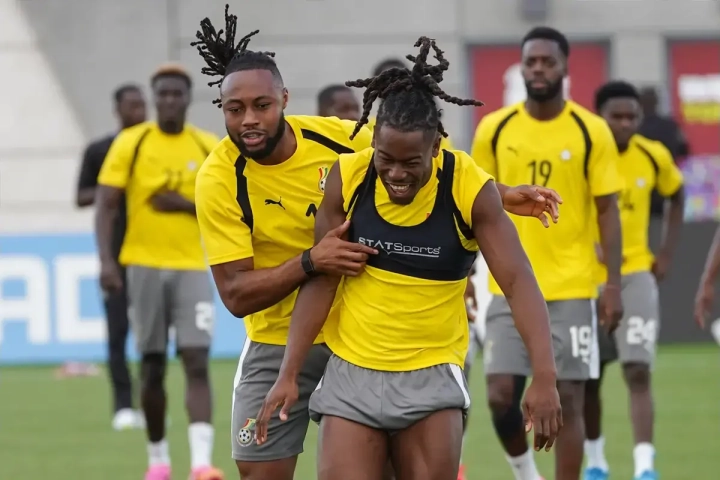
Arriving at the tournament carrying the immense weight of passionate West African expectations, Ghana are on a mission to restore their historical pedigree. Following a few turbulent years characterised by early exits in continental competitions, the Ghanaian Football Association successfully steadied the ship by reinstalling Otto Addo as head coach. The former international has meticulously worked to forge a more resilient, unified squad, blending seasoned veterans with an exciting crop of technically gifted young talent.
Recent form suggests a team that has finally found its tactical footing. The Black Stars navigated the rigorous African qualification campaign with a renewed sense of defensive solidity, complemented by their trademark explosive pace in the final third. Their final warm-up fixtures demonstrated a pragmatic approach, selectively surrendering possession against possession-heavy teams before striking ruthlessly on the counter-attack.
At the epicentre of this tactical blueprint is West Ham United’s dynamic attacking midfielder, Mohammed Kudus. Operating in a fluid number ten role, his exceptional close control, vision, and ability to break lines with driving runs make him the undisputed creative heartbeat of the side. Providing the necessary defensive stability behind him is Arsenal’s Thomas Partey, whose elite experience and positional discipline will be vital in marshaling the midfield engine room.
Out wide, the sheer blistering pace of Antoine Semenyo and the tireless work rate of Iñaki Williams offer a constant, terrifying threat to opposition full-backs. Addo has consistently emphasised the importance of rapid vertical transitions, ensuring that whenever possession is turned over, the Black Stars possess the offensive weaponry to punish disorganised defensive structures in a matter of seconds. Fortunately for the coaching staff, the squad arrives in Toronto with a pristine bill of health, entirely free from any confirmed injuries or suspensions.
Los Canaleros’ Tactical Evolution
Stepping onto the pitch as the proud representatives of Central America, Panama bring a distinctly different, yet equally dangerous, footballing philosophy to the table. Under the meticulous stewardship of Danish-Spanish manager Thomas Christiansen, Los Canaleros have undergone a profound tactical revolution. Shedding their historical reputation as a purely physical, defensive-minded outfit, they have systematically evolved into a technically proficient, possession-oriented team that genuinely aims to dictate the tempo of matches.
This brave stylistic shift has yielded impressive dividends within the CONCACAF region, where they have consistently challenged traditional powerhouses like Mexico and the United States. Their journey to the 2026 finals was marked by cohesive team performances and a clear, unwavering commitment to Christiansen’s overarching vision. Entering the tournament, their recent competitive outings have showcased a remarkable ability to retain the ball under pressure and construct patient, methodical attacks from the backline.
The absolute linchpin of this modernised Panamanian side is midfield maestro Adalberto Carrasquilla. Recognised as one of the most intelligent playmakers in his confederation, Carrasquilla possesses an exceptional passing range and the remarkable ability to effortlessly dictate the rhythm of a match. His individual battle against the physical dominance of Thomas Partey promises to be one of the most compelling subplots of the entire fixture.
Defensively, the experience of Olympique de Marseille’s Michael Amir Murillo on the right flank provides both defensive grit and vital overlapping width. Further forward, the attacking burden falls upon the shoulders of José Fajardo and Ismael Díaz, who are tasked with providing the clinical finishing required to translate their team’s possession into tangible scoreboard pressure. Like their African counterparts, Panama head into this crucial opener with a fully fit squad, allowing Christiansen to deploy his absolute strongest starting eleven.
Tactical Battlegrounds and Historical Context
This intriguing encounter marks the first-ever senior international meeting between the two nations, adding a wonderfully unpredictable element to the proceedings. The stylistic contrast between the two teams guarantees a fascinating tactical chessboard. Ghana’s overarching philosophy relies on disruptive pressing, physical dominance in the centre, and lightning-fast transitions. Conversely, Panama will deliberately seek to slow the game down, monopolise possession, and patiently probe for intricate gaps in the Ghanaian defensive block.
Anticipated Key Matchups
|
Area of the Pitch |
Ghana Key Figure |
Panama Key Figure |
Tactical Significance |
|
Central Midfield |
Thomas Partey |
Adalberto Carrasquilla |
The battle for tempo control. If Carrasquilla is afforded time and space, Panama can dictate the game; if Partey dominates physically, Ghana will launch devastating counters. |
|
The Flanks |
Antoine Semenyo |
Michael Amir Murillo |
Raw, explosive pace against seasoned defensive positioning. Murillo’s willingness to overlap could leave vast spaces for Semenyo to exploit during transitions. |
|
Creative Hub |
Mohammed Kudus |
Aníbal Godoy |
Kudus thrives between the lines. Godoy’s primary responsibility will be tracking the Ghanaian talisman and disrupting his creative output. |
The psychological weight of the occasion cannot be ignored. Ghana boast a rich World Cup heritage, famously reaching the quarter-finals in 2010, and their supporters demand a return to those glorious heights. Panama, making only their second appearance at the finals after a challenging debut in 2018, are desperate to register their first-ever World Cup victory and prove their recent continental growth translates to the ultimate global stage.
If the Central Americans can successfully establish their passing rhythm and frustrate the Ghanaian forwards early on, the pressure will undoubtedly mount on Otto Addo’s men. However, if the Black Stars manage to force early turnovers in dangerous areas, their lethal attacking quartet possesses the requisite quality to put the game out of reach before the half-time whistle.
Building Anticipation for Kick-Off
As the thousands of passionate, colourful supporters stream into the Toronto Stadium, the theoretical planning, exhaustive video analysis, and endless media speculation decisively conclude. The undeniable reality of elite tournament football takes over.
With Group L widely considered one of the most treacherous brackets in the entire competition, absolutely neither side can afford a tentative, cautious start. A draw does very little to alleviate the immense pressure before facing the daunting prospects of England and Croatia in the coming weeks. Football fans across the globe can readily anticipate a captivating, high-stakes encounter where fleeting moments of individual brilliance, unwavering tactical discipline, and sheer mental fortitude will ultimately define their respective tournament trajectories. The global stage is perfectly set for a classic clash of styles in Canada.