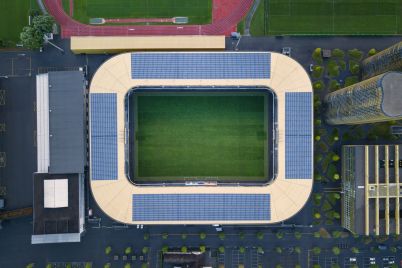

The soaring architecture of the Kansas City Stadium in Missouri will serve as the spectacular venue for a winner-takes-all conclusion to Group J at the 2026 FIFA World Cup. Scheduled for a late-night American showdown that translates to an early-morning kick-off at exactly 03:00 BST on Sunday, 28 June 2026, the Algerian national team will face a highly disciplined Austrian outfit. For the passionate supporters filling the cavernous arena, the ninety minutes represent a definitive crossroads. Both proud nations arrive in the American Midwest with their tournament survival hanging precariously in the balance. With reigning champions Argentina having already dominated the section to secure their progression, only one realistic qualification spot remains. The mathematical reality is unforgiving: one side will dramatically extend their North American adventure into the knockout stages, while the other will be forced to book a premature flight home.
Group J Permutations and the Current Landscape
Navigating the treacherous waters of the expanded 48-team tournament has proven to be a gruelling examination of endurance for both squads. Heading into this decisive final matchday, the standings remain delicately poised beneath the Argentine juggernaut. Austria currently occupies the coveted second-place position, sitting on three points with a neutral goal difference after scoring three goals and conceding three across their opening two fixtures.
Algeria, meanwhile, finds themselves in third place. They share an identical points tally with their European counterparts but are significantly hindered by a damaging goal difference of minus two. The permutations for this clash in Kansas City are relatively straightforward, yet brutally uncompromising. Ralf Rangnick’s Austrian side hold a distinct structural advantage; avoiding defeat will guarantee they finish ahead of the North Africans, likely securing passage to the Round of 32 as group runners-up.
For Vladimir Petković and his Algerian squad, the situation demands absolute attacking intent. Nothing less than an outright victory will suffice to leapfrog their opponents into second place. A draw would leave them completely at the mercy of the complex third-place ranking system, where their negative goal difference would almost certainly condemn them to elimination.
The Fennec Foxes Fight Back
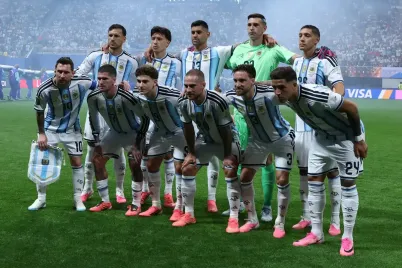
Arriving in the United States with high expectations, the Algerian campaign commenced in disastrous fashion. Facing Lionel Messi and a rampant Argentina in their opening encounter, the North Africans were systematically dismantled in a comprehensive 3-0 defeat. The heavy loss immediately placed immense pressure on Petković to rapidly restore morale and tactical cohesion.
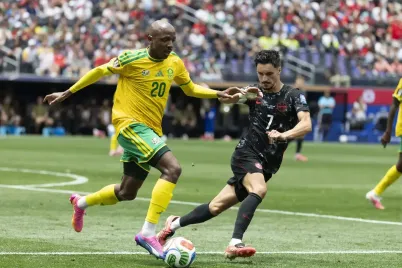
The response against tournament debutants Jordan was a testament to their psychological resilience, though it was far from straightforward. Falling behind to an early Nizar Al-Rashdan strike in San Francisco, the Fennec Foxes stared down the barrel of an unthinkable early exit. However, a spirited second-half revival turned the tide. Nadhir Benbouali finally broke their tournament duck to equalise in the 69th minute, before Amine Gouiri delivered a crucial, match-winning strike eight minutes from time. The 2-1 triumph dramatically resuscitated their World Cup dreams, but the performance highlighted lingering defensive vulnerabilities that must be urgently addressed.
Captain Riyad Mahrez remains the undisputed focal point of their attacking machinery. The 35-year-old winger, possessing vast international experience, has frequently found himself heavily marked and aggressively pressed by opposition defenders. The creative burden will fall heavily upon his shoulders once again, supported by the energetic running of Farès Chaïbi and Gouiri. To break down a resolute Austrian defence, Algeria must rediscover their attacking fluidity and ruthlessness in the final third.
Austria’s Tactical Discipline
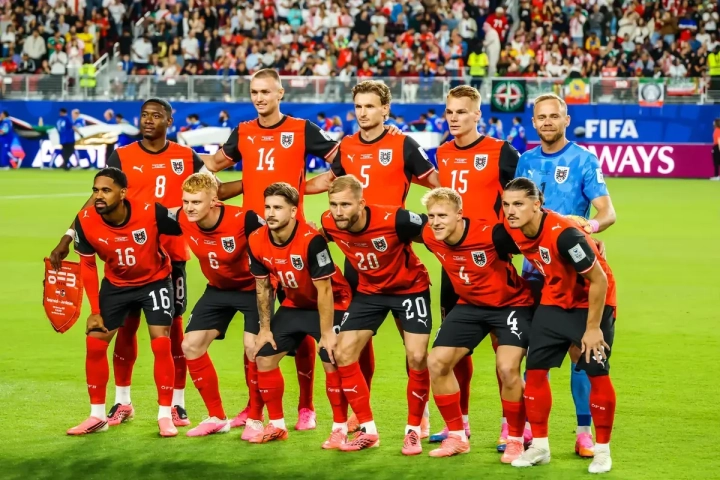
Standing resolutely across the tactical divide is an Austrian squad that has fully embraced Rangnick’s high-intensity, pressing philosophy. Their return to the global stage after a lengthy 28-year absence began with a gritty, hard-fought 3-1 victory over Jordan. Romano Schmid set the tone with a spectacular opening goal, and despite a Jordanian equaliser, an own goal from Yazan Al-Arab and a stoppage-time penalty from veteran striker Marko Arnautović secured the vital three points.
Their subsequent encounter against Argentina proved to be a far sterner test. Despite remaining defensively compact and frustrating the South American champions for long periods, they were ultimately undone by two moments of sheer brilliance from Messi, falling to a 2-0 defeat in Dallas. However, the performance showcased their impressive structural organisation. The defensive foundation, marshalled by Kevin Danso and Stefan Posch, restricted Argentina to relatively few clear-cut opportunities.
Midfield dynamos Konrad Laimer and Nicolas Seiwald are absolutely central to the Austrian blueprint. Their tireless energy, positional awareness, and aggressive counter-pressing will be instrumental in disrupting the Algerian build-up play. Further forward, Marcel Sabitzer continues to provide exceptional vision and passing range, serving as the crucial link between the midfield engine room and the physical presence of Arnautović in the penalty area.
Anticipated Tactical Battlegrounds
When analysing the granular details of this impending matchup, a fascinating contrast of overarching footballing philosophies immediately emerges, entirely dictated by the group standings.
Algeria simply has no alternative but to attack. Petković must instruct his full-backs, Rayan Aït-Nouri and Rafik Belghali, to push aggressively high up the pitch, actively attempting to stretch the Austrian defensive block and create numerical overloads in the wide channels. The North Africans will likely dominate possession, patiently probing for gaps and heavily relying on the individual brilliance of Mahrez to unlock the stubborn European lines.
However, this necessary commitment to offence plays perfectly into Rangnick’s preferred tactical design. By absorbing the Algerian pressure, Austria will deliberately manufacture vast pockets of space behind the advancing defensive line. The blistering transitional speed of Sabitzer and Romano Schmid will be immediately weaponised to launch rapid, devastating vertical counter-attacks. If Algeria’s midfield pivot of Nabil Bentaleb and Ramiz Zerrouki fails to effectively apply aggressive counter-pressing upon losing the ball, they run the severe risk of being ruthlessly punished on the break.
|
Area of the Pitch |
Algeria Key Figure |
Austria Key Figure |
Tactical Significance |
|
Central Midfield |
Nabil Bentaleb |
Konrad Laimer |
A brutal battle for physical dominance and control of the tempo. Laimer will aggressively press the Algerian playmakers, while Bentaleb is tasked with dictating the rhythm. |
|
The Flanks |
Riyad Mahrez |
Phillipp Mwene |
Mahrez’s elite dribbling ability against disciplined, cautious defensive positioning. Controlling the wide areas is absolutely paramount for Austrian survival. |
|
The Penalty Box |
Aïssa Mandi |
Marko Arnautović |
Elite defensive positioning against a physically imposing, experienced target man. Mandi must command his area to completely nullify the primary European offensive threat. |
Team News and Squad Availability
Preparation for this monumental Group J finale has fortunately provided a relatively pristine bill of health for both managers. Following their physically demanding encounters earlier in the week, both nations have completely avoided any fresh, significant injury concerns.
Crucially, neither squad is burdened by lingering disciplinary suspensions. While several players picked up yellow cards in their previous outings, including Ramiz Zerrouki for Algeria, and Stefan Posch and Konrad Laimer for Austria, they successfully avoided a second caution that would have ruled them out of this decisive clash. This affords both Petković and Rangnick the luxurious flexibility of selecting their absolute strongest, most trusted starting elevens for the most important match of their respective campaigns.
For the North Africans, Gouiri’s match-winning impact off the bench against Jordan makes a compelling case for his inclusion from the opening whistle. Austria is likely to remain largely unchanged from the side that frustrated Argentina for large spells, trusting their established tactical framework to deliver the required result.
Historical Context and The Final Word
Encounters between these two distinct footballing cultures are exceptionally rare on the senior international stage, adding a wonderful element of sheer unpredictability to the proceedings. The stark lack of recent historical precedent means there is absolutely no established psychological hierarchy or past tournament trauma to heavily influence the players’ mindsets. Sunday morning’s clash offers both proud nations a completely blank canvas upon which to boldly paint their World Cup legacy.
As the passionate, vibrant supporters converge on the magnificent modern architecture of the Kansas City Stadium, the extensive theoretical planning and exhaustive video analysis will immediately give way to raw, competitive tournament survival. For the disciplined European challengers, the fixture provides a golden opportunity to execute a flawless tactical masterclass, manage the emotional intensity of the occasion, and secure a thoroughly deserved place in the knockout stages.
For the desperate North African hopefuls, it represents the ultimate test of character and attacking ingenuity. Millions of fans tuning in around the world can readily anticipate a fiercely contested, high-stakes encounter where fleeting moments of individual genius, unwavering tactical discipline, and sheer mental resilience will ultimately separate the victors from the vanquished. With the punishing reality of elimination looming menacingly over the pitch, a conservative, tentative approach from Algeria will benefit absolutely no one. History awaits the brave in Missouri.