
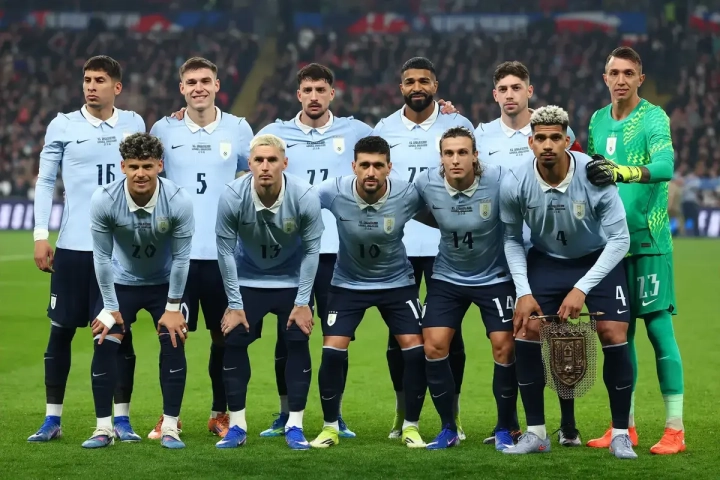
The relentless heat and intense humidity of Florida provide the backdrop for a compelling clash of footballing philosophies this Monday, as Uruguay face Saudi Arabia in their opening fixture of the 2026 FIFA World Cup. Taking place under the lights at the sprawling Miami Stadium, this pivotal Group H encounter will kick off at exactly 23:00 BST on 15 June 2026. For two proud nations seeking to leave an indelible mark on the expanded 48-team tournament, the stakes could barely be higher.
The South Americans arrive desperate to banish the lingering memories of their painfully premature group-stage exit in Qatar four years ago. Conversely, the Green Falcons are fiercely determined to recapture the magic that saw them famously stun eventual champions Argentina in their 2022 opening match. In a highly competitive group that also features reigning European champions Spain and tournament debutants Cape Verde, securing maximum points in this initial clash is absolutely paramount for any realistic hopes of progression to the knockout phases.
Bielsa’s High-Wire Act and Midfield Stardust
Under the meticulous and notoriously demanding guidance of Marcelo Bielsa, La Celeste have undergone a profound tactical transformation. The veteran Argentine manager has uncompromisingly implemented his trademark high-intensity, aggressive pressing system, demanding relentless energy and verticality from his players. However, their immediate preparations for the global showpiece have been far from seamless. Uruguay enter the tournament winless in their previous four outings, a concerning run that alarmingly included a bruising 5-1 defeat to the United States alongside frustrating, scoreless draws against Mexico and Algeria.
Central to Bielsa’s demanding system is a world-class midfield trio that arguably ranks among the finest in the entire competition. Real Madrid’s Federico Valverde provides the unstoppable driving force and a thunderous long-range threat, effortlessly setting the overarching rhythm for his team. Beside him, Manchester United’s Manuel Ugarte anchors the engine room with his tenacious tackling and supreme positional discipline. Tottenham Hotspur’s Rodrigo Bentancur completes the formidable triumvirate, offering elite ball retention and necessary composure whenever the match threatens to descend into chaos.
In the attacking third, a genuine generational shift has been fully realised. For the first time in over a decade, Uruguay are competing at a World Cup without the iconic presence of either Edinson Cavani, who retired from international duty, or Luis Suárez, who was omitted from the final squad. The heavy burden of goalscoring responsibility now falls squarely onto the shoulders of Liverpool forward Darwin Núñez. His explosive pace, formidable physical presence, and sheer unpredictability will be thoroughly tested against an opposition defence he is intimately familiar with from their respective club exploits. Providing width and direct service to Núñez will be the dynamic Maximiliano Araújo, whose overlapping runs down the flank represent a primary attacking outlet.
The most pressing concern for the South American giants, however, lies within their severely ravaged defensive line. A devastating spate of injuries has completely decimated their preferred backline on the very eve of the tournament. Key defensive pillars Ronald Araújo and José María Giménez have been categorically ruled out of this opener through calf and ankle issues, respectively, while Matías Viña continues nursing a complex muscle complaint. Consequently, Bielsa will be forced to rely on a makeshift central defensive pairing, likely consisting of Santiago Bueno and Sebastián Cáceres, introducing a significant element of vulnerability to a team heavily reliant on defensive stability.
Donis Aims to Spark a New Saudi Era
Transitioning to the Asian challengers, Saudi Arabia touch down in Miami having successfully navigated a period of profound turbulence. In a highly unusual move just two months before the tournament commenced, the Saudi Arabian Football Federation parted ways with manager Hervé Renard, abruptly appointing Greek tactician Georgios Donis in April. The new head coach has had precious little time to implement his philosophy, overseeing a mixed bag of warm-up results that included a narrow 2-1 defeat to Ecuador before successfully securing a morale-boosting 3-0 victory over Puerto Rico.
Despite the recent managerial upheaval, Donis has wisely opted for continuity regarding his playing personnel, heavily leaning on the core group that delivered that historic upset in Lusail four years ago. The squad remains almost entirely domestically based, with dynamic defender Saud Abdulhamid serving as a rare European representative following his impressive performances abroad.
The dramatic influx of elite foreign superstars into the Saudi Pro League over the past three years has presented a double-edged sword for the national setup. While the local players train alongside global icons daily, crucial domestic playing time for homegrown talent has noticeably diminished. Nevertheless, Donis has publicly insisted his squad must draw confidence from their elite exposure to overcome any lingering doubts on the grandest international stage.
Captain and talisman Salem Al-Dawsari remains the undisputed heartbeat of the national side. The Al-Hilal winger possesses the technical wizardry and big-game temperament required to alter the complexion of a match in a fleeting moment. He is ably supported in the final third by the prolific Feras Al-Buraikan, who firmly established himself as the team’s premier attacking threat by netting five crucial goals during the arduous Asian qualification campaign. In midfield, the highly experienced Mohamed Kanno will be tasked with the monumental challenge of disrupting the flowing rhythm of his illustrious Uruguayan counterparts.
The Green Falcons are definitely not without their own selection headaches. Their defensive structure has taken a considerable blow with the absence of Walid Al-Ahmad, who was devastatingly ruled out of the entire tournament after suffering a severe cruciate ligament tear during domestic duty. To compensate, Donis is fully expected to deploy a resolute, highly organised defensive block, seeking to thoroughly frustrate the opposition and strike via rapid, incisive counter-attacks.
Tactical Battles and Tournament Implications
History provides a relatively recent and relevant benchmark for this specific encounter. The two nations previously locked horns during the group stages of the 2018 World Cup in Russia, where Uruguay edged a tightly contested affair 1-0 courtesy of a solitary strike from Suárez. Eight years later, the faces have inevitably changed, but the overarching dynamic remains strikingly similar: a South American powerhouse overwhelmingly expected to dominate possession against a disciplined, hard-working Saudi outfit determined to ruthlessly spoil the party.
The upcoming ninety minutes promise to unfold as a fascinating tactical chessboard. Bielsa’s overarching philosophy explicitly dictates that Uruguay will aggressively seize the initiative, pushing their full-backs extremely high up the pitch and attempting to suffocate the Saudis deep inside their own half. The midfield battle will be fiercely contested, with Valverde and Bentancur tasked with systematically bypassing the inevitable low block that Donis will meticulously construct.
If the South Americans fail to exhibit clinical finishing, the potential for a catastrophic defensive lapse from their patched-together backline increases exponentially as the game progresses. Saudi Arabia’s wide players will consciously lurk with intent, exceptionally eager to exploit the vast, inviting spaces inevitably left behind by Bielsa’s adventurous attacking structure. Furthermore, the creative spark of Giorgian de Arrascaeta is a major doubt for Uruguay due to a lingering calf complaint. Should he fail a late fitness test, the burden on the midfield to generate clear-cut opportunities will significantly intensify.
With Spain widely tipped to eventually secure the top spot in Group H, the ensuing battle for the crucial second qualification berth is fiercely competitive. A victory in Miami would provide either nation with a monumental psychological boost and a highly tangible advantage heading into their subsequent fixtures. For Uruguay, the primary objective is to emphatically prove they possess the necessary cutting edge to appropriately match their undeniable midfield pedigree. For Saudi Arabia, the ultimate goal is to once again demonstrate that their unique blend of domestic cohesion and unwavering tactical discipline can systematically dismantle the world’s most talented squads.
As the thousands of passionate supporters stream into the Miami Stadium, the theoretical planning ends. Both teams acutely understand the immense ramifications of an opening-day defeat, guaranteeing a tense, absorbing, and utterly unmissable spectacle.