
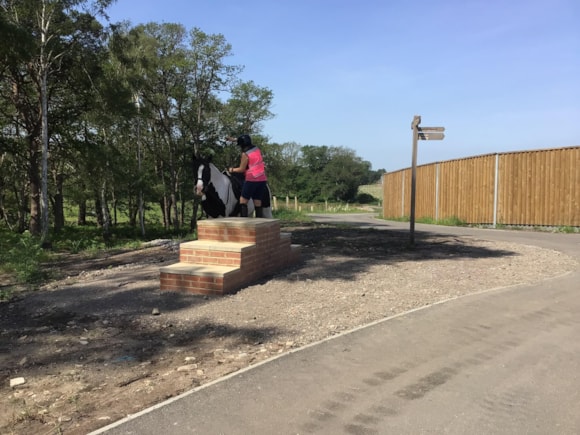
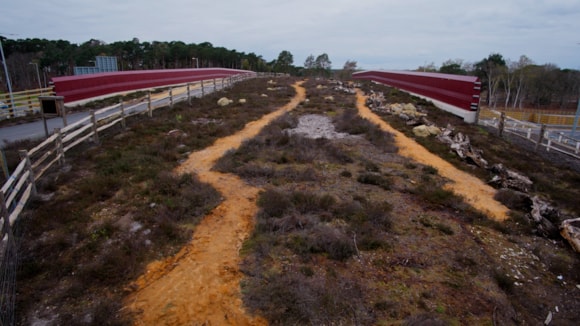
The UK’s first ever heathland green bridge has now opened to walkers, cyclists and horse riders in Surrey.
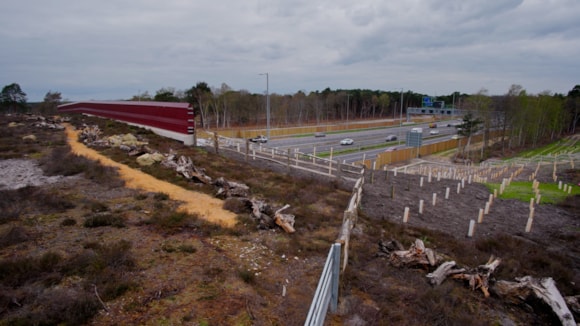
The Cockcrow Bridge connects Ockham and Wisley Commons on either side of the A3, providing a unique corridor for one of the rarest habitat types in the country – lowland heathland.
It acts as a safe crossing over the busy carriageway not just for people, but also for wildlife such as deer, badgers, voles and other small animals.
The beams for the structure were installed by National Highways last year and since then, workers have used specialist equipment to transport turf from nearby land onto the bridge.
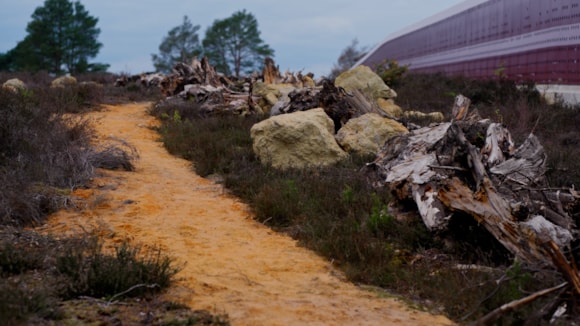
Around 10,000 square metres of heathland were moved from donor sites, with the landscape allowed to slowly establish itself over the coming years.
The Cockcrow Bridge is a cornerstone of the green legacy National Highways has pledged to leave as part of a project to upgrade junction 10 of the M25 and the A3 Wisley Interchange.
Jonathan Wade, Senior Project Manager at National Highways, said: “This scheme is about much more than just improving road journeys – enhancing the surrounding environment is a huge part of our work.
“We are thrilled to have taken this big step forward in bringing the Cockcrow Bridge to life, where a range of wildlife will find it easier to migrate, mate, eat, and survive.”
Green bridges have been hailed as a way of joining disconnected habitats and vulnerable populations, but only a handful have been established so far in the UK, compared to dozens in other countries on the continent.
They are typically planted with hedgerows and trees, but Cockcrow puts lowland heathland at its centre.
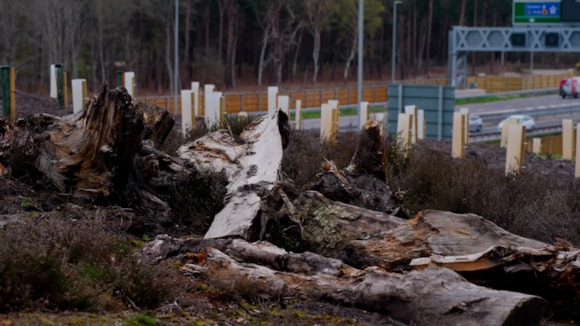
Moving established turf creates bare ground in the heathland, which in turn will improve the habitats in the wider environment. Therefore, species such as sand lizards, which nest in bare sand, will benefit.
It also allows the natural mosaic of plants, root systems and seed banks to be moved with it, as well as a proportion of the essential soil fungi and fauna, which will help the vegetation to establish quicker than alternative methods of seeding.
Furthermore, it encourages new growth and helps create a mix of vegetation ages, which improves diversity within ecology.
Ben Hewlett, Senior Environmental Advisor at National Highways, added: “Heathland is one of the UK’s most threatened environments and is a vital habitat for a wide range of invertebrates, reptiles, and bird species.
“The M25 junction 10 and A3 is surrounded by lowland heathland, a habitat that has declined in Surrey by 85% over the last 200 years.
“This is a golden opportunity for multiple species to expand their territories and strengthen their populations.”
With soft landscaping on both sides of the bridge, people using it will feel immersed in nature, reflecting the gently rolling landscape around them.
Wisley and Ockham Commons from part of Surrey County Council’s countryside estate.
Marisa Heath, Cabinet Member for Environment and Planning, said: “Surrey’s heaths are an important habitat, so we’re thrilled to have the UK’s first heathland bridge in our county.
“The bridge links Wisley and Ockham commons for the first time in decades, so we’re excited to see the improvements to local ecosystems and the benefits for the species which rely on them. I urge walkers, cyclists and horse riders in the area to visit the bridge and take a look.
“As we continue to work with National Highways and Surrey Wildlife Trust, we’re looking forward to seeing how the new heathland link establishes itself and brings real environmental change.”
National Highways, responsible for England’s major A roads and motorways, has already constructed green bridges over the A556 near Chester, the A21 at Scotney Castle in Kent and across the A30 in Cornwall.
Further structures will also follow in the coming years, including one as part of the A417 Missing Link scheme near Gloucester.
Initiated in France in the 1950s and pioneered in the Netherlands in 1990, green bridges are now becoming an important part of the sustainability of infrastructure projects, by:
• creating a safe crossing point for wildlife movement;
• joining up habitats and connecting colonies, and making wildlife populations more resilient;
• creating a safe crossing point for people and improving road safety;
• integrating roads and railways into the surrounding landscape.
Balfour Beatty and AtkinsRéalis supported National Highways with design, technical and engineering expertise to deliver the bridge.
Joanna Vezey, Managing Director of Balfour Beatty’s UK Highways business, said: “The Cockcrow Bridge shows what’s possible when we put nature at the heart of infrastructure delivery.
“Working with National Highways, we have helped bring Ockham and Wisley Commons back together by carefully moving heathland onto the bridge so it can grow and establish over time.
“This project is an important example of how infrastructure can be delivered in a way that respects its surroundings whilst also creating a natural corridor that allows wildlife to safely move across the M25 once again.”
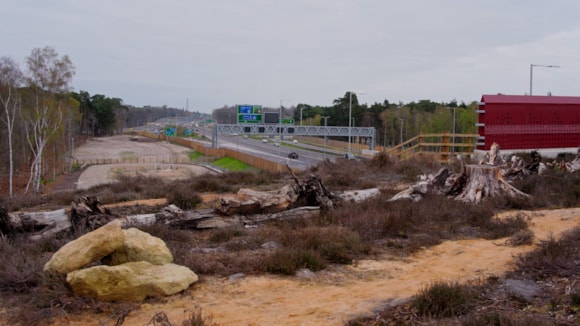
Ian Spellacey, AtkinsRéalis Market Director – Strategic Highways, said: “As the UK’s first heathland bridge, Cockcrow was a complex engineering challenge: designing a 30-metre-wide structure to support rare habitat while providing a safe, shared route for walkers, cyclists and riders.
“By integrating engineering, landscaping and ecology from the outset, the bridge functions as an infrastructure and environmental asset together – demonstrating how sustainable design in major projects can reconnect habitats and the communities around them.”