
Most disabled people know vehicle adaptations can help them keep driving or travelling by car. But far fewer know how to get or pay for them, according to new research from adapted vehicle specialist Mobility in Motion.
In a survey of 224 disabled people, carers and supporters, more than eight in 10 (82%) said they were aware that adaptations can help disabled people, people with long-term conditions or limited mobility to drive or travel by car. Nearly nine in 10 (89%) knew the right adaptations can help people return to driving or keep driving. Awareness of specifi c adaptations was high: hand controls (84%), wheelchair accessible vehicles (80%), steering aids (76%) and swivel seats (75%).
Yet only one in fi ve (21%) said they understand what support they may be eligible for. The rest were unclear:
● 38% know support exists but aren’t sure whether they qualify
● 23% don’t know whether any support is available
● 14% assumed they wouldn’t be eligible
More than six in 10 (62%) were not confi dent they understood what fi nancial support or funding was available for adaptations, and almost half (47%) said they had delayed seeking advice because they didn’t know where to start.
The cost of this gap is personal. Among respondents who had reduced or stopped driving, two in three (67%) said it had reduced their independence, 58% said it had increased their isolation, and half (51%) said they now rely more on family and friends. More than four in 10 (43%) said it was harder to get to medical appointments.
The fi ndings suggest better information could make a real difference. Two in three respondents (68%) said clearer information and advice would make them more likely to continue driving, return to driving, learn to drive or explore ways to improve their driving experience. More than six in 10 (63%) believed better information could have helped them drive for longer or explore adapted driving sooner.
The research comes at a time of change. The Government’s Timms review of Personal Independence Payment is due to publish its fi nal report this autumn, having concluded in its interim report that “PIP is not working”. Changes to the Motability Scheme for new leases, including a 30,000-mile limit over three years for cars, came into effect on 1 July 2026.
Matt Fieldhouse, Group Managing Director at Mobility in Motion, says:
“This research shows a real disconnect. People know adapted driving is possible, but they don’t know where to start, what they qualify for or what it might cost. That uncertainty stops people acting, sometimes for years, and the cost is their independence.
“We’re not pretending a new car is within everyone’s reach. For many disabled people it isn’t, and adaptations add cost. But everyone deserves to know all their options. That’s why we launched Adapt & Drive: to give people another route to an adapted car, alongside schemes like Motability, with free expert advice so they can make the right decision for them.”
About Adapt & Drive
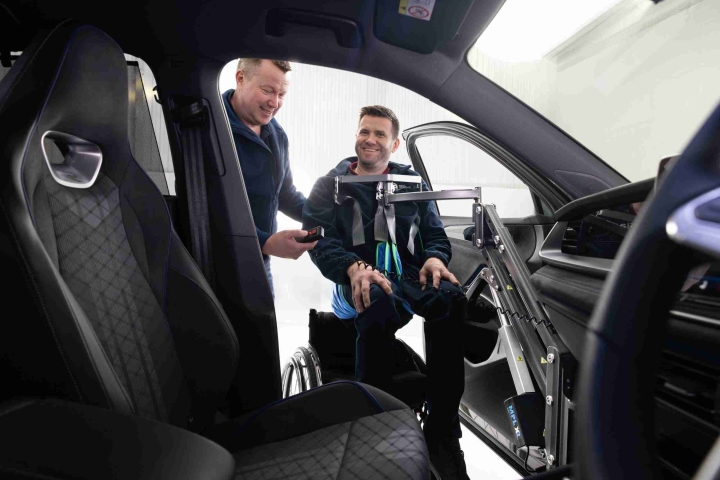
Adapt & Drive is an adapted vehicle purchase scheme from Mobility in Motion, backed by VW, Vauxhall, Nissan and Kia. It combines a brand-new car with specialist adaptations fi tted, a free personal mobility assessment, fl exible monthly payment options and possible VAT relief for eligible customers. Customers own the vehicle once payments are complete, and the scheme is open to people whether or not they receive PIP or use the Motability Scheme. Each car is sold at a substantial discount off the standard price, which can cover the cost of the adaptations, or even exceed it. That means a new adapted car can cost less than the standard price of the car alone. Customers can drive away a new adapted car for less than the standard price of the car alone. One customer saved almost £3,000 on an adapted Nissan X-Trail fi tted with a Turny Evo swivel seat, 16-inch Carony system, armrests and a universal elastic strap.
Find out more at mobilityinmotion.com/adapt-drive or call 0800 009 2575.