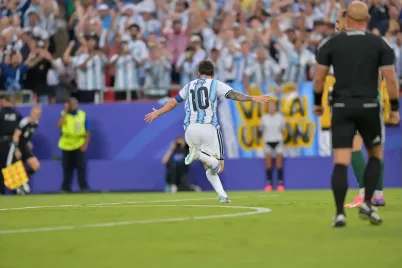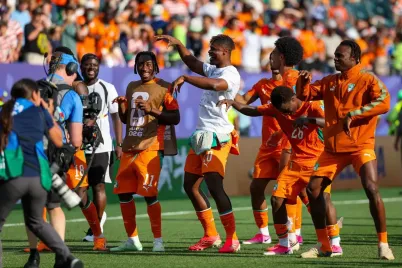

The unforgiving reality of knockout football has firmly settled upon the 2026 FIFA World Cup. As the expansive group stage gives way to the breathless tension of single-elimination ties, the Round of 32 continues to deliver captivating intercontinental encounters. Early on Saturday, 4 July 2026, South American heavyweights Colombia will clash with African powerhouses Ghana. Scheduled for a 02:30 BST kick-off beneath the lights of the Kansas City Stadium in Missouri, this fixture presents a fascinating juxtaposition of tactical ideologies and intertwined managerial histories. The ultimate prize is a coveted berth in the final sixteen, where a formidable test against either Switzerland or Algeria awaits the victor. For the vanquished, nothing remains but an immediate, agonising flight home.
A Triumphant Return for Los Cafeteros
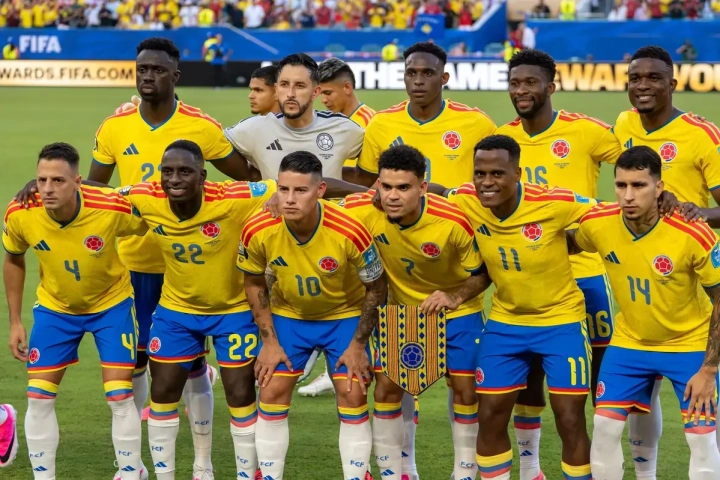
Having painfully missed out on the 2022 edition in Qatar, the South American outfit have returned to the global stage displaying a phenomenal sense of purpose. Guided by head coach Néstor Lorenzo, the squad has perfectly balanced the flair long associated with their footballing heritage with a newfound tactical resilience. Lorenzo, who previously honed his craft as José Pékerman’s trusted assistant during the nation’s golden runs in 2014 and 2018, took the reins in 2022 and has since orchestrated a remarkable revival.
Placed in Group K, their preliminary campaign was an exercise in systematic dominance. Their North American adventure commenced with a tightly contested but highly professional 1-0 victory over DR Congo. Finding their offensive rhythm, they subsequently delivered a commanding performance against Uzbekistan, securing the necessary points with an assertive display of attacking football. Their group phase concluded with a fiercely competitive goalless draw against European heavyweights Portugal in Miami. That resolute defensive showing ensured they progressed undefeated, perfectly illustrating their capacity to match elite opposition while maintaining structural integrity.
Ghana’s Pragmatic Resurgence Under Queiroz
Ghana’s route to the knockout bracket has been defined by late upheaval and an immediate tactical revolution. The Black Stars made headlines worldwide when they appointed veteran tactician Carlos Queiroz in April 2026, mere months before the tournament, following the departure of Otto Addo. Now competing in an astonishing fifth consecutive World Cup, the 73-year-old Portuguese manager wasted no time in installing his trademark defensive pragmatism.
Drawn into the notoriously volatile Group L, the West African nation faced a daunting gauntlet. They opened their campaign in Toronto by securing a vital, hard-fought victory over Panama, establishing a crucial foundation. This was followed by an absolute tactical masterclass against England. In a match where they faced sustained pressure, Queiroz’s men frustrated the Three Lions to secure a 0-0 draw, drawing widespread praise for their impeccable defensive discipline and spatial awareness. Although their group stage concluded with a narrow 2-1 defeat to Croatia in Philadelphia—a match that saw them push the European side to their absolute limits—the resilience demonstrated in their opening fixtures proved entirely sufficient to guarantee progression.
The Managerial Subplot: Queiroz Faces His Past
Adding an incredibly rich layer of narrative tension to this fixture is Queiroz’s intimate history with the opposing national team. The Portuguese manager spent a notable stint occupying the Colombian dugout between 2019 and 2020. During that tenure, he gained first-hand knowledge of the South American setup, actively managing and developing several core members of the current squad. He is uniquely positioned to understand the psychological makeup and technical intricacies of Lorenzo’s key personnel. His ability to devise a bespoke tactical blueprint designed to nullify the very players he once commanded will be one of the most fascinating psychological subplots of the entire Round of 32.
The Tactical Chess Match
The battlelines on the Californian turf present a classic clash of footballing philosophies. Operating within a fluid, possession-oriented framework, Lorenzo expects his side to dictate the tempo and exploit the wide channels. The undisputed creative heartbeat of the team remains their captain, James Rodríguez. The veteran playmaker continues to roll back the years, orchestrating proceedings from the central areas with his unparalleled vision and precise weight of pass. He is brilliantly supported by the explosive pace and relentless directness of Luis Díaz on the flank, offering a constant, terrifying threat to opposition full-backs. The midfield engine room is efficiently anchored by Richard Ríos and Jhon Arias, who provide both defensive solidity and the essential speed required in transition.
Conversely, the African side will rely heavily upon the archetypal Queiroz blueprint. Expect a deep, remarkably compact defensive block that systematically suffocates space in the central areas. Ghana will likely concede the majority of possession, challenging their opponents to find a way through their heavily fortified lines. When the ball is inevitably turned over, the Black Stars will transition with ferocious verticality. The driving, powerful runs of Mohammed Kudus through the middle of the pitch will be instrumental in launching rapid counter-attacks, looking to exploit the vast spaces left behind by overlapping full-backs. It is a classic confrontation between a team asking all the attacking questions and an opponent firmly established to provide an impenetrable answer.
Team News and Squad Availability
At this gruelling stage of international competition, squad depth, rotation, and medical management become absolutely paramount factors. The intense North American summer heat and the condensed fixture schedule are undoubtedly taking their toll across all thirty-two camps. Both medical departments have been working tirelessly behind the scenes to ensure optimal recovery following the demanding group stage.
Fortunately for the neutral spectator, neither manager has reported any verified, major injury concerns stemming from their respective final group encounters. Furthermore, both nations appear to have successfully navigated the perilous disciplinary tightrope that often plagues teams during the early stages of a tournament. Despite a handful of yellow cards being distributed across the opening three matches, no player from either side has accumulated the required bookings to trigger an automatic suspension for this specific fixture.
Consequently, both Lorenzo and Queiroz enjoy the incredibly rare luxury of selecting from fully stocked rosters. This comprehensive availability guarantees that the tactical blueprints envisioned on the training ground can be executed entirely without enforced compromise, significantly elevating the prospect of a remarkably high-quality footballing contest.
Historical Context and The Weight of Expectation
While competitive meetings between these two proud footballing institutions are exceptionally rare on the global stage, both nations carry an immense weight of historical expectation into this knockout tie. Colombia are desperate to emulate, or perhaps even surpass, their legendary run to the quarter-finals in Brazil in 2014. The current squad is eager to prove that this generation rightfully belongs among the world’s absolute elite.
Ghana, equally, are chasing the ghosts of their own historic past. The Black Stars remain desperate to replicate the heroics of 2010, hoping to produce a deep tournament run that galvanises an entire continent. For Queiroz, it is an opportunity to silence critics of his pragmatic style and prove that his methods remain overwhelmingly effective on the biggest stage of all.
The Stage is Set
As the 02:30 BST kick-off rapidly approaches, the atmosphere in Kansas City is building towards a magnificent crescendo. The architectural marvel of the stadium provides a fittingly grandiose backdrop for a match of this sheer magnitude. Every tackle will carry immense weight, every defensive lapse will be heavily magnified, and every goal will be celebrated with unbridled, raw passion. It is the uncompromising, unforgiving nature of knockout football.
One exceptionally talented squad will prolong their North American dream and march confidently into the last sixteen, keeping their hopes of ultimate glory intact. The other will be left to face the crushing despair of an early departure, left only with the bitter taste of what might have been. The stage is perfectly set, the narratives are deeply intertwined, and the global footballing audience awaits the outcome with bated breath.