
Few matches finish without goals and still leave supporters talking long after the final whistle, but Ecuador’s World Cup clash with Curaçao was one of those rare occasions. In a game filled with drama, pressure, frustration, determination and remarkable individual brilliance, the two sides battled to a 0-0 draw in Group E, a result that felt vastly different for each nation when the final whistle sounded.
For Ecuador, the match represented another painful missed opportunity in a tournament that has so far failed to follow the script they had imagined. Entering the competition with hopes of reaching the knockout stages, the South Americans found themselves under pressure after suffering a narrow defeat in their opening group fixture. Against a Curaçao side that had been heavily beaten by Germany, Ecuador knew victory was essential. Instead, they walked away with a single point and growing concerns about their chances of advancing.
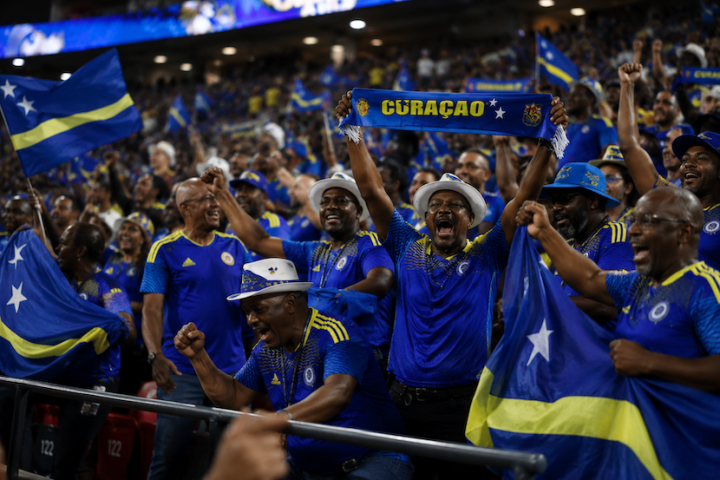
For Curaçao, however, this was a night that will be remembered for generations. The Caribbean nation, appearing at its first World Cup, produced a display of resilience and determination that earned the country’s first-ever point on football’s biggest stage. The achievement was made all the more impressive by the circumstances. Facing wave after wave of Ecuadorian attacks, Curaçao refused to surrender and were inspired by a goalkeeping performance that will be spoken about for years to come.
From the opening moments, Ecuador played with urgency. Their players understood the significance of the occasion and immediately sought to impose themselves. The midfield trio worked aggressively to recover possession high up the pitch, while the wide players attempted to stretch Curaçao’s defensive structure. The early signs suggested it could become a long evening for the underdogs.
Within minutes, Ecuador created their first clear opportunity. Quick movement through midfield opened space behind the Curaçao back line and a dangerous cross found its target inside the penalty area. The resulting effort looked destined for the net until an outstanding save denied what appeared to be a certain goal. It was an early indication of what was to come.
Rather than becoming discouraged, Ecuador continued to attack. Their passing was crisp, their movement energetic and their territorial dominance unmistakable. Curaçao often found themselves defending with almost every outfield player behind the ball. Yet despite the pressure, they remained organised. Their defensive line stayed compact, the midfield worked tirelessly to close spaces, and every clearance was celebrated as though it were a goal.
The key figure throughout the first half was goalkeeper Eloy Room. The experienced shot-stopper repeatedly came to his country’s rescue, producing save after save as Ecuador increased the intensity. Some stops required quick reflexes from close range. Others demanded excellent positioning and anticipation. Each intervention frustrated Ecuador further while simultaneously boosting the confidence of his teammates.
As the opening period progressed, Ecuador’s dominance became overwhelming. They controlled possession, won corners and forced Curaçao deeper into their own half. Yet the breakthrough never arrived. On several occasions Ecuador appeared only inches away from taking the lead. A header drifted narrowly wide. A powerful strike was tipped around the post. Another effort flashed across goal without finding the decisive touch.
Despite spending long periods under pressure, Curaçao were not completely passive. When opportunities arose, they attempted to counterattack with pace. Tahith Chong offered energy on the flank and looked eager to exploit any space left by Ecuador’s attacking full-backs. Juninho Bacuna also showed moments of quality, helping his side gain valuable breathing room whenever they managed to escape their own half.
The first half ended with Ecuador wondering how they had failed to score. Their superiority was clear, but football has never been a sport that rewards dominance alone. Goals are the currency of success, and Ecuador had not found one.
The second half followed a familiar pattern. Ecuador pushed forward relentlessly while Curaçao concentrated on discipline and concentration. Every minute that passed increased the pressure on the South Americans. The longer the score remained level, the more belief spread through the Curaçao ranks.
Several Ecuadorian attacks came agonisingly close to producing the breakthrough. One flowing move sliced through the defence only for Room to make another superb stop. Another chance saw a shot blocked almost on the line. The crowd sensed a goal was coming, but somehow Curaçao continued to survive.
What made the performance even more impressive was the emotional resilience shown by Dick Advocaat’s side. Just days earlier they had endured a difficult evening against Germany, conceding seven goals in a heavy defeat. Lesser teams might have carried scars from such a result. Instead, Curaçao responded magnificently. Their players displayed courage, concentration and togetherness, refusing to allow that previous setback to define them.
As Ecuador grew more desperate, their decision-making occasionally suffered. Crosses were delivered too quickly. Long-range shots were attempted from difficult positions. Attacks became increasingly rushed. The sense of urgency that had driven them positively earlier in the match slowly transformed into anxiety.
One of the key moments arrived midway through the second half when Curaçao briefly threatened at the other end. A quick transition exposed Ecuador’s defence and forced an important intervention from the goalkeeper. Although the chance did not result in a goal, it served as a reminder that Curaçao were still capable of causing problems. Ecuador could not simply commit everyone forward without considering the risks.
The final twenty minutes became a fascinating battle between ambition and resistance. Ecuador attacked with everything they had. Substitutions added fresh energy. Defenders stepped into midfield. Full-backs pushed higher and higher. The pressure became relentless.
Still, Room stood firm.
Every great tournament creates unexpected heroes, and this performance firmly placed the Curaçao goalkeeper among the stories of the World Cup. His confidence appeared to grow with each save. Whether dealing with powerful drives, delicate headers or deflected efforts, he consistently found a solution. By the closing stages, Ecuador’s attackers seemed almost stunned by his refusal to be beaten.
The tension reached extraordinary levels during the final minutes. Ecuador threw bodies forward in search of a winner. A dangerous set piece created panic inside the Curaçao penalty area. Another effort rattled the woodwork, drawing gasps from the crowd. Yet fortune, determination and outstanding goalkeeping combined to preserve the deadlock.
When the referee eventually blew for full time, the reactions from the two teams revealed everything about the significance of the result.
Curaçao’s players celebrated enthusiastically. For them, this was more than a point. It was history. They had secured their first result at a World Cup and demonstrated that they belonged on football’s biggest stage. The smiles, embraces and emotional scenes reflected a group of players who understood the magnitude of their achievement.
Ecuador’s response was understandably different. Players sank to the turf, aware that a valuable opportunity had slipped away. Their overall performance contained many positives in terms of possession, territory and chance creation, but the inability to convert opportunities left them facing a difficult situation in the group standings.
The statistics underlined the unusual nature of the contest. Ecuador dominated possession and produced a huge number of attempts on goal. They completed hundreds more passes than their opponents and spent most of the match in attacking positions. Yet none of those figures altered the final scoreline. Football can be brutally simple at times, and Ecuador learned that lesson once again.
After the match, Ecuador’s manager spoke with a mixture of disappointment and determination. He acknowledged that his team had created enough opportunities to win comfortably and admitted that finishing had ultimately cost them. However, he resisted the temptation to criticise his players too harshly. Instead, he emphasised the need to remain united ahead of the final group match. The coach pointed to the quality of the performances in general play and insisted that his team must maintain belief despite the setback. He also paid tribute to the opposing goalkeeper, recognising that some nights a player produces a performance that changes the course of a match.
The Ecuador manager expressed frustration at the outcome but highlighted the importance of learning quickly. According to his assessment, the team’s structure and chance creation were largely positive, yet greater composure in front of goal was required. He challenged his players to respond strongly in the next fixture and refused to concede that their tournament hopes were over.
Dick Advocaat, meanwhile, could barely hide his pride. The veteran coach praised the discipline, commitment and character shown by his players. He reminded observers that many people had expected another difficult evening after the defeat to Germany, yet his squad had responded magnificently. Advocaat highlighted the collective effort rather than focusing solely on individual performances, although he understandably reserved special praise for Room.
The Curaçao manager described the result as an important moment in the nation’s football history. He spoke about the sacrifices made by the players and staff to reach the World Cup and explained that earning a point on such a stage validated years of hard work. He also noted that his team had not come merely to participate. They arrived determined to compete, and this performance demonstrated that ambition.
Advocaat’s comments reflected a coach who understood the wider significance of the achievement. For smaller football nations, moments like these can inspire future generations. Children watching back home will remember the night their national team stood firm against a higher-ranked opponent and earned a result few expected.
The draw also created fascinating implications for Group E. Germany’s strong position at the top of the group meant attention shifted to the battle beneath them. Ecuador now face increased pressure entering their final match, while Curaçao remain mathematically alive and full of belief. The group has become far more competitive than many anticipated at the start of the tournament.
Beyond the standings, though, this match will likely be remembered for its human stories. It showcased football’s ability to produce unexpected narratives. A team that had suffered a heavy defeat days earlier found redemption through courage and organisation. A goalkeeper delivered a performance for the ages. A favourite discovered that dominance means little without efficiency. And supporters witnessed the kind of drama that makes the World Cup unique.
For Ecuador, the challenge now is psychological as much as tactical. They must recover from the disappointment, rediscover their confidence in front of goal and approach the next match with renewed conviction. The quality within the squad remains undeniable, but tournaments rarely offer second chances.
For Curaçao, the task is to build on this momentum. While celebration is understandable, the team will know that one result alone does not define a tournament. Still, they can enter their next match carrying the confidence that comes from proving they can compete at this level.
As the lights dimmed and supporters departed the stadium, one image remained impossible to forget: Eloy Room standing tall after another save, refusing to allow the ball past him. On a night when Ecuador threw everything forward and created enough opportunities to win several matches, the Curaçao goalkeeper produced a display of concentration, bravery and excellence that transformed a goalless draw into one of the most memorable stories of the tournament so far.
The scoreline may have read 0-0, but the match itself was anything but empty. It was a contest packed with emotion, tension and significance. For Ecuador, it felt like two points lost. For Curaçao, it felt like history made. And for everyone watching, it served as another reminder that football’s greatest drama often emerges when nobody expects it.